
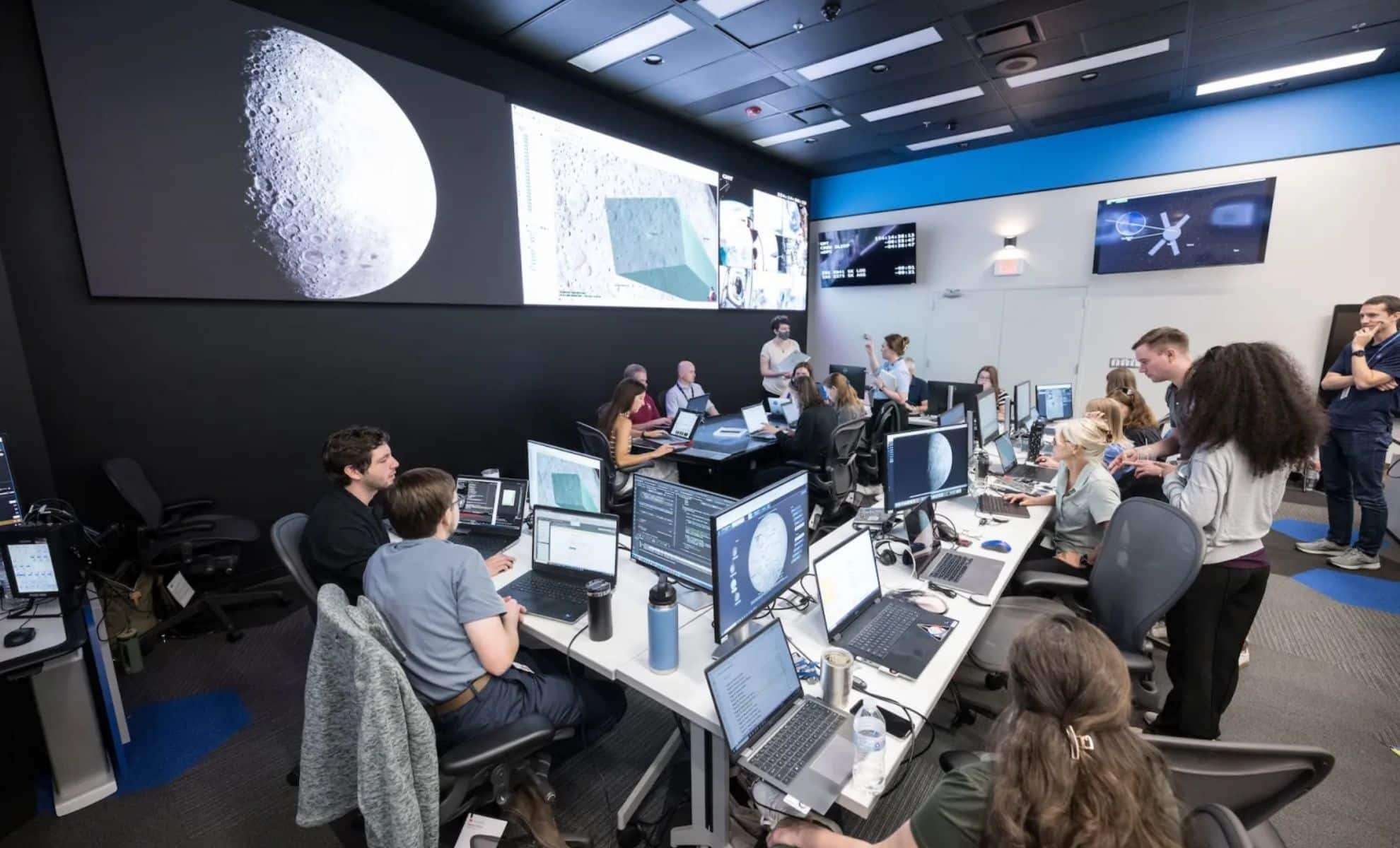
NASA’s Artemis II lunar science division recently completed its initial mission rehearsal in the newly established Science Evaluation Room (SER) at the Johnson Space Center in Houston, marking a crucial step in gearing up for manned lunar missions. Situated within the Christopher C. Kraft Jr. Mission Control Center, the SER is crafted to seamlessly integrate scientific support directly with mission control. The simulation in early June 2025 evaluated how scientists will collaborate and interpret data in real time while astronauts conduct observations during the upcoming ten-day lunar flyby.
A Specialized Space to Drive Lunar Science Collaboration
The Science Evaluation Room is specifically designed to boost NASA’s capacity to perform scientific research during active lunar missions. This dedicated facility enables scientists to collaborate side-by-side with flight operators, allowing rapid data interpretation and agile decision-making. Unlike previous missions where scientific analysis was mostly retrospective, the SER supports conducting science concurrently with mission activities. During the simulation, the team practiced workflows for selecting lunar imaging priorities, processing data instantly, and adapting mission strategies on the fly. “Incorporating science directly into mission operations optimizes NASA’s potential for discoveries throughout Artemis,” stated Kelsey Young, lead lunar scientist for Artemis II and chief science officer at Goddard Space Flight Center. This integrated approach promises to enhance the scientific returns of all Artemis missions.
Simulating Lunar Observation in Real-Time
The June 2025 exercise was the first to fully utilize the SER’s facilities and technology, identical to those slated for use during crewed missions. The Artemis II crew will be responsible for capturing high-resolution moon surface images and delivering comprehensive verbal observations throughout their lunar orbit. These recordings will aid in pinpointing promising landing sites for future expeditions and advancing lunar geology insights. Inside the SER, researchers practiced everything from managing observation schedules to immediate image analysis. The room’s core features a large touchscreen command center where the “scrum team” congregates, supported by experts focusing on data visualization, astronaut communication, and mission coordination. Young reflected, “Witnessing the SER and its collaborative teams operate seamlessly after years of development inspires great enthusiasm for the scientific achievements we will realize when humanity returns to the lunar surface,”.

Crafting an Engaging and Efficient Workspace for Artemis Science
The design of the SER balances operational efficiency with an immersive atmosphere. The main team occupies the core space, encircled by supporting specialists arranged in a distinctive U-shaped “trench,” resembling classic flight control layouts. Each position is carefully assigned: the SER lead oversees in-room activities, while the SER Com acts as the exclusive liaison to the Flight Control Room. Visual elements enrich the environment—a striking blue stripe symbolizes Earth, and the carpet displays a 2D representation of anorthite, a predominant mineral found in the lunar highlands. These features cultivate a science-focused ambiance rooted in lunar exploration themes. The recent simulation served to confirm that this setup enables the team to efficiently manage and respond to live mission data.
- Categories:
- News








0 comments
Sign in to Comment