
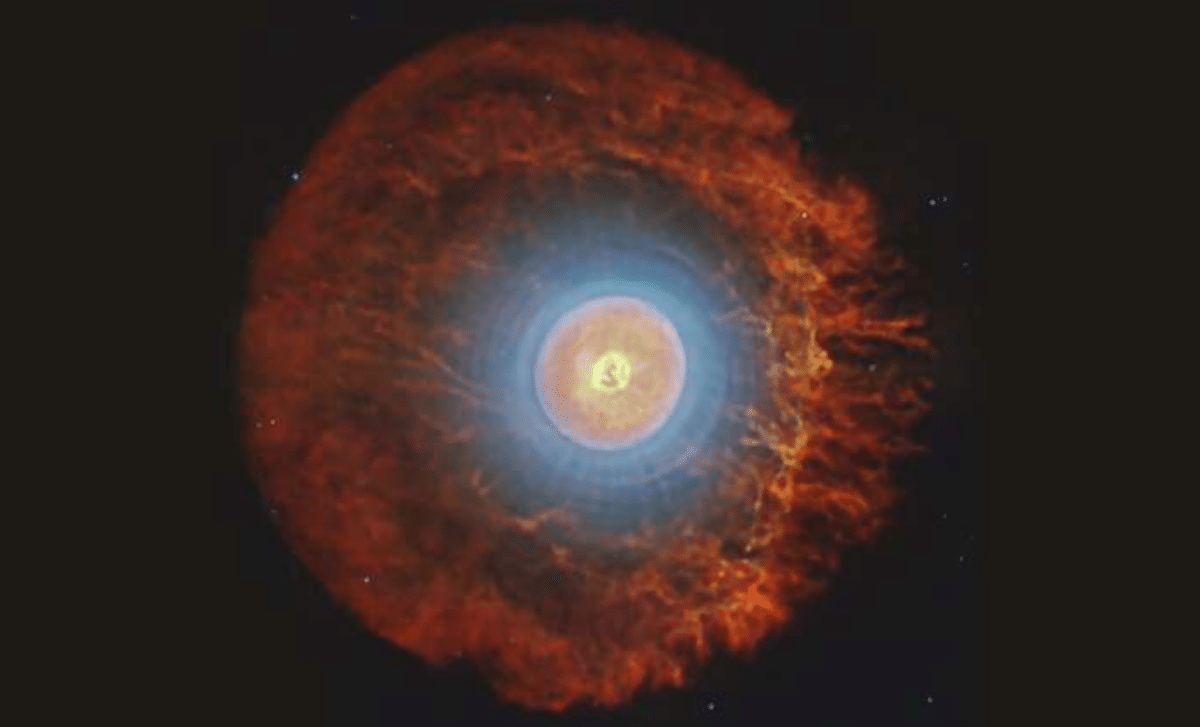
A team of astronomers from the University of Western Ontario has unveiled a remarkable finding that could change how we understand molecular formations in space. Utilizing the James Webb Space Telescope (JWST), they have procured breathtaking images and data from the planetary nebula Tc 1, already renowned for containing buckyballs—spherical molecules made up of 60 carbon atoms arranged like a soccer ball. This discovery not only presents spectacular views of the nebula but also offers fresh insights into the enigmatic buckyballs populating the cosmos.
An Interstellar Journey: Tracing Buckyballs Across the Universe
The path to this discovery began in 2010 when buckyballs were initially detected in space via NASA’s Spitzer Space Telescope. These complex carbon molecules had mystified scientists until Professor Jan Cami, leading the University of Western Ontario’s research team, identified their presence in the Tc 1 nebula, located over 10,000 light-years away in the Ara constellation. Though first synthesized in laboratories in 1985 and awarded a Nobel Prize, their cosmic existence remained speculative until that breakthrough.
Now, with JWST’s advanced capabilities, the researchers have returned to Tc 1 to capture highly detailed images and study the nebula’s chemistry like never before. As Professor Cami explains,

“Tc 1 was already extraordinary, as it was the object that told us buckyballs exist in space, but this new image shows us we had only scratched the surface. The structures we’re seeing now are breathtaking, and they raise as many questions as they answer.”
The Crucial Role of JWST in Unveiling Cosmic Mysteries
Thanks to the Mid-Infrared Instrument (MIRI) aboard JWST, researchers have uncovered intricate details of the nebula, revealing delicate beams, thin filaments, and luminous gas shells. These formations display varying colors, with blue hues indicating hotter gases and reds marking cooler elements. Beyond the visuals, the key advancement lies in combining imagery with chemical analysis through integral field unit (IFU) spectroscopy, enabling the team to directly associate the nebula’s physical appearance with its underlying chemical and physical properties.
Ph.D. candidate Charmi Bhatt described the significance:
“As beautiful as this image is, for me it is first and foremost a dataset. The sharpness and sensitivity of JWST are unlike anything I have worked with before. Structures that were completely invisible to us are now laid out with stunning clarity: the shells, the rays, the fine details in the outer halo. And crucially, through the integral field unit spectroscopy, we can now connect everything we see morphologically in the image directly to the chemistry and physics happening throughout the nebula.”
Charting the Curious Distribution of Buckyballs
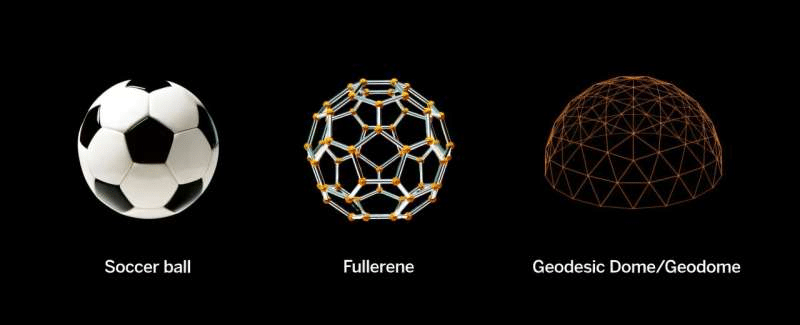
An especially fascinating insight involves how buckyballs are positioned within Tc 1. Rather than a random spread, these molecules are concentrated in a thin spherical shell encircling the central star. This peculiar pattern raises questions about their formation and alignment. Morgan Giese, a graduate student at Western, explained,
“We painstakingly measured the properties of the buckyballs throughout our dataset and then put together a map of where they all are. Funnily enough, these microscopic hollow spheres are actually distributed in the shape of a hollow sphere as well. Buckyballs arranged like one giant buckyball. We’re still working on why they’re located here, but it’s really fun to see all these small things pop up in our data.”
Unraveling New Enigmas from JWST Observations
Beyond buckyballs, the JWST images expose a puzzling structure within Tc 1 resembling an inverted question mark. This odd shape has intrigued researchers who are eager to explore its origins. Ph.D. candidate Simon Van Schuylenbergh shared,
“We put a lot of effort into the data analysis because we had so many questions about the buckyballs and their surroundings. After a long time, we finally thought we’d start to see some answers, only for the nebula to show us a giant question mark, right in our face. The universe has a cruel sense of humor.”
Advancing the Frontier of Space Chemistry
This groundbreaking work showcases JWST’s transformative impact on space research. For over 15 years, scientists have been puzzled by the bright emissions of buckyballs in nebulae such as Tc 1, and the new data is finally shedding light on this phenomenon.
“When we proposed these observations, we knew Tc 1 was special,” said Professor Els Peeters. “But what JWST has shown us goes far beyond what we anticipated. We are already gaining new insight into the nature of the buckyballs themselves, and into why they shine so exceptionally bright in this object, questions we have been puzzling over for fifteen years. This is one of those datasets that will keep us busy for years to come.”
- Categories:
- Astronomy






0 comments
Sign in to Comment