
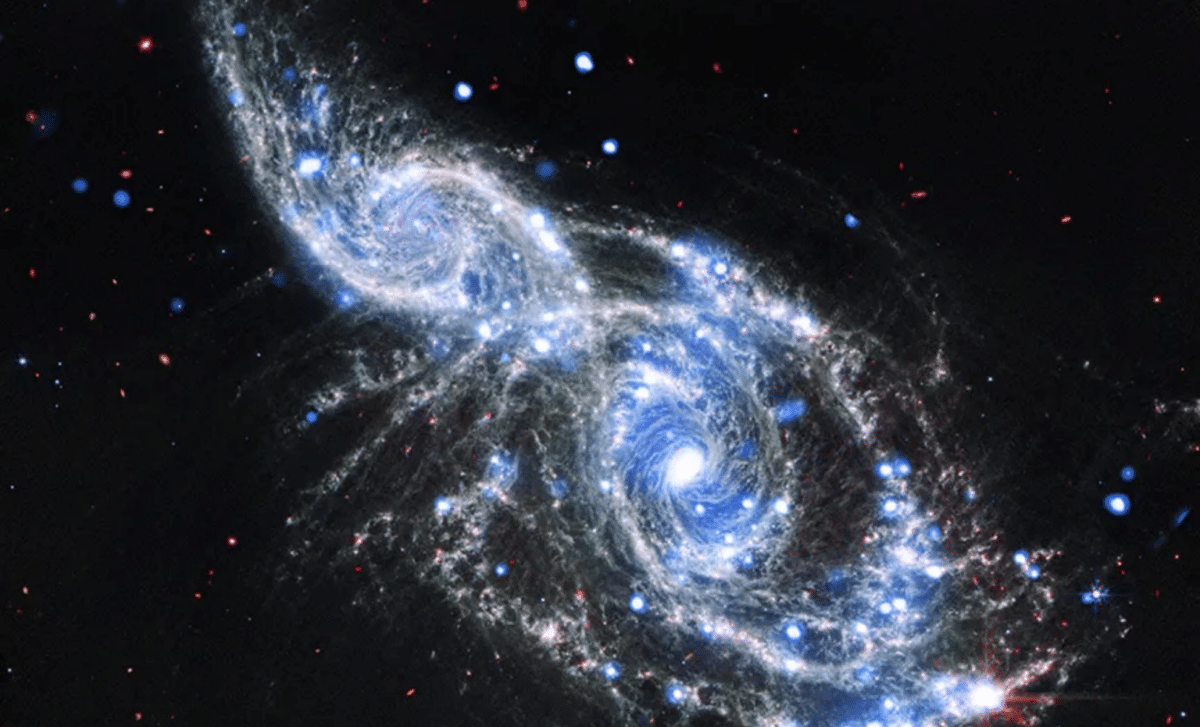
The James Webb Space Telescope (JWST) has amazed the scientific community with a breathtaking new portrayal of the cosmos—a complex network of sparkling galaxies, radiant stars, and tangled filaments spanning deep space.
Peering Back to the Universe’s Dawn
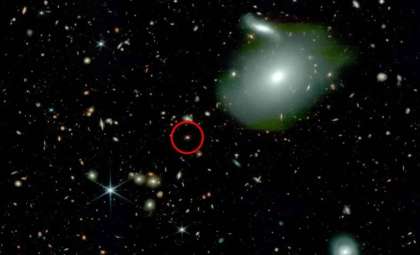
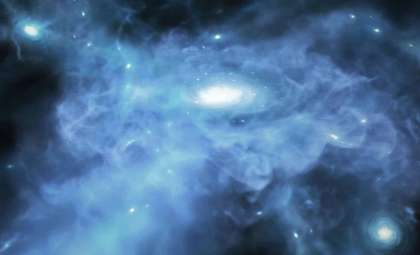
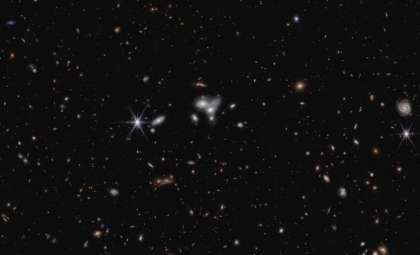
NASA and the European Space Agency (ESA) recently released an image captured by JWST’s Near-Infrared Camera (NIRCam), showcasing a densely packed galaxy cluster immersed in a radiant cosmic network. Each luminous filament represents light traveling over 13 billion years, originating shortly after the Big Bang. Researchers describe the scene as a “web of chaos,” where gases, dust, and emerging stars intertwine like threads in an enormous cosmic fabric.
Situated in the constellation Sculptor, this area demonstrates how gravity orchestrates the arrangement of matter across the universe. Early tiny density variations gradually expanded into immense galactic structures. Thanks to the James Webb Telescope’s advanced sensitivity, scientists can explore these phenomena in remarkable detail, detecting subtle starlight invisible to earlier instruments such as Hubble.

Infrared Technology Unveiling Hidden Depths
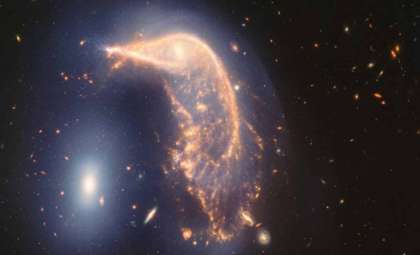
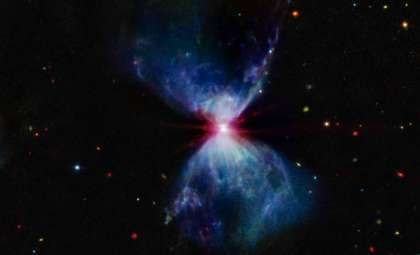
The James Webb Telescope primarily detects infrared light, enabling it to penetrate dense clouds of cosmic dust that block visible light. This advantage exposes the heart of stellar nurseries, where stars are born. The sparkling light sources shown in the image include both well-established galaxies and fresh clusters still forming.
Infrared observations also assist astronomers in calculating galaxies’ redshifts—the stretching of light waves caused by cosmic expansion. Analyzing these shifts helps reconstruct a spatial and temporal map of the universe’s growth. As noted by LiveScience, Webb can detect galaxies formed merely 300 million years after the Big Bang, unveiling times previously beyond observation.
Charting the Universe’s Cosmic Web
The term “cosmic web” goes beyond metaphor, representing the genuine large-scale structure of the universe. Galaxies cluster along extensive networks connected by invisible dark matter and intergalactic gas filaments. The glowing groups visible in Webb’s latest image lie at filament junctions, where gravity accumulates matter and sparks intense star formation.
Scientists across the globe are now studying this JWST data to deepen understanding of how dark energy and dark matter govern the development of cosmic architecture. Detailed analyses of the web’s intricate patterns aim to answer vital questions about the universe’s present form and how its extensive cosmic pathways direct galactic motion.
- Categories:
- Astronomy


0 comments
Sign in to Comment