
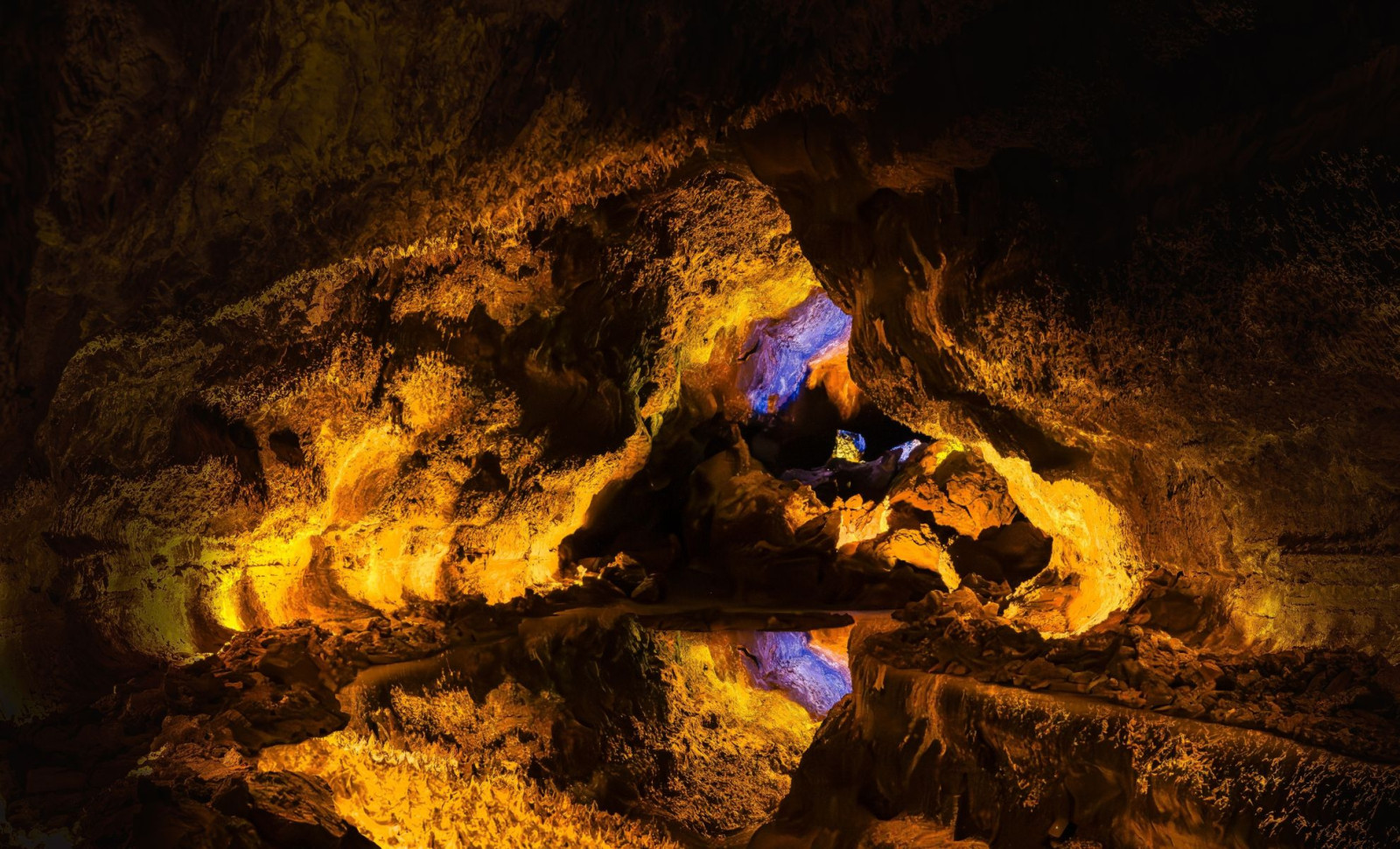
A trio of self-directed robots explored a volcanic lava tube in Lanzarote, simulating the survey of subsurface caves on the Moon and Mars. This European initiative explores a novel route for extraterrestrial settlement, emphasizing the crucial role that robotic systems could play in locating underground shelters for upcoming human colonies. This project advances humanity's ambition to establish settlements beyond Earth.
As the Artemis II mission prepares to ferry astronauts back to the Moon, research efforts intensify to ready humanity for settling the Moon and Mars. Robotics offers promising methods to investigate challenging, inaccessible areas like subsurface volcanic corridors on these celestial bodies.
Natural Protection from Hostile Space Conditions
The research team, whose findings appear in Science Robotics, highlights that these lava tubes can shield inhabitants from cosmic radiation, temperature extremes, and meteorite bombardments prevalent on lunar and Martian surfaces.

Since these worlds lack substantial atmospheres, rocky lava tunnels could act as life-supporting refuges, enabling humans to thrive in otherwise uninhabitable conditions.
Lanzarote’s La Corona lava tube—spanning nearly 30 meters in height and width—serves as an ideal analog for extraterrestrial caves. This setting allowed European collaborators, including the European Space Agency (ESA), to carry out groundbreaking robotic investigations.
Deploying Autonomous Robots in Extreme Conditions
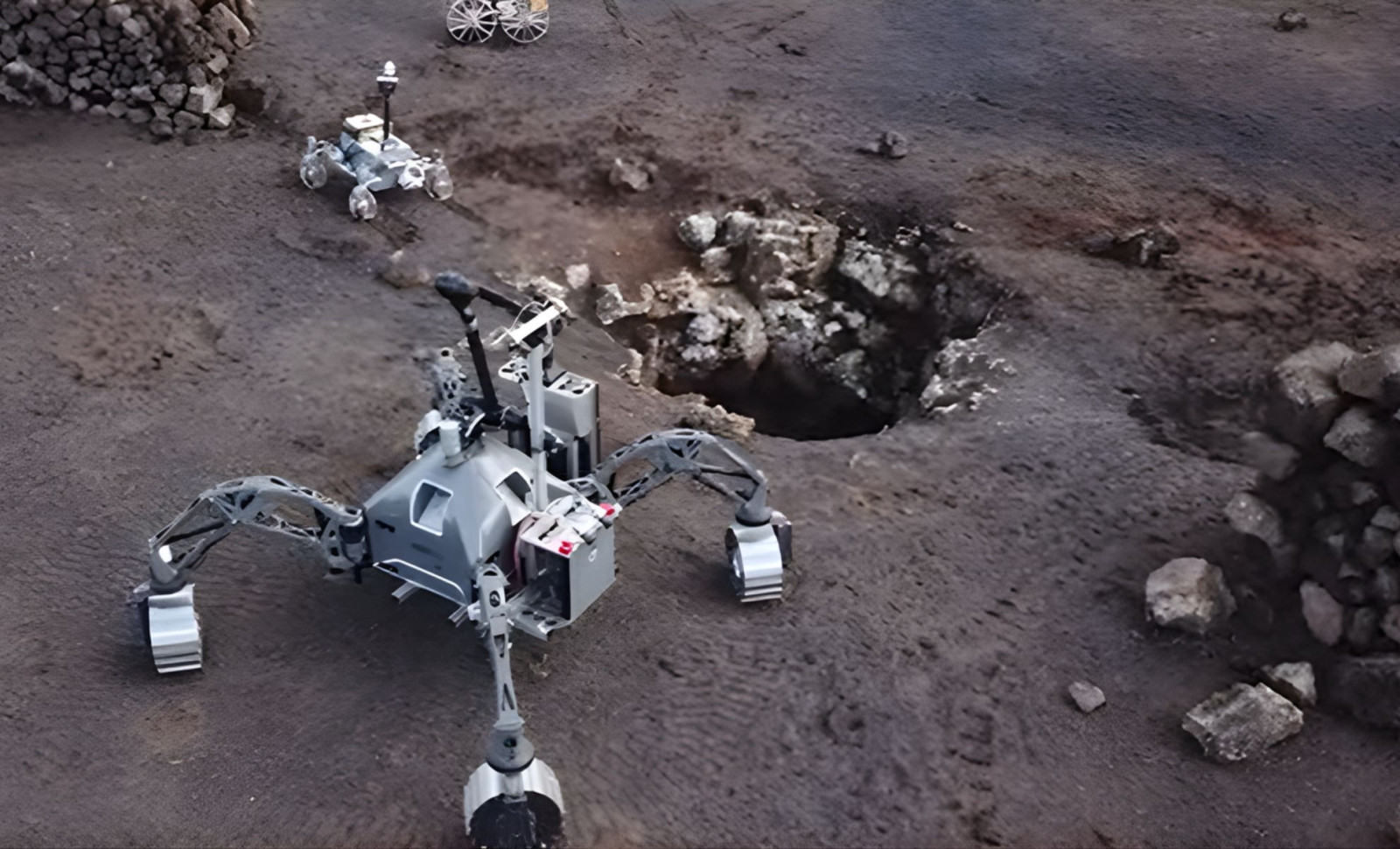
The core objective of this trial involved using self-governing robots functioning without continuous human control. In La Corona, three specialized robots undertook distinct missions. Researchers explained:
“This mission concept was validated in a relevant scenario, a lava cave on Lanzarote island, where the team of robots was able to build a three-dimensional model of the surrounding area and skylight.”
Since signals take minutes to travel between Earth and these distant locations, immediate communication isn’t feasible. As a result, these robots must autonomously adapt and make decisions in response to real-time conditions.
Stepwise Terrain Exploration
The operation to survey the Martian lava cave unfolds over four hierarchical phases. The mission begins with robots mapping the tunnel’s entrance surroundings.
Following this, a payload cube equipped with sensors is deployed into the cave, collecting data on temperature, humidity, and atmospheric gases. This baseline assessment is essential for understanding the cave's habitability potential.
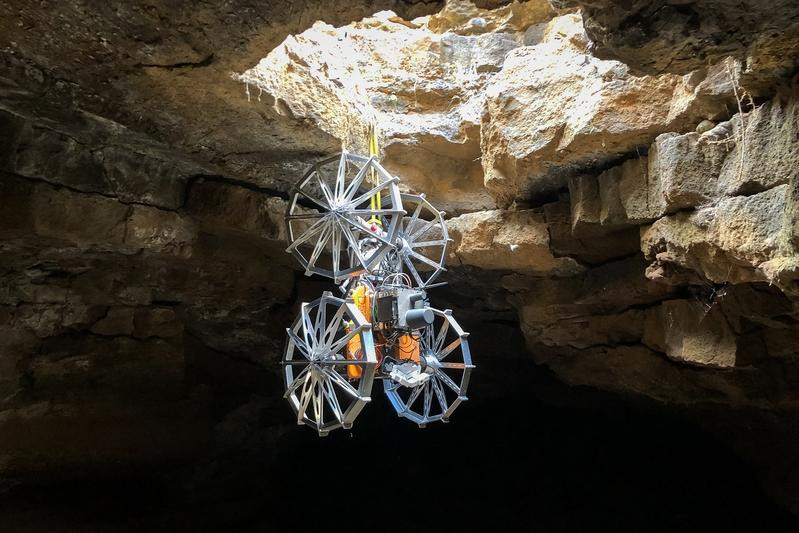
The third phase involves a scout rover descending into the tunnel using rappelling techniques, probing further inside while transmitting gathered data back to Earth. Finally, the team completes a detailed 3D survey of the tunnel to pinpoint optimal sites for human settlement modules.
Advancing Toward Human Space Colonies
Results from this mission demonstrate that autonomous robots can efficiently explore and analyze environments as challenging as those on the Moon and Mars.
“The results obtained demonstrate the proposed mission concept’s feasibility, including three next-generation planetary exploration rovers that were coordinated to obtain meaningful information about the lava cave’s external and internal morphology,” wrote the authors.
Although improvements are needed—especially in overcoming visual challenges in dark conditions and sensor disruptions—the robots’ capability to conduct autonomous exploration represents a pivotal advance in interplanetary science missions.
Scientists are optimistic these technologies will be finalized soon, making the dream of establishing colonies on alien planets increasingly realistic.
- Categories:
- Astronomy







0 comments
Sign in to Comment