
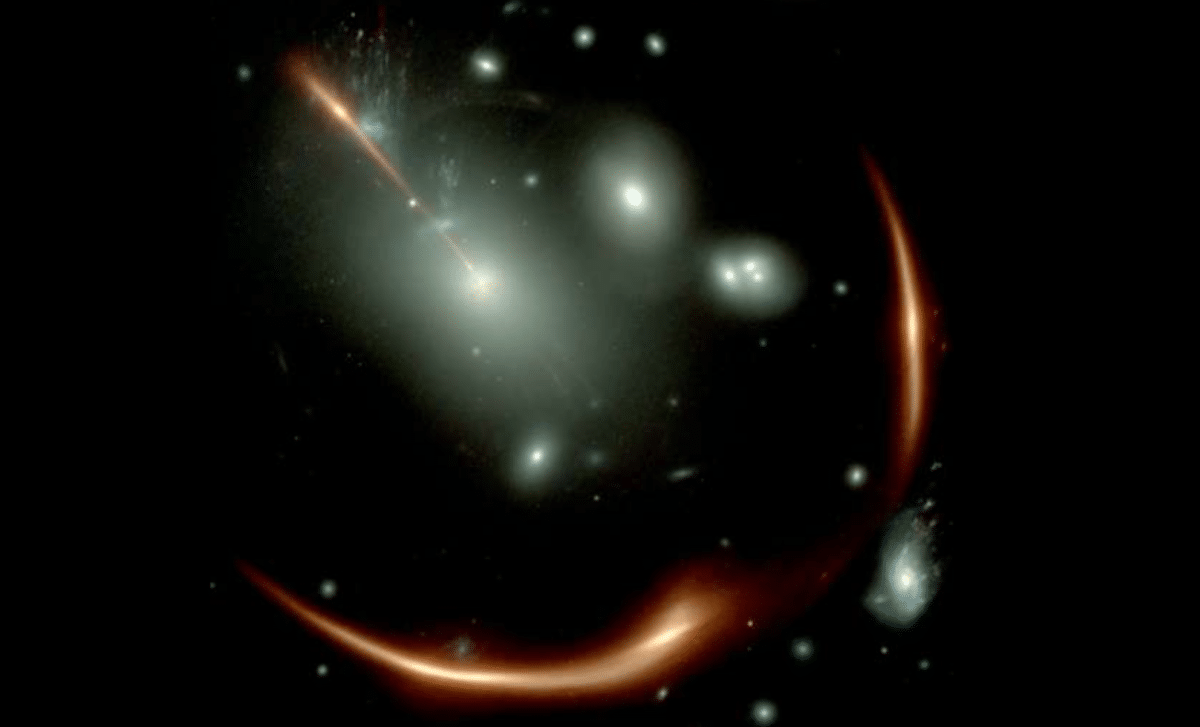
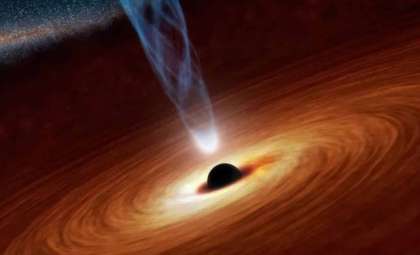
A global team of astronomers has precisely determined the mass of a quiescent supermassive black hole located over 10 billion light-years from Earth, providing valuable insights into the universe's infancy. Published in Science, their findings show the black hole at the heart of galaxy MRG-M0138 contains roughly six billion times the Sun’s mass, shedding light on the co-evolution of galaxies and black holes when the cosmos was only a quarter of its current age.
Revealing a Hidden Cosmic Titan
Unlike active black holes that emit powerful radiation signals, dormant black holes are invisible and can only be detected by observing the gravitational effects they have on surrounding stars. For MRG-M0138, researchers employed stellar dynamics—analyzing star movements near the galaxy's center—to estimate the black hole’s mass.
Previously applied only to closer galaxies, with the most distant about 700 million light-years away, this approach has now been extended dramatically. Thanks to JWST combined with gravitational lensing, astronomers have pushed the frontier to a galaxy more than 10 billion light-years away, exploring stellar dynamics from the early universe.

Enabling the Breakthrough: JWST and Cosmic Lenses
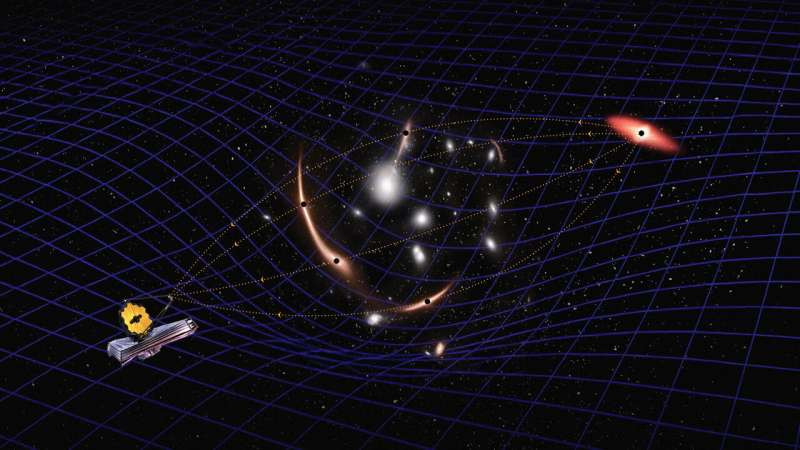
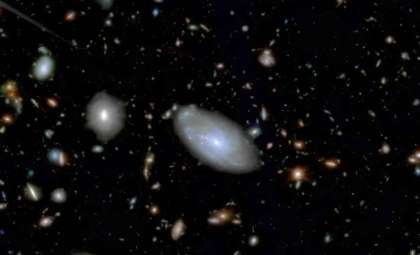
The James Webb Space Telescope provided critical high-resolution imaging of the galaxy, which is amplified around 30 times by the gravitational field of a foreground galaxy acting like a natural cosmic lens. Dr. Andrew Newman, the lead researcher from Carnegie Science, explained,
“By combining JWST data with gravitational lensing, we could peer inside the black hole’s sphere of influence, where its gravity boosts the speeds of stars. This is one of the best techniques we have to weigh a black hole, so we were excited to extend it to a much earlier period in cosmic history.”
Such a rare alignment was essential, as it enabled the measurement of stellar motions at an extraordinary distance that would otherwise be unfeasible.
Inferring Mass from Stellar Velocity Patterns
The researchers carefully analyzed the velocities of stars near the galaxy’s core, discovering that those close to the black hole moved much faster than stars farther away, revealing the black hole’s gravitational pull. This contrast in stellar speeds allowed the team to precisely calculate the mass of this otherwise unseen cosmic heavyweight. Professor Richard Ellis from UCL Physics & Astronomy remarked on the significance:
“By demonstrating the feasibility of such a technique for galaxies in the early universe, we can now undertake a more complete census of how black holes develop over time and infer their role in shaping galaxy evolution.”
Published in the journal Science, this research marks a vital advance in understanding the impact supermassive black holes had on galaxy formation during the universe’s youth.
Consequences for Galaxy Development in the Early Cosmos
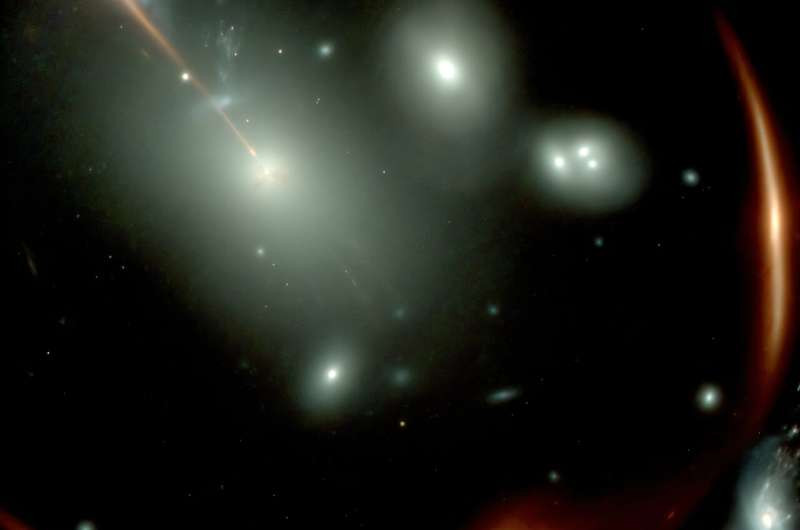
MRG-M0138 and its central supermassive black hole currently lie dormant, without signs of star birth or gas accretion. Scientists speculate that in its earlier quasar phase, the black hole’s immense energy output likely expelled star-forming material. Witnessing such a gargantuan, inactive black hole so far away provides an exceptional view into how galaxies evolved during the universe’s formative years. Additional observations from JWST and other instruments are expected to identify more dormant black holes, enriching our knowledge of their influence on star formation and galactic lifecycles.
- Categories:
- News





0 comments
Sign in to Comment