
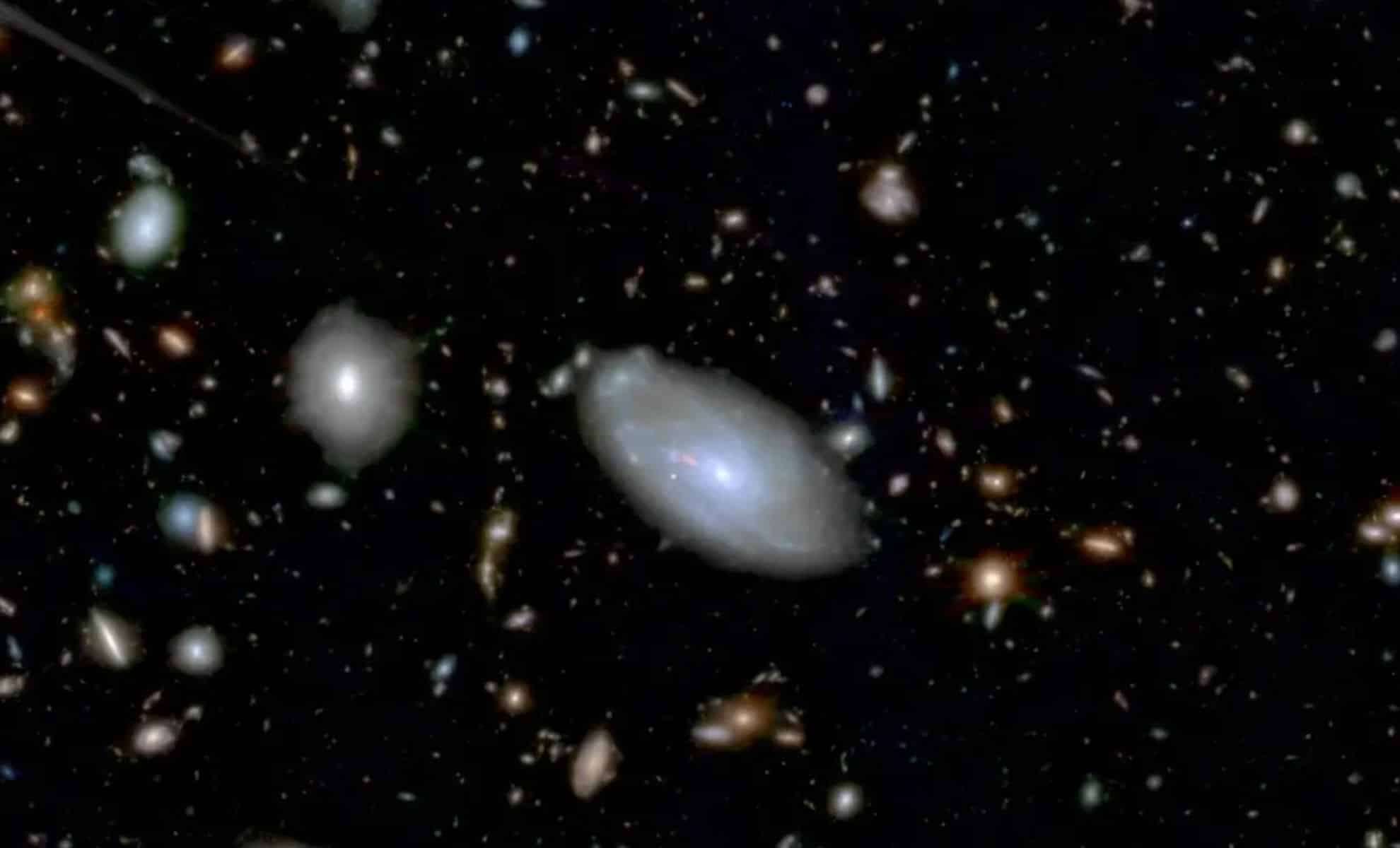
Recent astronomical observations have revealed compelling indications of dark stars—immense celestial bodies powered by dark matter annihilation rather than conventional nuclear fusion. This discovery could redefine our comprehension of the universe’s earliest epochs, providing a novel perspective on how primordial black holes might have originated. Utilizing data collected by the James Webb Space Telescope (JWST), researchers have uncovered evidence supporting the reality of these enigmatic stars, a theory initially put forward by astrophysicist Katherine Freese in 2007. The observed traits correspond more closely with predicted models of dark stars instead of normal fusion-driven stars, adding a new dimension to our cosmic narrative.
Recent findings from ultra-remote celestial bodies, situated over 13 billion light-years away, provide the strongest indication yet for dark stars’ presence. These observations peer back to a time when the universe was only a few hundred million years old. While the community greets these results with enthusiasm, some remain cautious, fostering ongoing discussion about whether these dark matter-powered stars could explain puzzling early-universe phenomena such as the rapid assembly of supermassive black holes.
What Are Dark Matter-Fueled Stars?
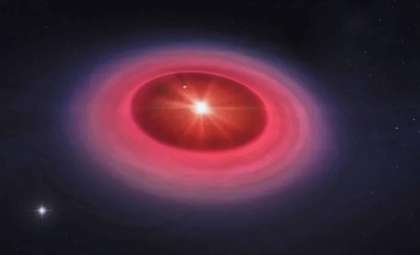
The concept of dark stars emerged from Freese and her team at the University of Texas in 2007. Their theory proposes that in the universe’s infant phase, dark matter particles could have collided and released heat faster than surrounding gas clouds were able to cool. This process might have caused stars to balloon to immense proportions—reaching millions of solar masses—without igniting the standard fusion reactions typical of regular stars. Such stars would have appeared cooler and much more extended than normal stars, eventually exhausting their dark matter fuel and collapsing into black holes.

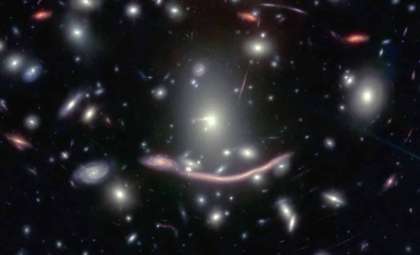
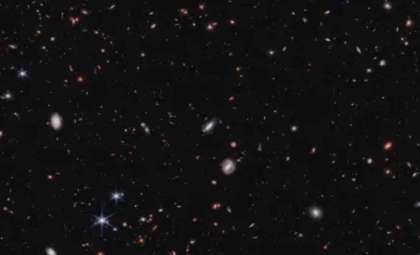
New analyses of five extraordinarily distant objects observed by JWST now reveal traits consistent with those expected from dark stars. Located over 13 billion light-years away, these objects’ light offers a unique look into the universe’s formative years, possibly confirming long-standing theoretical predictions.
Enthusiasm from Freese Meets Skepticism from Whalen
Researchers have been energized by these findings, which appear to validate a core aspect of Freese’s theory. She stated, “If it’s real, then I don’t know how else you’d explain it other than with a dark star,” reflecting the excitement around this potential confirmation. Nevertheless, some scientists, such as Daniel Whalen from the University of Portsmouth, remain doubtful. Whalen emphasized, “They ignore an entire body of literature on the formation of supermassive primordial stars, some of which could give signatures very similar to the signatures that they show,” suggesting alternative interpretations. This disagreement highlights a vibrant debate within the field regarding the true nature of these early cosmic phenomena.
Despite contrasting viewpoints, identifying these distant candidates that might be dark stars marks important progress toward understanding the universe’s dawn. Future JWST observations are anticipated to shed more light on these objects, helping clarify their properties and significance.
Dark Stars and the Mystery of Early Supermassive Black Holes
The prospect of dark stars gains greater significance in view of recent discoveries by the Chandra X-ray Observatory and JWST, which have exposed supermassive black holes existing within just a few hundred million years after the Big Bang. Traditional models struggle to explain how such immense black holes could have formed so rapidly. Dark stars, potentially collapsing into massive black holes after only a few million years, could offer the crucial missing link to this cosmic puzzle.
Conventional theories for supermassive star development depend on rare conditions like unpolluted gas inflows and intense ultraviolet radiation fields, which were likely uncommon early on. Freese’s dark star hypothesis, however, provides a compelling alternative explanation for the accelerated formation of these gargantuan black holes, addressing gaps left by older models.
Looking Ahead: Detecting Dark Stars Through Light
A particularly thrilling aspect of the JWST data is the opportunity to detect unique light patterns that could distinguish dark stars from traditional stars. The observed objects display spectral characteristics indicating they are cooler and more expanded than standard fusion stars. A notable signature researchers seek is an absorption feature at 1,640 Å caused by singly ionized helium (He II), predicted to occur in dark star atmospheres. One object exhibits a faint hint of this absorption, although current data lacks the clarity for definitive proof.
Complicating matters, the detection of oxygen near one candidate object is unexpected if it were a pure dark star, suggesting possibilities including a more complex stellar system or the need to revise current dark star theories.
- Categories:
- News




0 comments
Sign in to Comment