
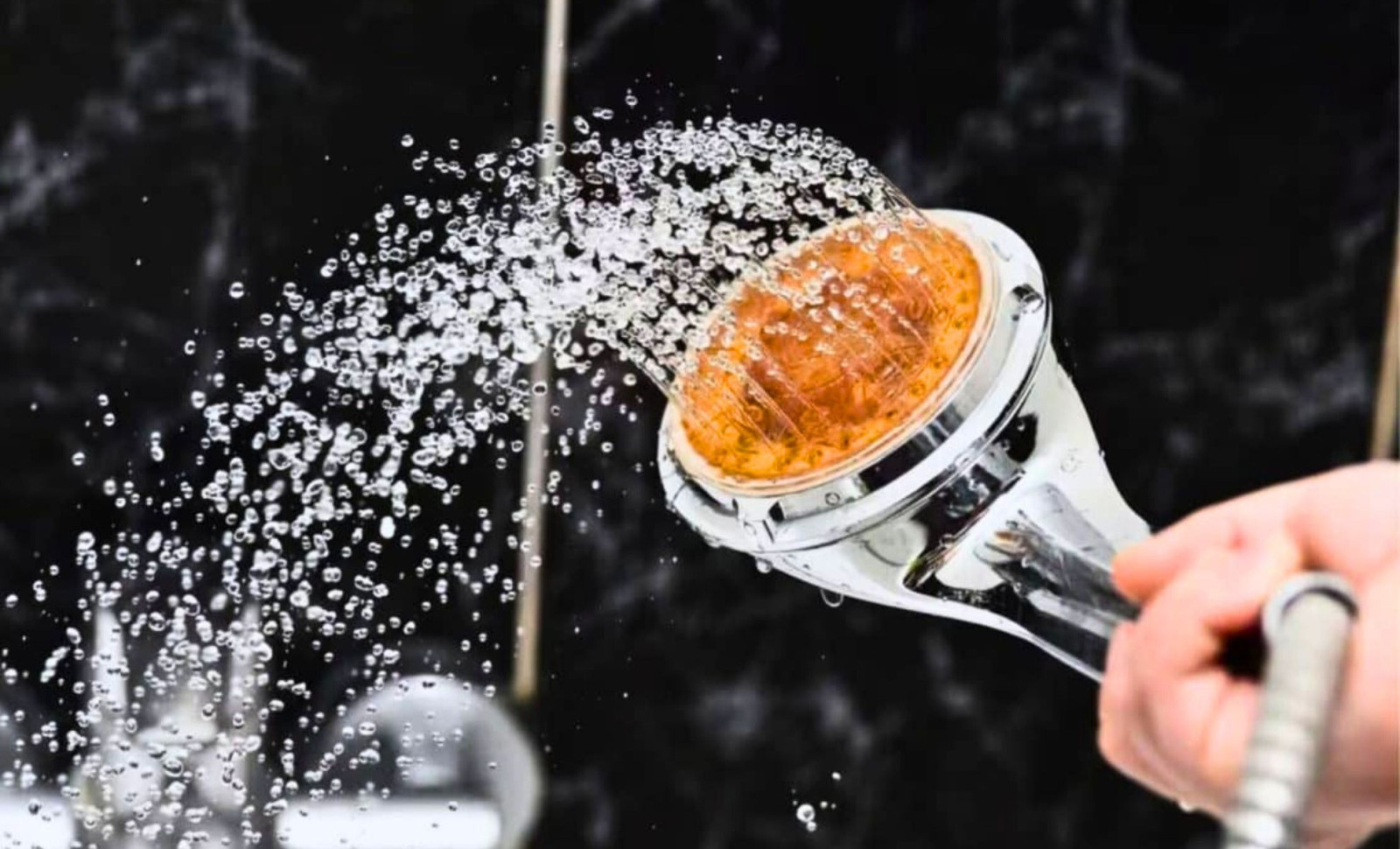
Starting in January 2026, select Japanese communities began piloting an innovative water technology that operates independently of traditional municipal pipelines. Installed alongside washing machines, these units recycle and purify greywater from showers, sinks, and laundry without relying on the central water grid.
Developed by Tokyo startup WOTA Corp., the pilot programs are running in Akita and Ishikawa, areas experiencing population decline that challenges the financial viability of maintaining aging water infrastructure. City officials are assessing this technology as a viable substitute for conventional centralized water supply.
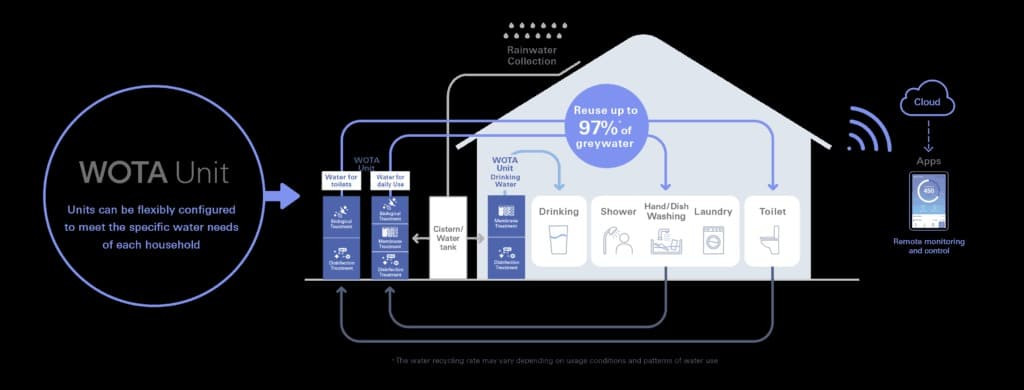
The WOTA BOX processes greywater via advanced filtration membranes and chemical treatments, then redistributes it for household use. Company claims suggest the system can purify up to 97 percent of wastewater, complying with all 51 Japanese potable water standards and World Health Organization safety guidelines. Any water shortfall is compensated with filtered rainwater.

Challenges of Replacing Japan’s Aging Water Networks
In June 2025, the Japanese Cabinet officially backed decentralized water solutions through the Basic Policy on Economic and Fiscal Management and Reform 2025. This policy explicitly encourages the “prompt adoption of decentralized water and sewerage services,” citing rising costs to sustain centralized systems identified in reports from the Ministry of Land, Infrastructure, Transport and Tourism.
The expense of replacing water pipes varies widely, ranging from 100 million to 200 million yen per kilometer, depending on materials and locations. Between 2020 and 2024, the national average cost increased by roughly 20 percent. In Osaka, actual replacement costs sometimes doubled initial budgets.
A 2024 report from the Ministry of Internal Affairs and Communications revealed that 60 percent of municipalities delayed earthquake-resistant upgrades to water infrastructure due to budget constraints. Some rural administrations are reducing water services amid shrinking populations.
Financing a Future Without Traditional Water Bills
To aid adoption of decentralized setups, WOTA launched the Water 2040 Fund in July 2025. This 10 billion yen initiative offers financial support, planning software, feasibility analyses, and operational strategies to municipalities nationwide. Applications are open on a rolling basis.
The company's deployment approach integrates digital simulations covering a 500-meter grid to pinpoint priority areas and customize infrastructure designs suited to local demands. The fund encourages cooperation with financial institutions and businesses to mitigate investment risks.
The modular water system includes three key segments: drinking water, domestic water, and toilet water. These modules can be combined to suit community requirements. Currently, drinking water is sourced externally, but a rainwater purification component is underway to enable full self-sufficiency.
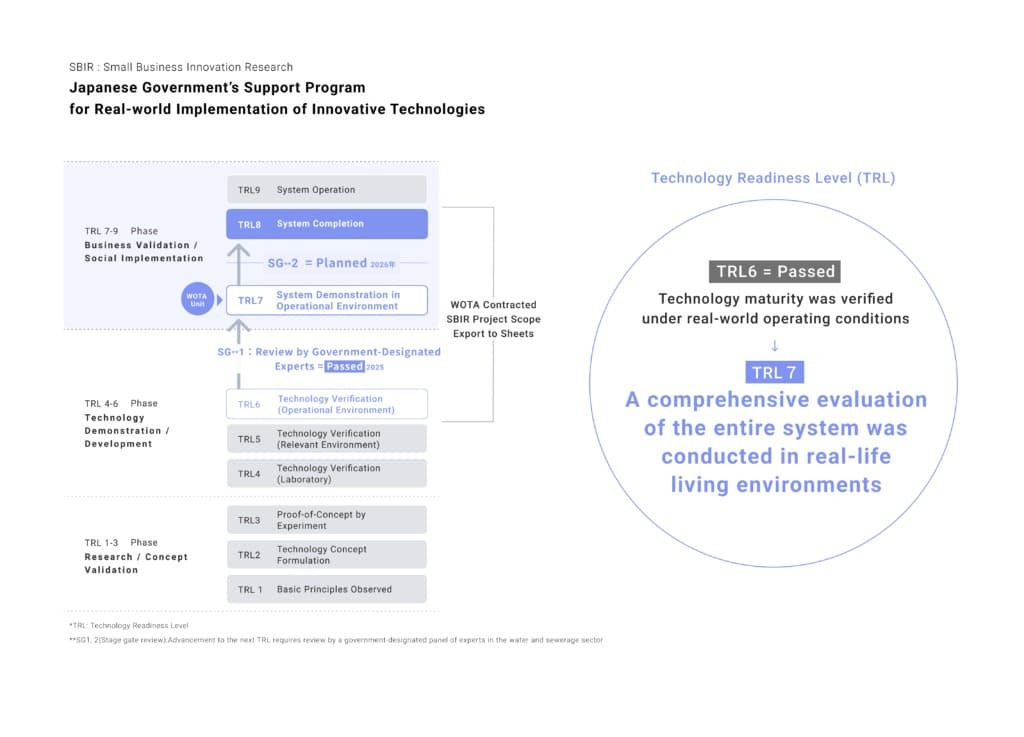
WOTA’s innovations have received backing from the New Energy and Industrial Technology Development Organization through its Deep Tech Startup Support Fund, as well as from the Cabinet Office and Ministry of Economy, Trade and Industry via the Small Business Innovation Research program. The technology reached Technology Readiness Level 6 in 2025 and is progressing toward Level 7, which entails testing in real-world environments.
Earthquake Damage Highlighting Need for Localized Water Solutions
Japan’s water systems were primarily constructed during eras of population growth. While over 98 percent of people currently benefit from safe drinking water through centralized networks, dwindling populations are driving up per capita infrastructure maintenance costs.
Natural disasters increase vulnerabilities; the 2024 Noto Peninsula earthquake disrupted water services locally. Soon after, WOTA installed its system in Suzu City to restore emergency safe water access. Local officials have underscored the critical role of water autonomy in disaster resilience.
The Ministry of Land, Infrastructure, Transport and Tourism’s committee on water systems is exploring a “best-mix” strategy blending centralized and decentralized infrastructure based on factors like population density and geography. This approach is expected to be incorporated into the upcoming First Mid-term Plan for National Resilience Implementation in 2025.
Unrealized Module and Future Outlook
While the WOTA system meets official water quality standards, long-term household usage data is not yet available. The 2026 field trials represent its first extended real-world test, with outcomes anticipated within 1 to 2 years.
Currently, the solution does not produce drinkable water solely from greywater; households must rely on outside sources or the planned rainwater module. WOTA states it is developing an integrated drinking water module but has yet to specify when it will be ready.
- Categories:
- News







0 comments
Sign in to Comment