
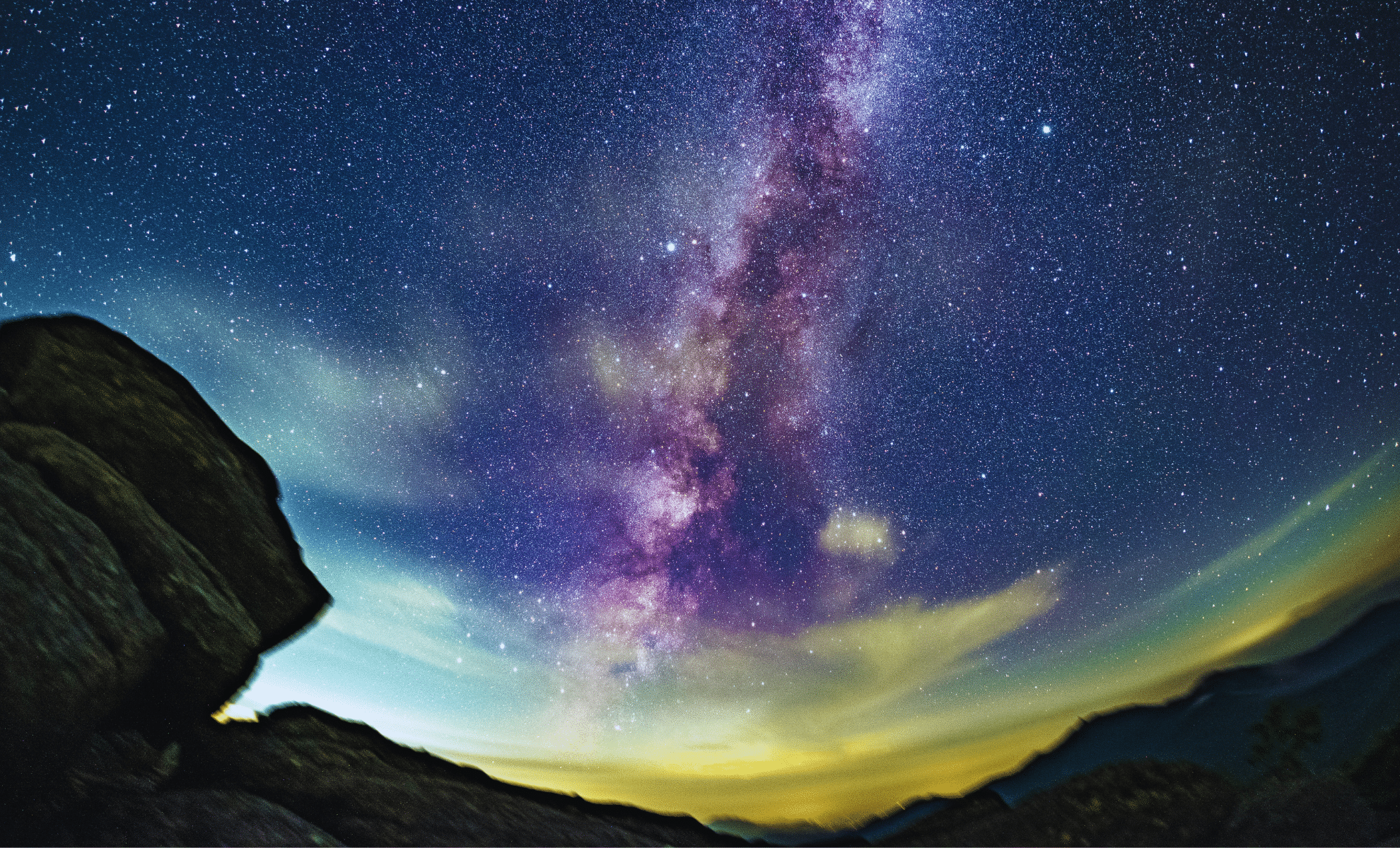
This June, stargazers have an extraordinary opportunity to admire the luminous center of the Milky Way in full display. According to NASA’s June 2025 skywatching guide, the galactic core will dominate the night sky throughout the entire month, particularly visible from secluded, dark locations. This stunning cosmic event coincides with the June solstice and notable planetary alignments, such as Mars’ approach near Regulus, making June a showcase of celestial wonders. From Venus’ early morning glow to the captivating pairing of Mars and Regulus, the month promises a spectacular stellar performance for observers.
The Milky Way’s Bright Core: A Nighttime Marvel
The glowing heart of the Milky Way represents one of the most breathtaking sights overhead. In June, this galactic hub stretches elegantly across the sky from dusk till dawn. The best viewing is reserved for places away from urban light pollution, where the Milky Way appears as a gentle, misty band arching across the heavens. This dense bulge, packed with stars, cosmic gas, and dust, forms a cloud-like patch that’s distinctly visible to the naked eye. For those using long-exposure photography, the core’s details become dramatically pronounced, revealing complex star clusters and dark nebulae that define the galaxy’s center. Advanced NASA telescopes further explore this region, unveiling clues about our galaxy’s formation and architecture.
June: Prime Time for Stargazing
The month of June offers an exceptional vantage point for dating the Milky Way's core. Thanks to Earth’s orbital position, the sky aligns favorably, allowing observers to look straight into the galaxy’s densely packed center. This alignment makes the glowing core visible nightly throughout June. Complementing this cosmic highlight are dynamic planetary shifts: Venus glimmers brightly in the pre-dawn sky, and Saturn climbs steadily higher each evening. A highlight occurs when Mars approaches Regulus, Leo’s brightest star, around June 16 and 17, creating an exceptional celestial pairing.

Planetary Highlights: Venus, Mars, and More
Alongside the radiant Milky Way, June presents a rich lineup of planets for enthusiasts to track. Venus commands the early morning eastern horizon, rising roughly two hours before sunrise and remaining visible throughout the month. Starting near Venus, Saturn gradually ascends higher in the sky as June progresses. The standout event comes mid-month when Mars edges close to Regulus, with the pair barely half a degree apart—approximately the diameter of the full moon. This spectacle is perfect for binocular or small telescope viewing, offering a rare glimpse of their proximity. Toward month’s end, Mercury becomes briefly visible after sunset on the western horizon, adding a fleeting but notable appearance.
The Significance of the June Solstice
The June solstice marks a pivotal moment in Earth’s annual journey, heralding the longest day in the Northern Hemisphere. Occurring on June 20 (June 21 UTC), this event is caused by Earth’s axial tilt positioning the North Pole closest to the Sun, resulting in the maximum daylight period. The solstice has held cultural importance for centuries, with ancient structures like Stonehenge and Chichén Itzá aligned with this solar milestone. For the Southern Hemisphere, it represents the shortest day of the year. No matter the location, the solstice is a powerful reminder of the Earth’s cosmic rhythms and offers an excellent chance to observe the Sun’s peak path across the sky and reflect on these celestial cycles.
- Categories:
- News







0 comments
Sign in to Comment