
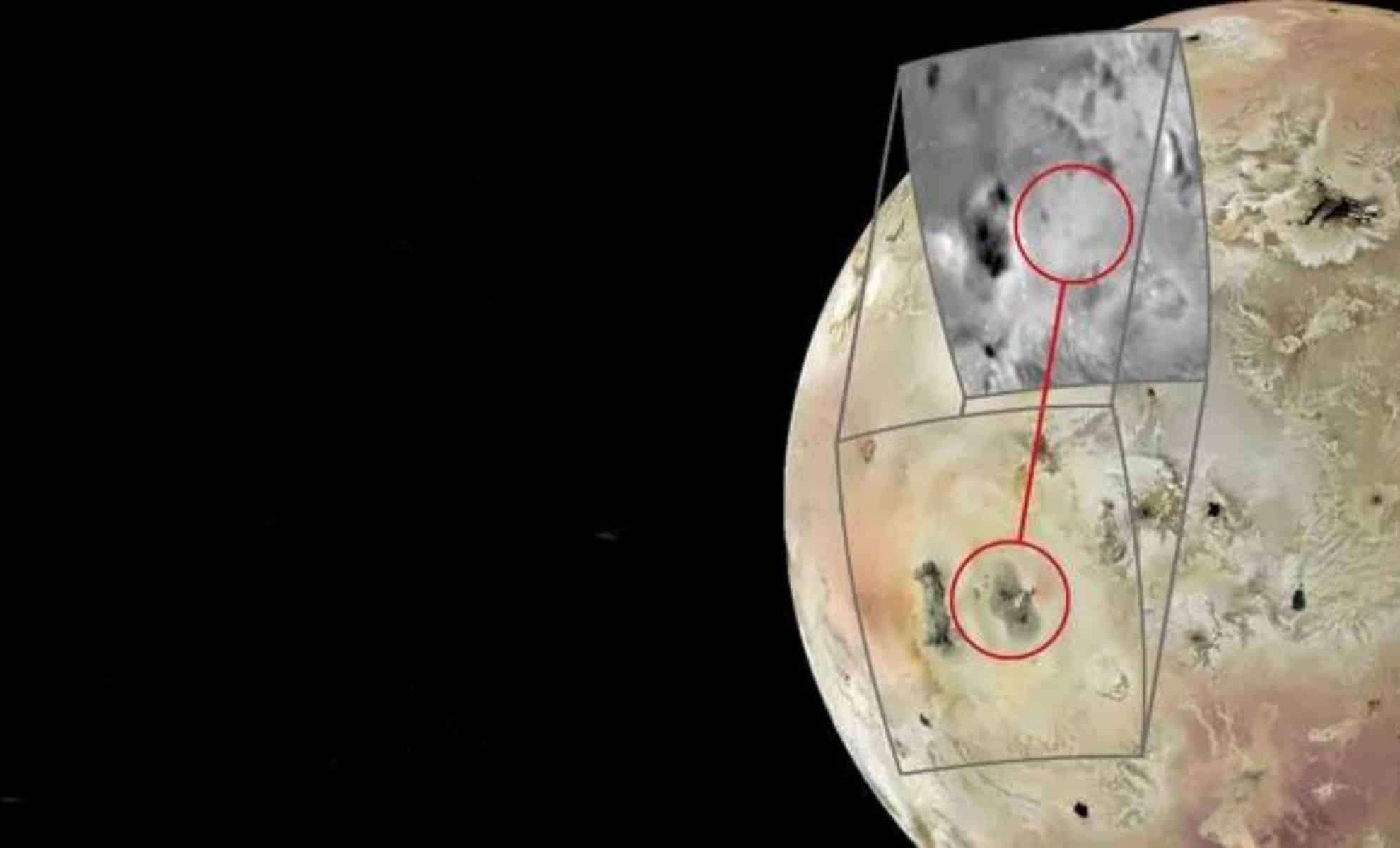
NASA's Juno spacecraft, launched in 2011, has captured unprecedented images highlighting a newly formed volcano on Io, Jupiter’s moon famed for its intense volcanic phenomena.
During its latest close approaches, Juno’s camera, JunoCam, identified a previously unseen volcanic structure, providing the first detailed observations of Io in more than twenty years. This breakthrough sheds light on the ongoing geological activity sculpting the surface of the solar system’s most volcanically active moon.
Identifying a Fresh Volcanic Feature on Io
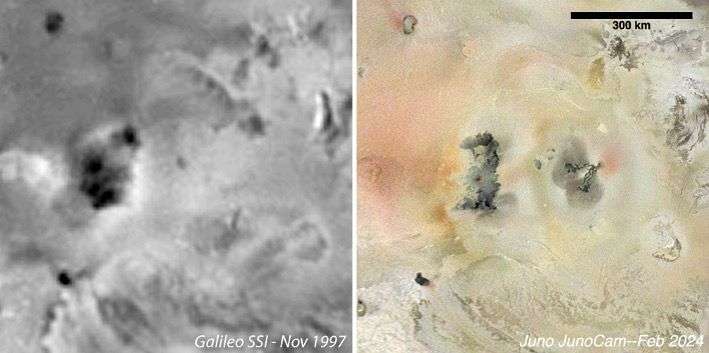
The recent discovery came from analyzing data collected during Juno’s February 2024 encounter and contrasting it with images from NASA’s Galileo spacecraft taken in 1997. This comparative study revealed the emergence of an expansive volcanic formation in a zone previously thought to be inactive. Michael Ravine, Advanced Projects Manager at Malin Space Science Systems, Inc., which manages JunoCam, stated, “Our JunoCam images reveal multiple transformations on Io’s surface, including this vast volcanic complex that did not exist in 1997.” The feature extends over 180 kilometers, featuring numerous lava flows and volcanic deposits spanning a considerable area.

This substantial alteration in Io’s terrain over the past 27 years highlights the moon's relentless volcanic evolution. Positioned just south of the equator, this new volcano adds to the prolific volcanic landscape that makes Io uniquely active within our planetary neighborhood.
Insights from JunoCam on Io’s Volcanic Dynamics
JunoCam’s high-resolution imagery uncovers fine details about the new volcano’s formation and activity. A diffuse red stain is visible on the feature’s eastern side, likely the result of sulfur gas released during eruptions, which settles back onto Io’s surface. This sulfuric residue commonly colors parts of Io with its characteristic reddish-orange tint.
On the volcano’s western flank, two distinct dark lava channels extend approximately 100 kilometers each, ending in overlapping circular gray deposits where the molten lava has vaporized the icy crust beneath. These formations indicate sustained volcanic activity that has reshaped the terrain. Captured during Io’s night, these images are illuminated by reflected light from Jupiter, allowing JunoCam to document these features in exceptional clarity.
The juxtaposition of JunoCam’s updated images with Galileo’s historic photos underscores the rapid transformation of Io’s volcanic landscape. These are some of the closest details acquired by any mission over the past twenty years, providing critical updates on Io’s geological changes.
Extended Juno Mission Unlocks More Secrets of Io’s Volcanism
Following the completion of its primary mission in 2021, Juno’s extended phase has continued intensive studies of Jupiter and its moons, including multiple close flybys of Io in 2023 and 2024. These maneuvers uncovered not only the new volcanic structure but also nine active plumes erupting from various sites across Io’s surface. Additional observations revealed fresh lava flows and volcanic deposits reshaping the moon since the last detailed surveys.
Io’s extraordinary volcanic activity arises from tidal forces exerted by Jupiter and its neighboring satellites, Europa and Ganymede. These gravitational tugs generate frictional heating inside Io, fueling continuous eruptions of sulfur and related compounds. Scott Bolton, the Juno mission’s principal investigator, emphasized, “Io’s volcanism is unparalleled across the solar system, and Juno offers the most detailed views of this extreme environment ever obtained.”
What Juno’s Discoveries Mean for Planetary Research
Juno’s detection of Io’s new volcano advances our comprehension of this dynamically changing world and its volcanic drivers. By combining fresh data from JunoCam with prior Galileo mission findings, scientists can trace Io’s evolving geological features and better understand the formation and lifespan of volcanic structures. Juno’s imagery of active plumes and recent lava flows further reinforce Io’s identity as a constantly transforming celestial body.
With the extended mission set to last through at least 2025, future flybys will continue to deliver valuable visuals and scientific measurements that track ongoing surface changes. Bolton notes, “Every pass offers unexpected insights, and we eagerly anticipate what discoveries Io will present next.”
Studying Io's volatile geology not only unravels mysteries of this unique moon but also enhances our knowledge of planetary processes more broadly. Investigations of geologically extreme environments deepen our grasp of phenomena shaping moons and planets inside and beyond our solar system, including Earth.
Future Exploration: Implications of Io’s Volcanism
The revelation of this recently formed volcano enriches our understanding of Io and has far-reaching consequences for prospective missions. Io’s harsh volcanic activity and intense radiation present formidable obstacles and intriguing scientific opportunities for future probes. Data from Juno and other missions will be critical in designing landers and orbiters capable of enduring these conditions.
Juno’s ongoing observations highlight the value of sustained planetary monitoring in exposing active geological processes on distant worlds. As Juno continues to explore, it promises to capture ever more spectacular images and data, deepening humanity’s insight into Io’s fiery landscape.
- Categories:
- Astronomy ,
- News ,
- Space ,
- Nasa









0 comments
Sign in to Comment