
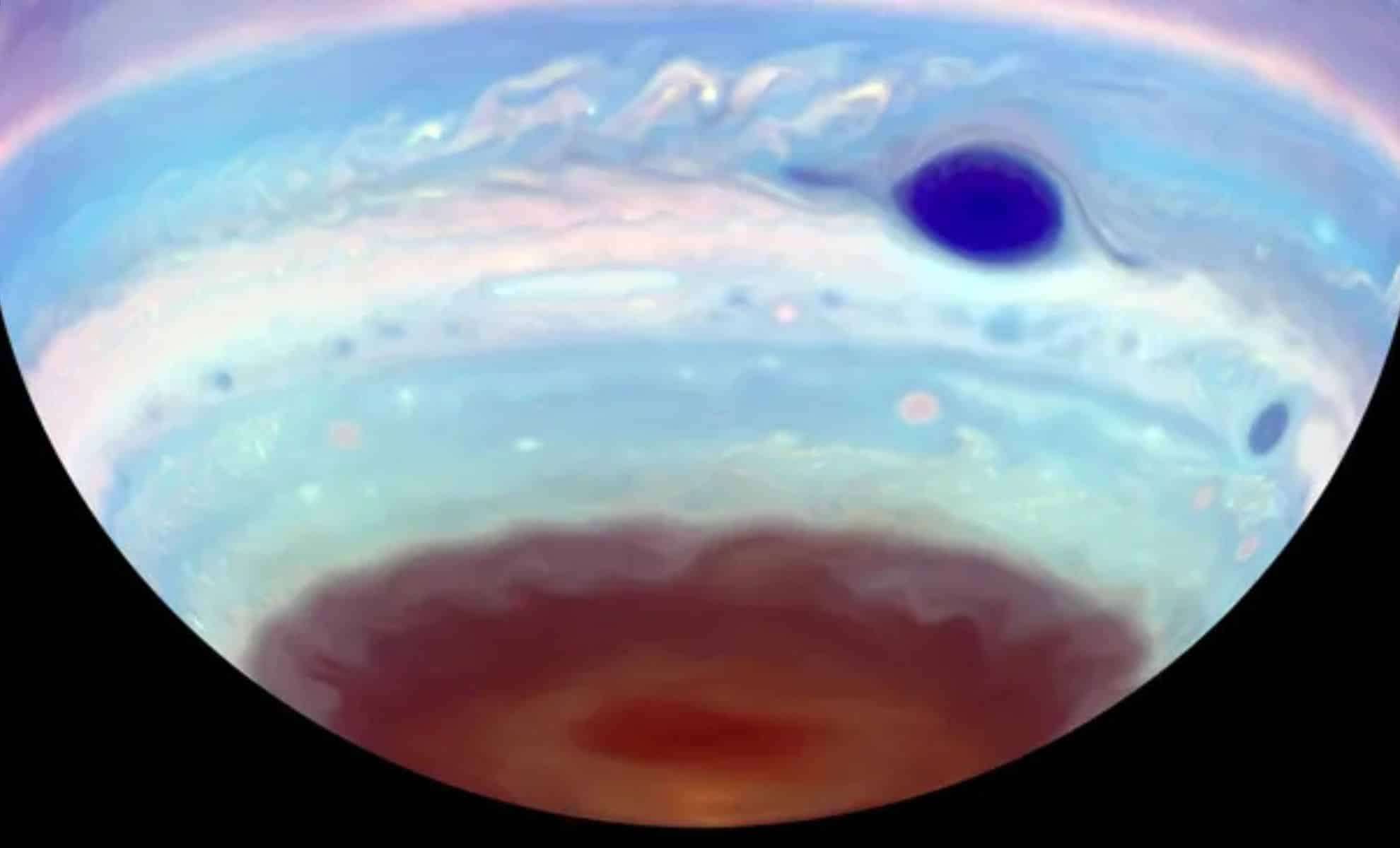
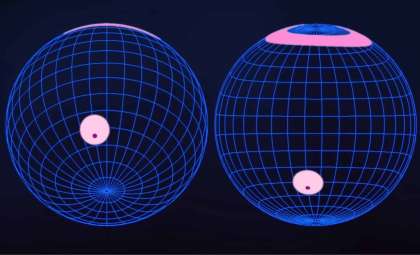
Researchers have recently uncovered that gigantic storms on Jupiter, comparable in size to Earth, are driven by intense magnetic vortices swirling high above the planet’s poles. These dramatic weather systems, visible as dark oval shapes in ultraviolet light, have perplexed scientists for years, but new analyses reveal the crucial influence of Jupiter’s magnetic environment in their formation. Utilizing observations from the Hubble Space Telescope alongside sophisticated atmospheric models, experts have linked these powerful magnetic tornadoes to the creation of dense, rotating cloud formations that absorb ultraviolet radiation, giving rise to the distinct dark ovals seen encircling the gas giant.
Magnetic Tornadoes Powering Storm Activity on Jupiter
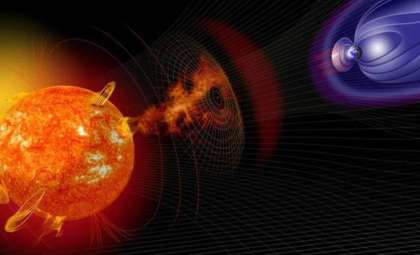
Central to this breakthrough is the discovery of how Jupiter’s colossal magnetic field interacts with its swirling atmosphere. Boasting a magnetic intensity over ten times stronger than Earth’s, Jupiter’s field spawns turbulent vortices near its polar regions, commonly dubbed magnetic tornadoes. These intense rotating structures agitate the planet’s upper atmosphere, triggering the emergence of dark oval storm systems that dominate the polar skies. Unlike Earth’s storms driven primarily by thermal and pressure fluctuations, Jupiter’s giant storms are largely shaped by magnetic forces. Undergraduate researcher Troy Tsubota from UC Berkeley commented, “These OPAL images were a treasure trove for us.” His team harnessed detailed Hubble imagery to directly associate Jupiter’s magnetic activity with the development of these enormous, spiraling storm systems.
This revelation marks a pivotal step in deciphering how the gas giant’s magnetic field powers its meteorological phenomena. The findings highlight the intricate connections between magnetism and atmospheric behavior on Jupiter, offering fresh perspectives on storm generation processes not only for our neighboring planets but also for understanding magnetic influences on giant planets like Saturn and distant exoplanets sharing similar magnetic characteristics.

Vortex Mechanics Behind Jupiter’s Gigantic Storms
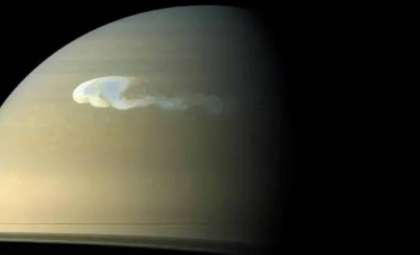
The formation of these Earth-scale storms is deeply tied to complex vortex phenomena driven by Jupiter’s magnetic outgoing forces. The magnetic tornadoes near the poles stir massive cyclones in the atmosphere that trap thick layers of haze, seen as the dark ovals in ultraviolet observations. Notably, researchers discovered that the haze within these storm systems is about 50 times denser than in other parts of the Jovian atmosphere. Xi Zhang, a planetary scientist affiliated with UC Santa Cruz, explains, “The concentration of haze inside the dark ovals is remarkably higher, implying vortex-driven dynamics play the key role rather than chemical reactions from high-energy particle interactions.” This challenges earlier assumptions that particle-induced chemistry was the main cause for the dark oval appearance and instead points to magnetic vortex dynamics as the dominant mechanism.
Unraveling these vortex-driven processes adds significant depth to the understanding of how magnetic fields can dictate atmospheric conditions on planets with substantial magnetospheres. Such insight is crucial not only for analyzing Jupiter’s weather but also for extrapolating atmospheric behavior on other magnetically active worlds, including potential exoplanets where similar storm formation mechanisms could be at work.
Expanding Horizons in Planetary Weather Research
Identifying magnetic tornadoes as the drivers behind massive storms on Jupiter paves the way for new research directions in planetary atmospheres. This work illuminates how magnetic forces shape weather patterns profoundly, influencing not just Jupiter but potentially other gas giants and exoplanets with powerful magnetic fields. Insights like those presented by Zhang about the formation of thick haze via vortex activity offer important clues to atmospheric dynamics across diverse planetary systems.
The study also emphasizes the vital role of advanced instruments such as the Hubble Space Telescope, which enable scientists to observe distant planetary atmospheres in unprecedented detail. These observations support more precise models of weather on alien worlds, enhancing predictions about atmospheric behavior far beyond our solar neighborhood. Increasing our grasp of how magnetism influences weather unveils exciting avenues to explore the vibrant and varied environments populating the cosmos.
- Categories:
- Astronomy






0 comments
Sign in to Comment