
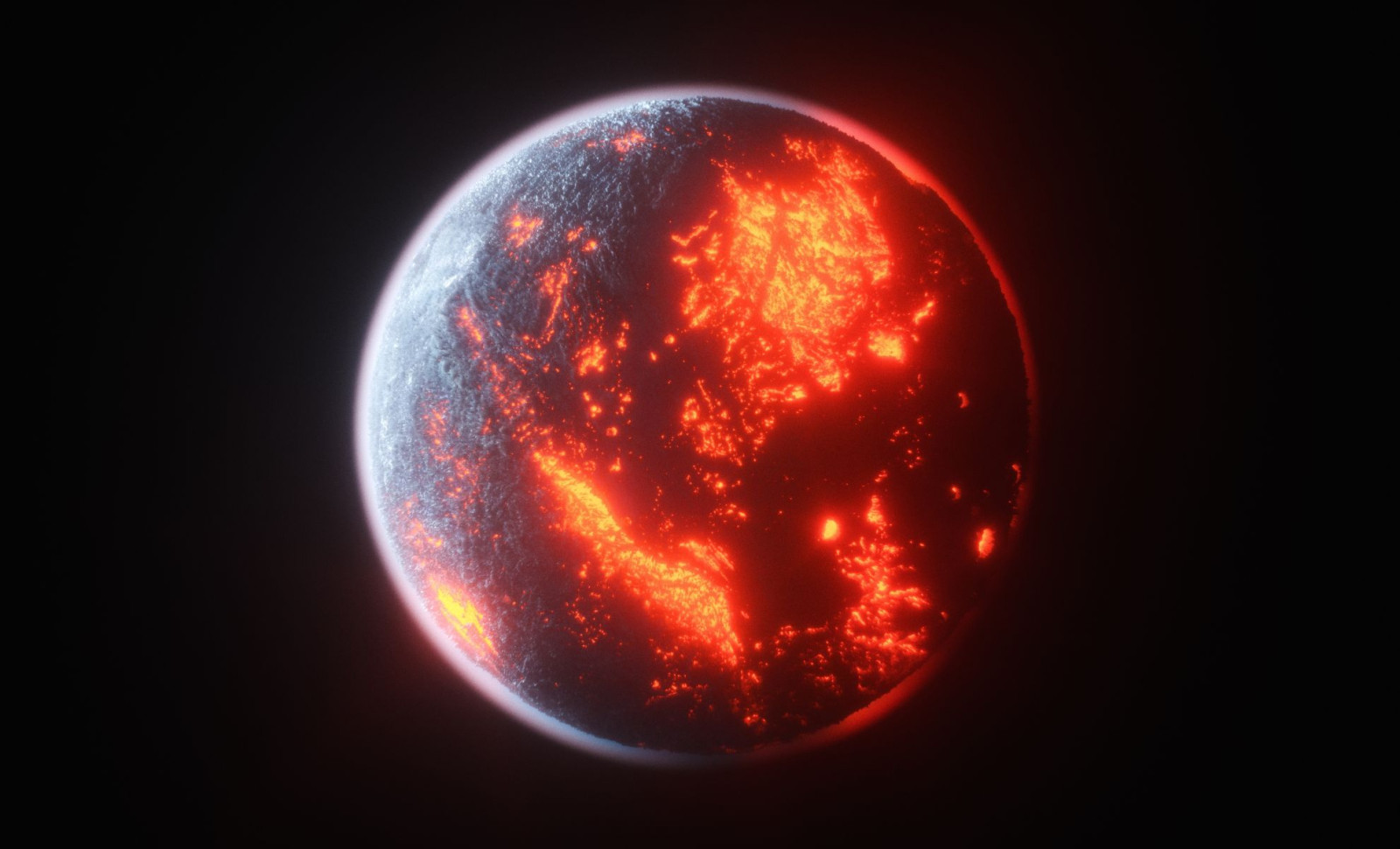
TOI-561 b is a rocky exoplanet with about double Earth's mass, orbiting extremely close to its star—approximately 40 times nearer than Mercury is to our Sun. Previously, scientists thought such a scorching proximity would strip the planet of any atmosphere.
However, new insights from the Carnegie Institution for Science reveal this super-Earth may not be an airless rock. The observations were made with the James Webb Space Telescope's powerful Near-Infrared Spectrograph (NIRSpec), which detected emissions from the planet’s illuminated side.
Surprising Atmospheric Clues from Emission Spectra
The research team harnessed JWST’s NIRSpec instrument to capture infrared light between 3 to 5 microns emanating from TOI-561 b’s dayside. They observed the system before, during, and after the planet’s secondary eclipse—when it moves behind its star—allowing them to isolate the planet's thermal glow.


The detected dayside temperature was approximately 1,800 degrees Celsius (3,200 °F), notably cooler than the expected near 2,700 degrees Celsius (4,900 °F) if the planet lacked an atmosphere.
According to The Astrophysical Journal Letters, models assuming no atmosphere or a thin rock-vapor layer predicted a much hotter dayside. Instead, the observations align with scenarios including a volatile-rich atmosphere composed of gases like water vapor, oxygen, and carbon dioxide. Anjali Piette, co-author and physicist from the University of Birmingham, explained:
“Strong winds would cool the dayside by transporting heat over to the nightside. Gases like water vapor would absorb some wavelengths of near-infrared light emitted by the surface before they make it all the way up through the atmosphere. It’s also possible that there are bright silicate clouds that cool the atmosphere by reflecting starlight.”
Lava Ocean Interacting with the Atmosphere
It’s believed that TOI-561 b is enveloped by a planet-wide magma ocean, fostering a dynamic interplay between its molten surface and overlying atmosphere. University of Groningen’s co-author Tim Lichtenberg described the possibility of an “equilibrium between the magma ocean and the atmosphere,” where gases continuously cycle between escaping into space and being reabsorbed by the liquid rock.
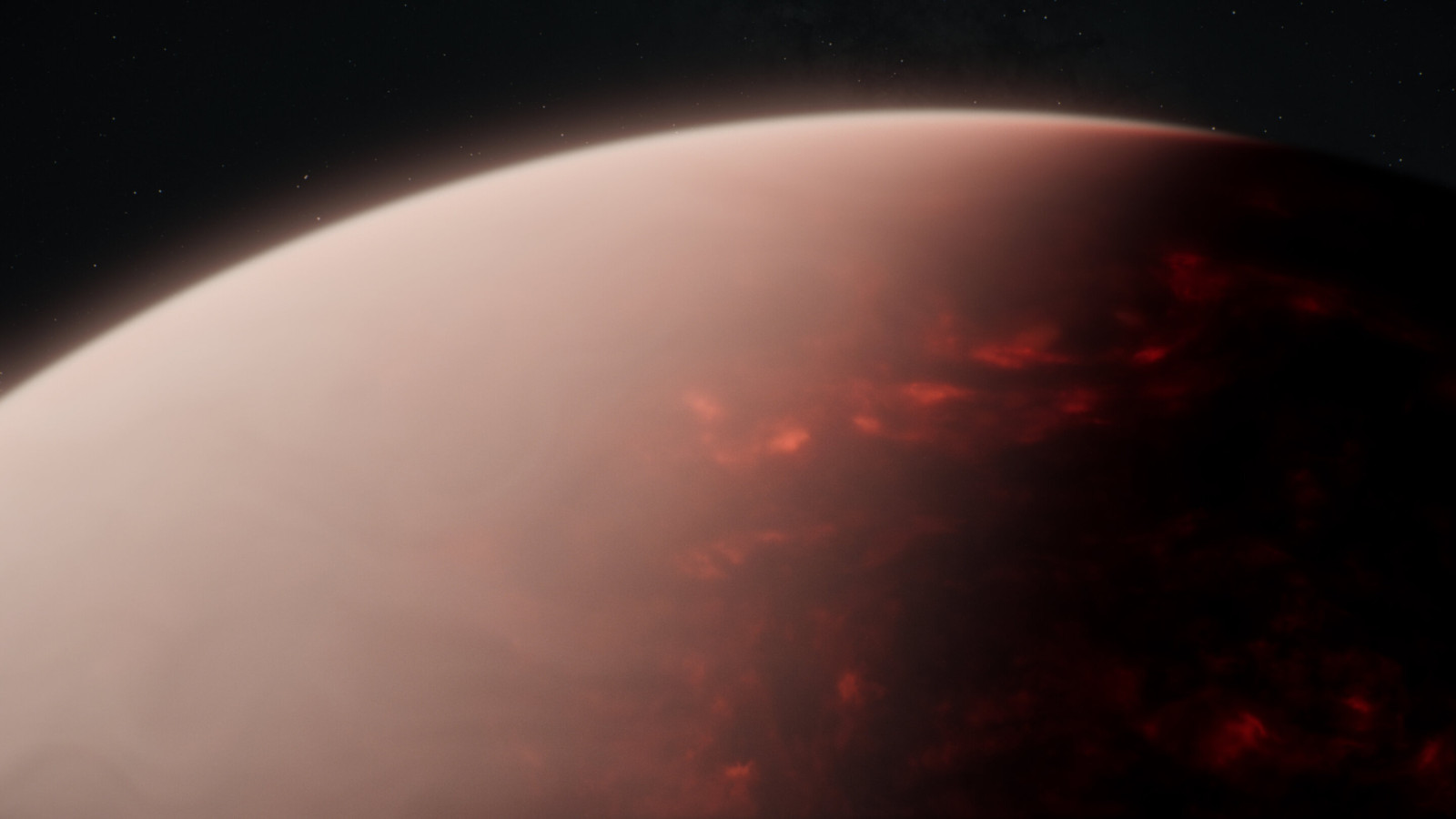
This ongoing exchange could explain how the planet sustains an atmosphere despite extreme stellar radiation.
“This planet must be much, much more volatile-rich than Earth to explain the observations,” Lichtenberg observed, describing it as “really like a wet lava ball.”
Another intriguing feature is the planet’s low density. Lead author Johanna Teske shared that TOI-561 b was initially targeted due to its notably lower density compared to similar planets, hinting at either a smaller iron core or a lighter rocky mantle. However, neither explanation alone matched the data, with the atmosphere emerging as the critical factor.
A Window into an Ancient Galactic Past
TOI-561 b orbits a star that is twice as old as the Sun, located within the Milky Way’s thick disk—a portion of our galaxy characterized by stars with distinct chemical signatures. This implies the planet formed in a very different chemical environment than Earth and other solar system worlds.
The host star is also notably low in iron, adding complexities to understanding the planet’s composition and evolution. The combination of an ancient star, iron scarcity, and an enduring atmosphere makes TOI-561 b a compelling subject for investigations into planetary formation during the early universe.
This research is based on observations from JWST’s General Observers Program 3860, which monitored the system continuously for over 37 hours. During this time, TOI-561 b completed nearly four orbits, providing an unprecedented glimpse of a planet that challenges previous assumptions. As Teske reflected, “this new data set is opening up even more questions than it’s answering.”
- Categories:
- Space








0 comments
Sign in to Comment