
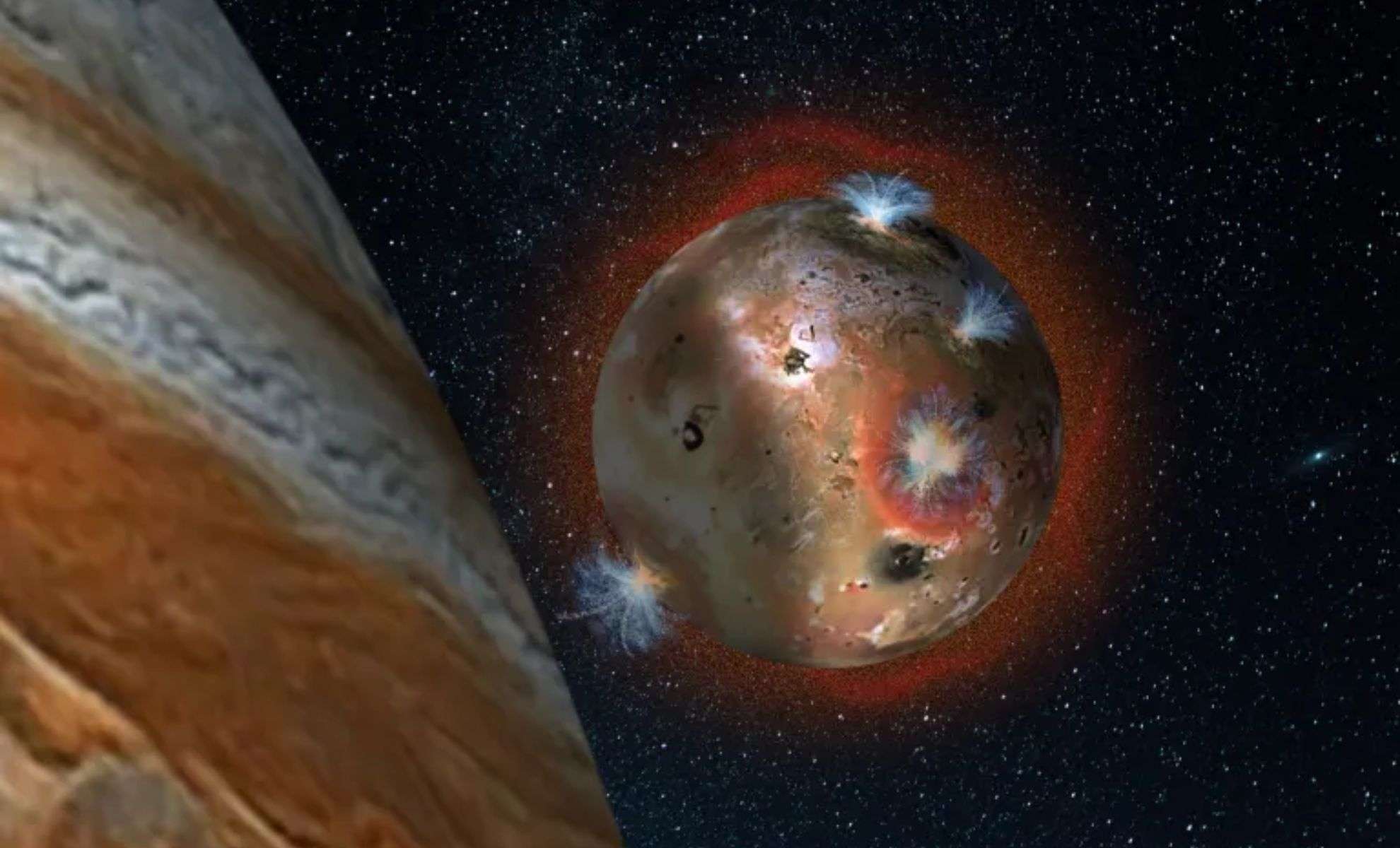
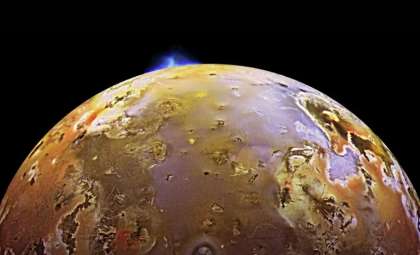
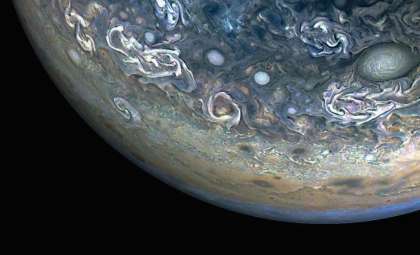
NASA has released an extraordinary photograph of Io, one of Jupiter’s most volcanic moons, captured by the Juno spacecraft during its close approach on December 30, 2023. This highly detailed image offers a stunning perspective on Io’s lava-rich surface and highlights the phenomenon known as Jupitershine, where reflected sunlight from Jupiter lights up Io’s nighttime hemisphere.
An Uncommon and Striking Light Display
Captured from roughly 930 miles (1,500 kilometers) above Io, this snapshot reveals intricate features of the moon’s volcanically active landscape. This flyby constitutes a significant milestone in the extended Juno mission, which continues to gather valuable information well beyond its initial 2021 completion. In its new orbit, the probe is enabling closer inspections of Jupiter’s moons like Io, renowned for its intense volcanic behavior.
Illumination of Io’s night side comes from Jupitershine, sunlight reflected off the gas giant Jupiter. This natural lighting effect allowed Juno to capture vivid imagery of Io’s otherwise shadowed surface, revealing volcanic features that would typically remain concealed. The sharp contrast between the brightly volcanic regions and the subtle glow on the moon’s left side presents a breathtaking and dramatic portrait of Io’s volatile environment.

The Solar System’s Most Eruptive World
Io is renowned as the most volcanically active object in our solar neighborhood, boasting hundreds of volcanoes that occasionally shoot lava plumes as high as 500 kilometers into space. Unlike Earth’s volcanic eruptions, Io’s volcanic activity stems from powerful tidal forces caused by Jupiter’s enormous gravitational pull, along with gravitational tugs from the planet’s other moons. This continuous tidal flexing generates immense internal heat, keeping Io’s surface in constant geological turmoil.
This recent image highlights Io’s most prominent volcanic sites, giving scientists fresh data about how volcanic events occur across the moon. These insights are crucial for understanding volcanic phenomena beyond Earth and the dynamic forces that mold such a uniquely restless world.
New Revelations from Juno’s Extended Exploration
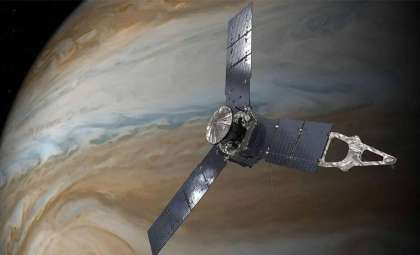
This striking view of Io is just one element of Juno’s comprehensive mission to probe Jupiter and its moons. Since its 2011 launch, the spacecraft has conducted multiple close passes of Jupiter, delivering detailed data on the planet’s magnetic environment, atmospheric conditions, and satellite system. Following the completion of its main mission in 2021, Juno has embarked on an extended campaign enabling closer inspections of Jupiter’s moons, revealing insights into their surfaces, magnetic fields, and interiors like never before.
The recent Io encounter forms part of Juno’s continuing study of not only the moon itself but also the intricate gravitational interactions within the Jovian system. By investigating the gravitational dance between Jupiter and its satellites, researchers are advancing the understanding of the planet’s dynamic surroundings and their impact on the formation and evolution of these celestial bodies.
Peering into Io’s Fiery Terrain
The volatile surface of Io continues to intrigue both researchers and space enthusiasts alike. With persistent volcanic eruptions, its landscape is ever-evolving, shaped by powerful forces beneath its crust. The latest image from Juno offers more than just a striking picture; it supplies essential data that will aid scientists in monitoring volcanic activity over extended periods.
This observation marks a key advance in planetary science, demonstrating the power of missions like Juno to deepen our understanding of extreme planetary environments. As upcoming missions such as the Europa Clipper and JUICE prepare to investigate other moons of Jupiter, the insights gained from this detailed look at Io will be vital for shaping future discoveries within the Jovian system.





0 comments
Sign in to Comment