
A stunning new investigation has uncovered a remarkable natural phenomenon: land-dwelling creatures that have traversed the vast Pacific Ocean, covering an extraordinary distance of 8,000 kilometers, to establish themselves on a new island chain. This journey ranks among the longest ocean-spanning migrations ever recorded for a vertebrate species, excluding those facilitated by human intervention.
Published in the journal Proceedings of the National Academy of Sciences, research highlights that these resilient animals now inhabit the Fijian archipelago. Fascinatingly, they possess a genetic connection to species native to the American continents, sparking debate over how such an extensive ocean crossing was possible.
While earlier hypotheses suggested these species might have arrived via ancient land bridges from millions of years ago, the new findings propose an alternative: rafting across the ocean.

How Storms and Sea Currents Enabled Oceanic Transport
The study offers a surprising explanation for the animals’ extraordinary voyage. Lead scientist Simon Scarpetta, an evolutionary biology expert, suggests the animals didn’t intentionally embark on this crossing.
Instead, it is likely they were swept off their native land by a powerful cyclone that uprooted the trees hosting them. These uprooted trees, carried by strong ocean currents, acted as natural rafts, ferrying the creatures across the Pacific to their new habitat.
Scarpetta notes that survival on such a journey wasn't reliant on chance alone. The animals, including ancient iguanas, are known for their remarkable endurance in extreme conditions, capable of withstanding severe drought and starvation—key traits that helped them survive the perilous transit.
Moreover, the floating vegetation provided essential nourishment, allowing the animals to feed during their extended time at sea.
Ancient Iguanas: Masters of Endurance
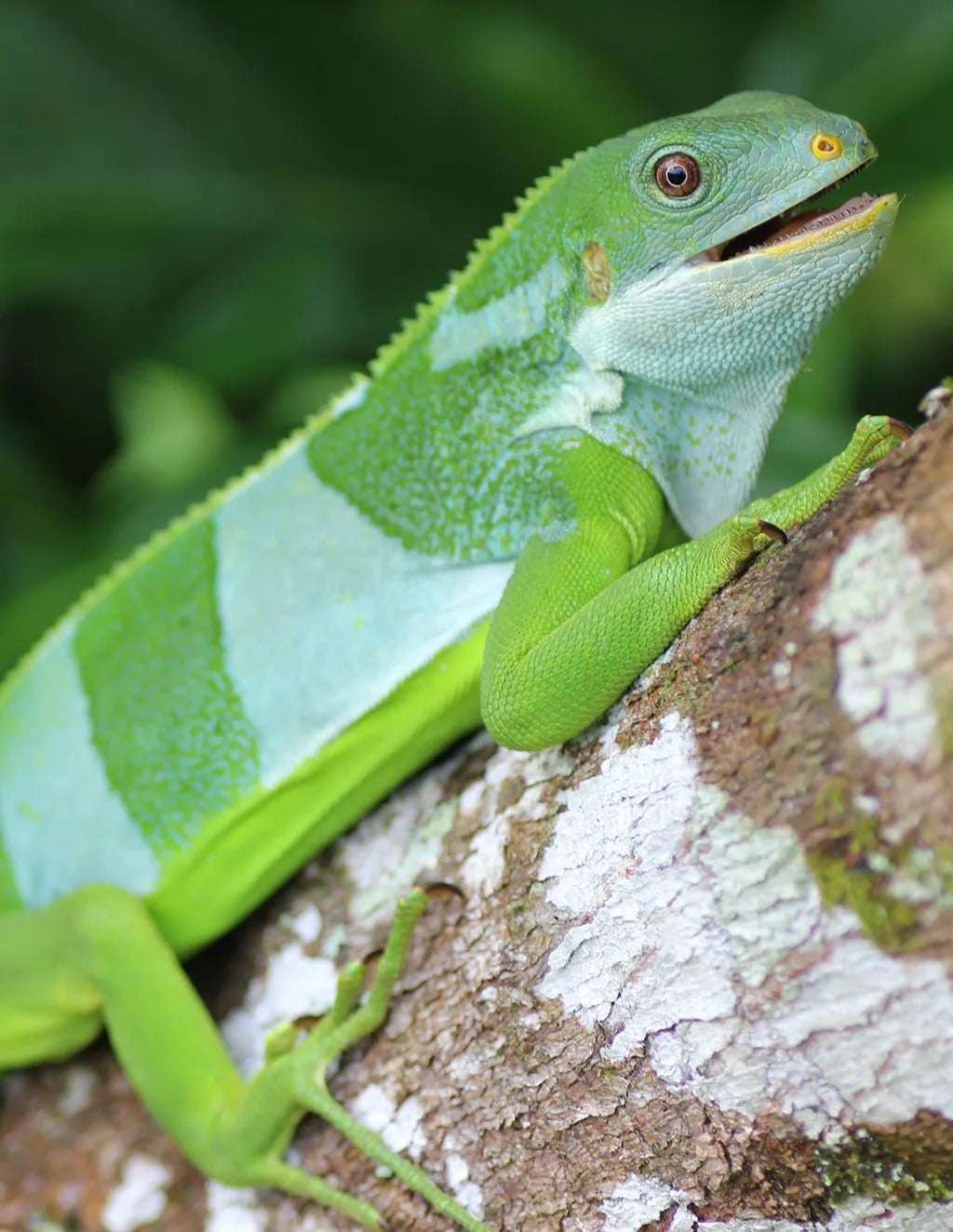
Central to this discovery are prehistoric iguanas, herbivorous reptiles originally inhabiting arid deserts. These tough creatures are adapted to survive lengthy periods without food or water—qualities crucial for enduring the oceanic passage.
According to Scarpetta, these survival capabilities enabled the iguanas to tolerate dehydration and starvation throughout the trek. Their genetic ties to species in the Americas further add intrigue to their epic migration.
While drifting on mats of uprooted plants, these iguanas likely fed on the surrounding plant debris, conserving energy to persevere during their journey.
The Unmatched Scale of This Oceanic Voyage
The iguanas’ trans-Pacific expedition is undoubtedly extraordinary, though it’s not the first known instance of animals navigating expansive water bodies. Over 36 million years ago, primates journeyed across the Atlantic Ocean, spanning roughly 1,000 kilometers.
However, the prehistoric iguanas eclipsed this feat, setting the record for the longest known transoceanic migration in animal history. This comparison emphasizes the exceptional nature of their journey.
Unlike the primates who may have had some assistance from floating debris, the iguanas’ survival underscores their extraordinary ability to thrive despite the formidable challenges presented by prolonged ocean voyages far from their original habitats.
- Categories:
- Science





0 comments
Sign in to Comment