
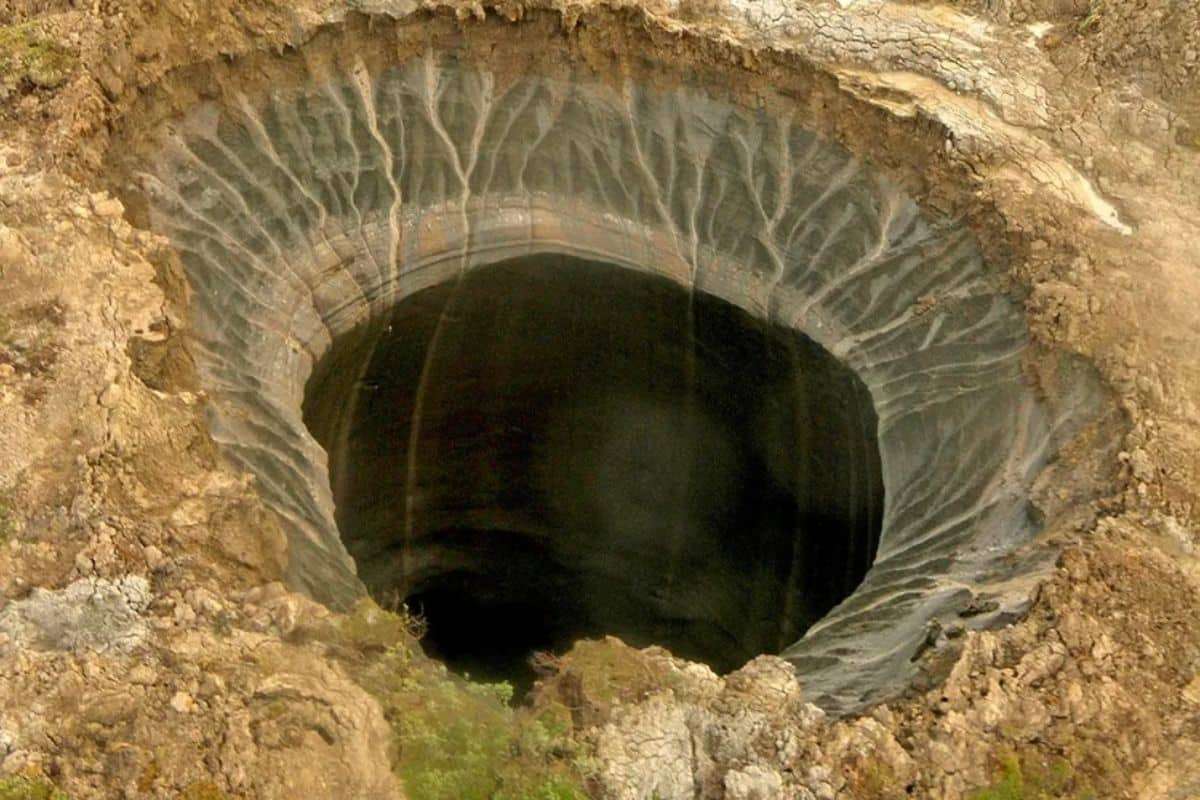
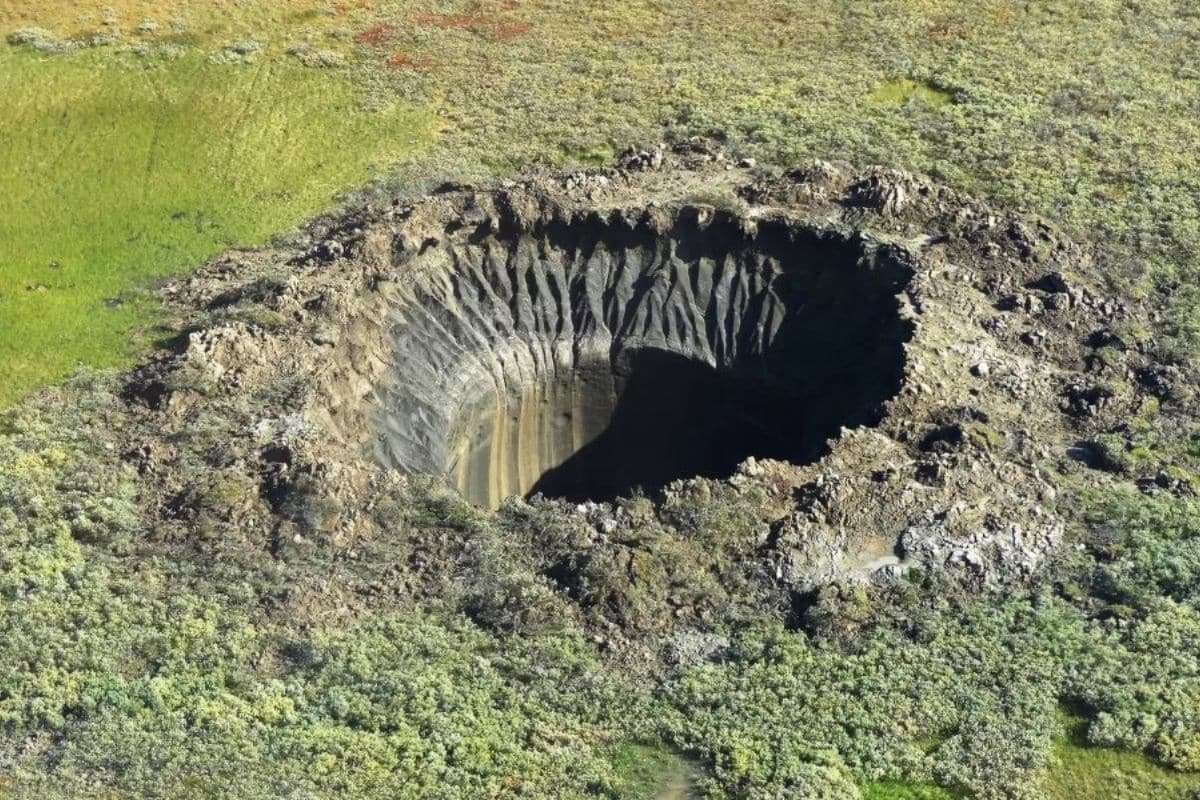
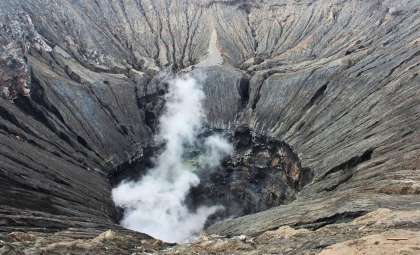
A colossal crater measuring approximately 165 feet deep has been uncovered in Siberia's Arctic tundra, prompting concern among researchers. The immense depression was accidentally identified by a film crew conducting aerial footage for Vesti Yamal TV. Captured on camera, the dramatic visuals highlight the immense proportions of the crater, described by experts as a “remarkable discovery.”
What Triggered the Explosion?
Newsweek reports that this crater likely formed due to an explosive release of methane that had accumulated beneath thawing permafrost layers. This phenomenon starts when formerly frozen ground—permafrost—begins to melt as temperatures increase.
Decomposition of organic matter trapped in the soil generates methane gases. "Gas-charged cavities develop within the permafrost," explained Vasily Bogoyavlensky, a senior scientist at the Russian Academy of Sciences.

"Put simply, these are hollow spaces filled with pressurized gas." When enough methane builds up, it can erupt violently, leaving behind a large crater.
Significance of Crater Number 17
This latest find is the biggest crater identified so far on the Yamal Peninsula, a region that has increasingly drawn scientific attention since the first major crater was discovered there in 2014. That initial crater measured 130 feet across. Since then, numerous similar formations have been recorded.
Designated crater number 17, this new depression marks the seventeenth of its kind located on the Yamal Peninsula since 2014.
Evgeny Chuvilin, a chief investigator at the Skolkovo Institute of Science and Technology who visited the site, remarked, “The scale and magnitude we observed are truly awe-inspiring. These formations are manifestations of powerful natural phenomena.”
Implications for Climate and Infrastructure
Experts are increasingly alarmed about the environmental and structural hazards posed by these methane eruptions.
The Yamal area contains the world’s largest natural gas reserves, and such ruptures are becoming more frequent due to warming climates. With rising global temperatures, the rapid thaw of permafrost releases escalating amounts of methane.
This thawing not only threatens the stability of the soil but also jeopardizes buildings and roads, which can collapse or crack as the ground becomes unstable.
What Lies Ahead for the Arctic?
The total number of methane-filled craters scattered across the Arctic tundra is still uncertain; however, scientists anticipate many more may form as thawing accelerates. According to The Siberian Times, as of 2017, more than 700 areas on Yamal show signs of the ground bulging, indicating potential methane build-up beneath the surface.
“The precise count of such craters in the Arctic remains unknown,” the report stated. This newly uncovered crater is a powerful reminder of the drastic transformations occurring in the Arctic environment and the increased risks linked to methane release.
- Categories:
- Science





0 comments
Sign in to Comment