
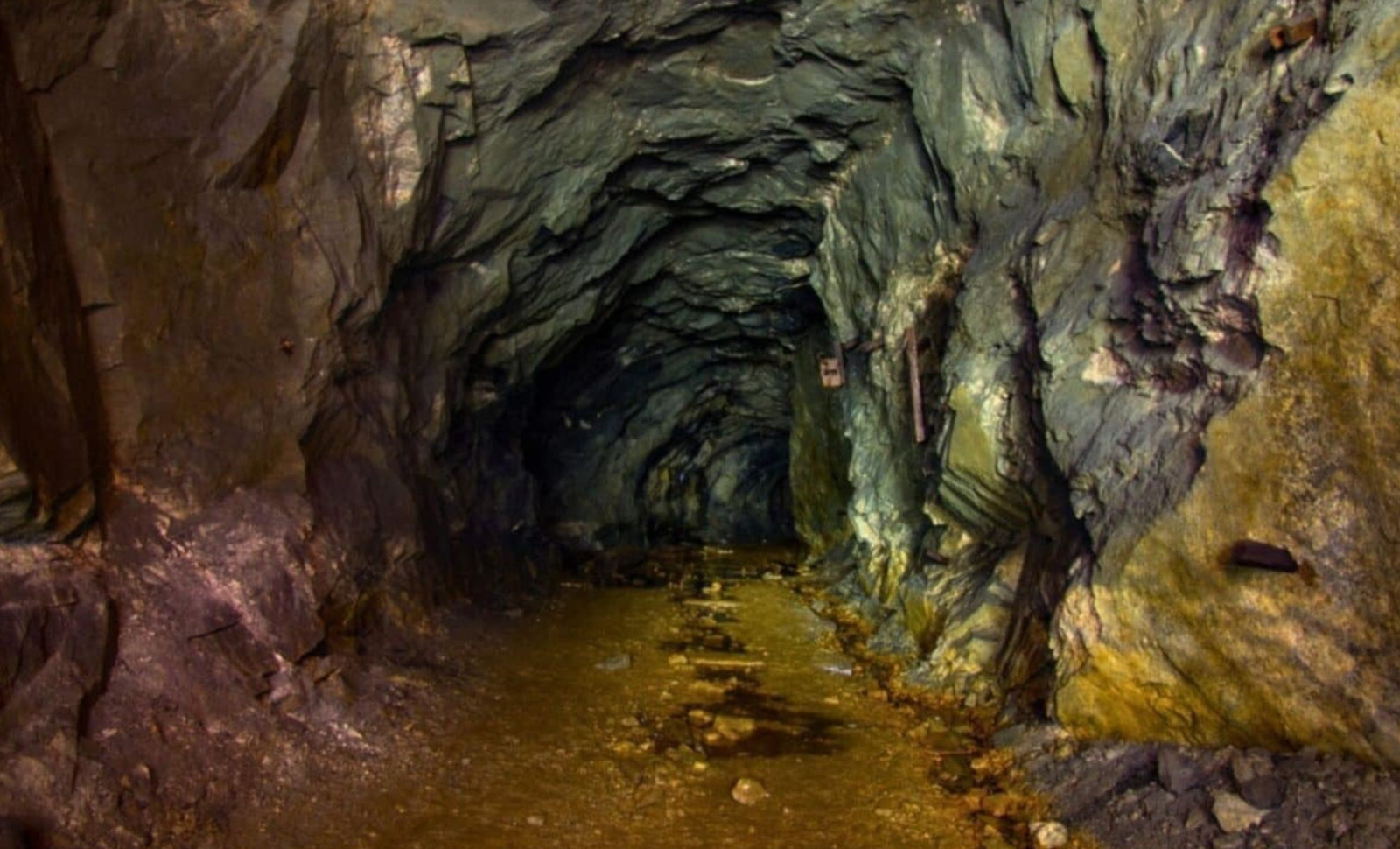
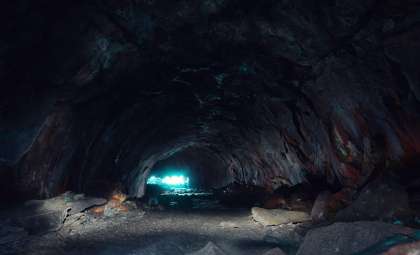
The explorers faced a narrow underwater passage, with the cave ceiling barely fifteen centimetres above the water. To proceed, they had to dive into the darkness and maneuver carefully. Beyond this point lay a hidden chamber untouched for approximately five centuries.
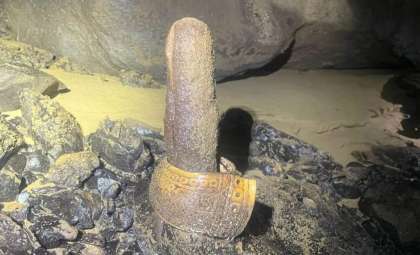
In September 2023, Russian cave expert Yekaterina Katiya Pavlova teamed up with local guide Adrián Beltrán Dimas to chart the Tlayócoc cave system, located over 2,380 metres above sea level in Mexico’s Sierra de Guerrero. Pushing beyond the previously mapped boundary, they entered a submerged, unexplored section. Inside this secondary chamber, they found items deliberately placed atop stalagmites — patterns too precise to be accidental. Initially, Pavlova assumed these were discarded waste. “We thought it was trash at first,” she later explained in a translated statement. However, they proved to be far more significant.
The discovered objects turned out to be ritual artifacts from pre-Hispanic times. They appear linked to the Tlacotepehua, a group recorded only in 16th-century colonial documents with no confirmed archaeological trail. This pristine cache, untouched by looters or water damage, offers a rare glimpse into Postclassic Mesoamerican cultural networks.

Fourteen Pristine Artifacts in Context
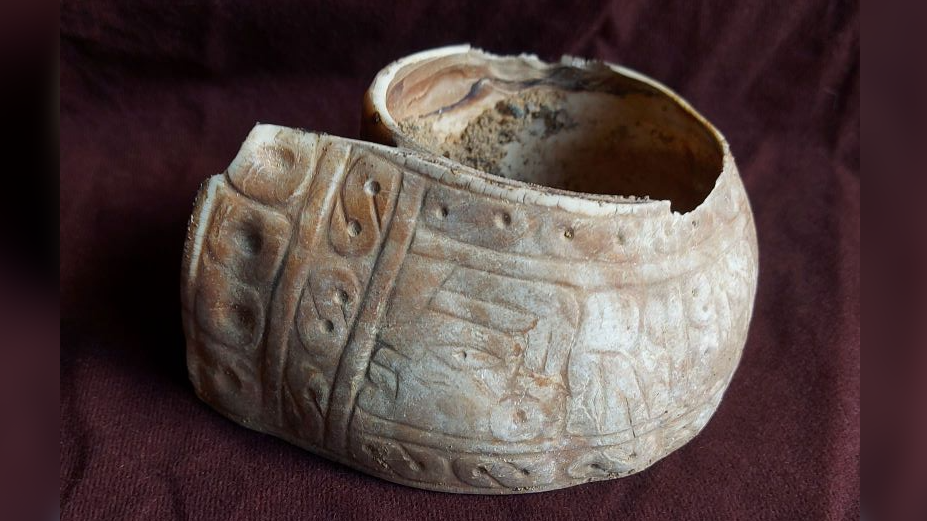
The INAH report lists fourteen artifacts from this chamber: three shell bracelets carved from the giant marine snail Triplofusus giganteus, a fragment of another bracelet, a marine conch from the genus Strombus, a small 3.2-cm piece of charred wood, and eight stone discs—two intact and six broken.
Decorative motifs include the xonecuilli, an S-shaped design linked in Mesoamerican cosmology to Venus and calendrical symbolism. Other designs comprise zigzag lines, circular patterns, and profile faces interpreted as anthropomorphic, with one possibly representing Quetzalcoatl, the wind and fertility deity. The stone discs, averaging 9.5 centimetres in diameter and featuring edge perforations, resemble pyrite mirrors found at other ritual sites in the region.
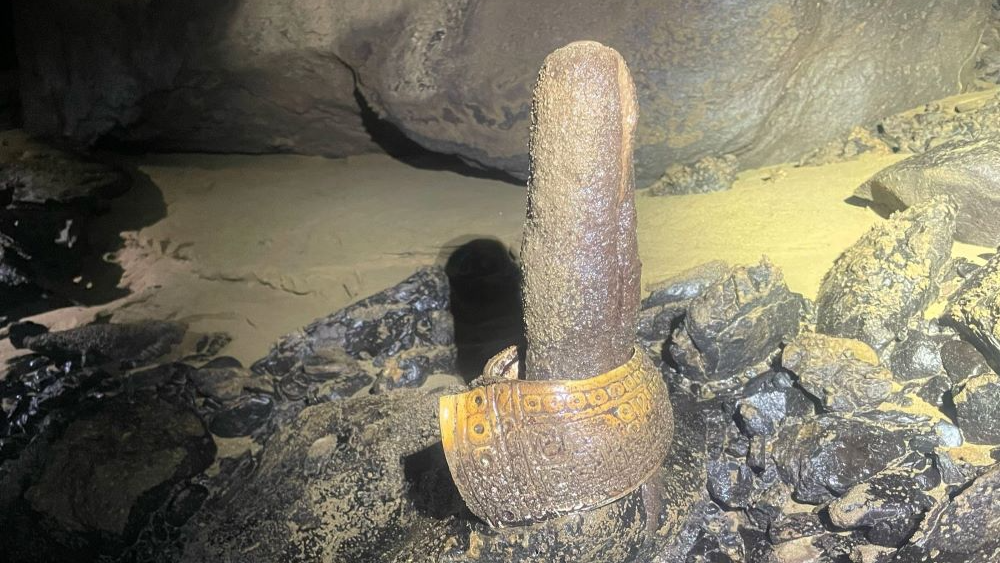
Researchers from INAH discovered that the stalagmites had been deliberately shaped in pre-Hispanic times to resemble rounded, phallic forms. The bulletin suggests this arrangement aligns with fertility rites conducted underground, where caves symbolized both entrances to the underworld and the earth’s womb. The chamber’s consistently humid and temperature-stable environment enabled exceptional preservation rarely seen in high-altitude excavations.
The artifacts date from the Postclassic era, approximately A.D. 950 to 1521. However, flowing water displaced some stone disc fragments before their 2024 assessment, complicating a complete spatial reconstruction.
An Enigmatic Group Mentioned Only in Historic Texts
The Tlacotepehua are known from 16th-century Spanish colonial writings as an Indigenous people inhabiting the Guerrero highlands, but archaeologists had never before connected physical artifacts or ritual sites to them.
INAH’s tentative attribution rests on two pillars: the cave’s geographic match to Tlacotepehua territory described in colonial accounts and the stylistic similarity of the artifacts to pieces from documented Guerrero sites. The bulletin also notes parallels to items found at El Infiernillo, another cave in Coahuayutla, and the Huastec region in Veracruz and San Luís Potosí. The Huastec, a Mayan-affiliated group distinct from other Maya peoples, incorporated marine symbolism and stone mirrors into their rituals.
The presence of marine shells at an altitude above 2,380 metres highlights long-distance trade networks linking highland Guerrero communities with coastal and Gulf regions. While stylistic resemblances to Huastec culture don’t confirm direct affiliation, they suggest that shared symbolic languages or active trade extended deeper inland than previously thought.
Introducing Archaeology to Carrizal de Bravo
Carrizal de Bravo, located at 2,397 metres in Leonardo Bravo municipality amid dense pine and oak forests, is home to Nahua-speaking descendants of semi-nomadic herders. According to INAH, their cultural history has been virtually unstudied.
The March 2025 site visit marked the first INAH archaeological expedition to Carrizal de Bravo. The team included archaeologists Cuauhtémoc Reyes Álvarez and Miguel Pérez Negrete from INAH Guerrero, accompanied by Universidad Autónoma de Guerrero historian Guillermina Valente Ramírez. Photographs and maps provided by Pavlova supplemented official records.
All fourteen artifacts have been recorded in INAH’s national heritage database and currently remain under the care of local community leaders. The institute announced forthcoming plans for a heritage conservation program at Carrizal de Bravo and an evaluation of preservation needs by its Guerrero restoration division, though no timeline has been given.
Conservation Challenges and Future Research
The team has yet to decide whether the Tlayócoc objects will be removed for scientific conservation or preserved in situ. On-site preservation risks further alteration due to the cave's water movement, which has already displaced some stone discs. Extraction poses logistical hurdles, requiring careful navigation of the flooded entrance, delicate handling of fragile shell and stone artifacts, and overcoming the site's high altitude and remote location.
Additional explorations within the Tlayócoc cave system are on hold until formal environmental and cultural protection measures are established. The charred wood fragment has not been analyzed via radiocarbon dating, which could provide a more precise timeline for the deposit.
As of early 2026, the artifacts remain safeguarded by the Carrizal de Bravo community, INAH’s conservation assessment is pending, and further cave exploration remains paused.
- Categories:
- News







0 comments
Sign in to Comment