
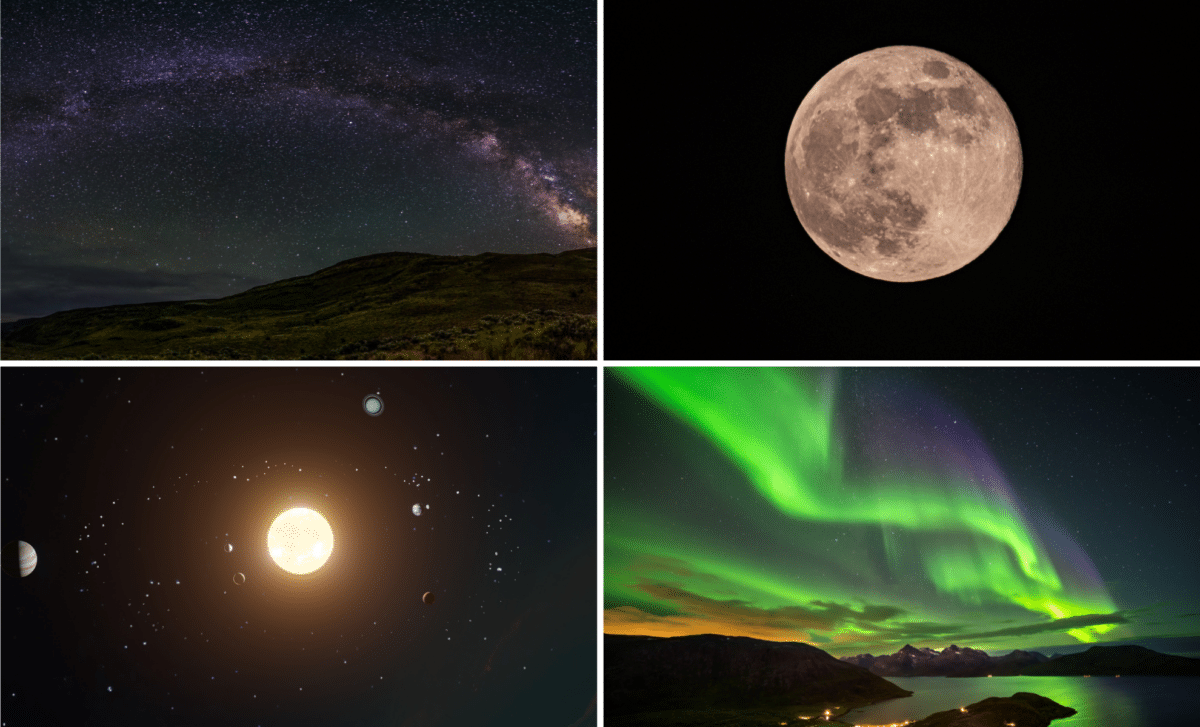
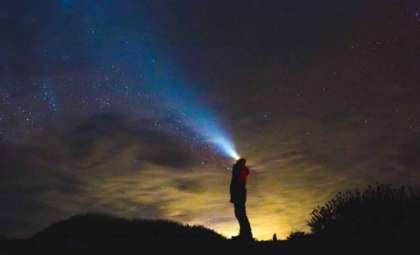
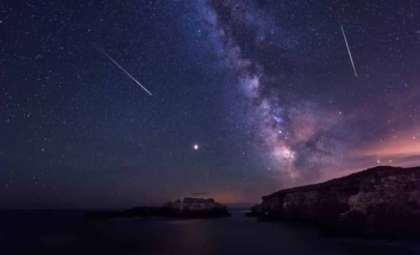
As March 2026 progresses, stargazers will be treated to an exciting lineup of astronomical wonders, including rare planetary pairings, exceptional conditions for deep-sky exploration, and a potential surge in auroral activity. These events present fantastic chances to experience the beauty of the cosmos firsthand.
Venus and Saturn Showcase a Rare Evening Alignment
Around March 8, look toward the western sky just after sunset to witness Venus and Saturn closely positioned for a planetary conjunction—an event where two planets appear near each other from Earth’s viewpoint.
This viewing opportunity lasts approximately 45 minutes after dusk, so timing is key. Venus shines brilliantly and points the way to the more subdued glow of Saturn. Even a simple pair of binoculars can help distinguish the gap between these two planets. The closest approach happens on March 7–8, but the duo remains nearby for several evenings around this timeframe.

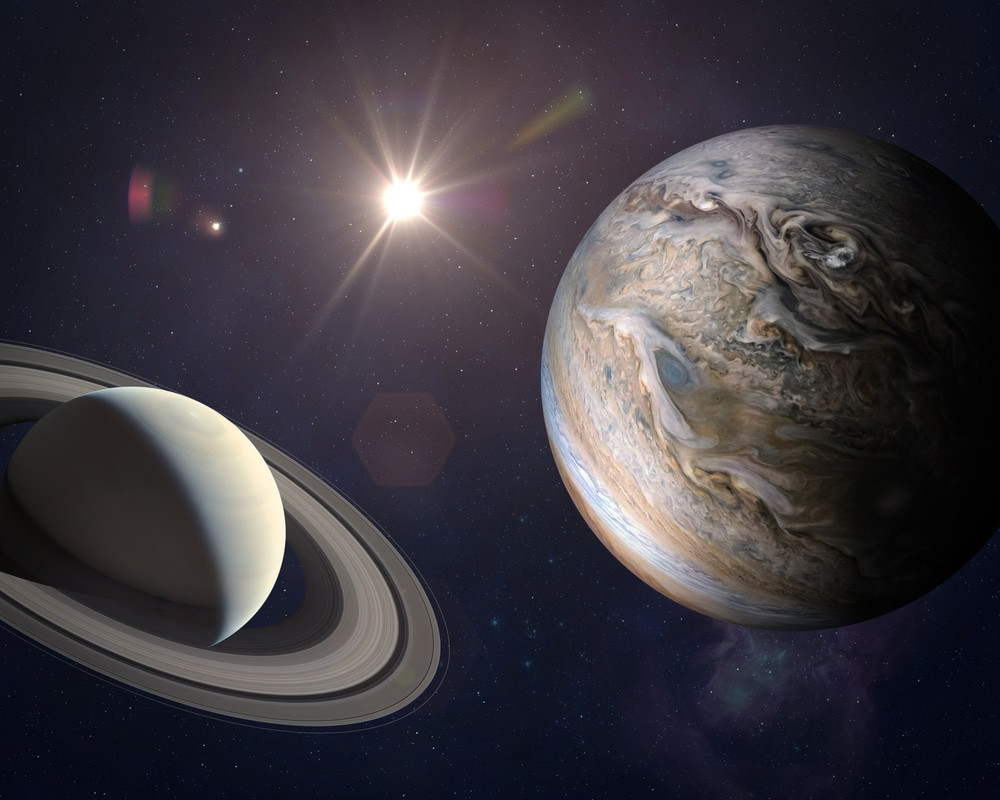
Since both planets appear low on the horizon, choosing a site with a clear, unobstructed western view and minimal atmospheric interference will enhance the experience. While city viewers will spot Venus easily, those in dark areas will have better luck picking out Saturn. Such bright-planet conjunctions are infrequent, making this a special event for astronomy enthusiasts and casual observers alike.
New Moon Brings Outstanding Opportunities for Deep-Sky Observations
March 19 marks the new moon phase, during which the moon’s illuminated face is turned away from Earth. This results in darker nights that significantly enhance visibility of faint celestial objects.
With darker skies, stargazers can explore star groups, nebulae, and distant galaxies more readily. A popular target is the Beehive Cluster in Cancer, which appears as a faint patch to the naked eye under dark conditions. Binoculars reveal dozens of individual stars within this cluster.
Additionally, the evenings surrounding the new moon are prime for viewing zodiacal light—a subtle, triangular glow caused by sunlight reflecting off tiny dust particles in the inner solar system. This phenomenon is more noticeable during late winter and early spring nights.
National Geographic highlights mid-March as an excellent period for spotting zodiacal light, especially in rural locations far from artificial illumination. Travelers to dark-sky areas during this time may enjoy some of the best stargazing all month.
Spring Equinox Sparks Potential for Enhanced Aurora Displays
The Spring Equinox occurs at 10:46 a.m. ET on March 20, when day and night lengths nearly equalize globally. For the Northern Hemisphere, this marks the official start of the spring season.
This equinox period is also linked to heightened chances of auroral activity. The alignment of Earth's magnetic field during this time allows solar wind particles to interact more effectively with the magnetosphere, producing the vibrant Aurora Borealis when charged particles collide with atmospheric gases.
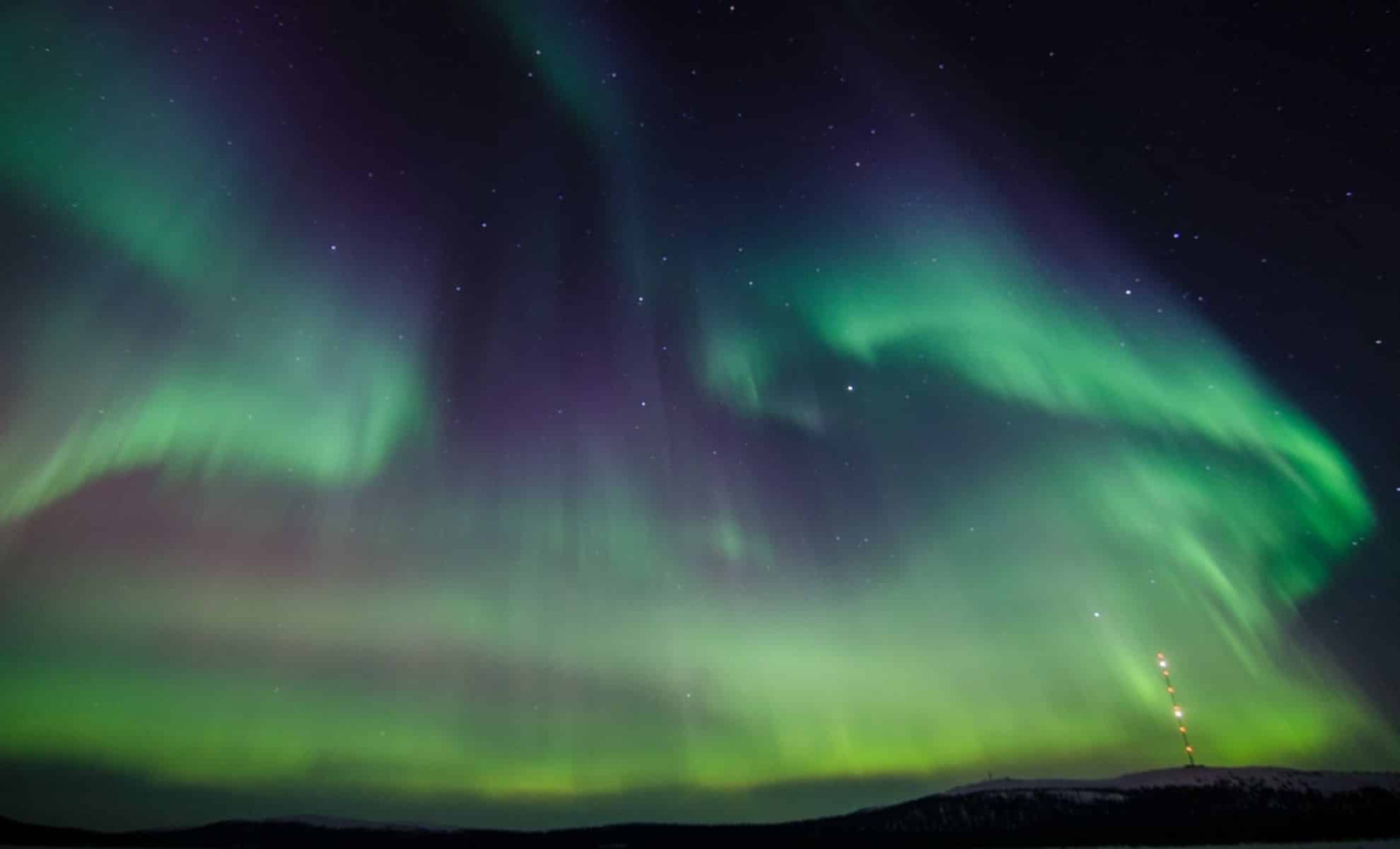
Areas like Alaska, northern Canada, and Scandinavia typically offer dependable aurora viewing. During stronger geomagnetic storms, however, the lights may extend to more southern regions such as the U.S. Great Lakes. March’s generally clearer skies in northern zones can improve visibility compared to the cloudier winter months.
Aurora enthusiasts should keep an eye on space weather forecasts around the equinox to maximize their chances of witnessing this breathtaking natural light show.
The Crescent Moon Aligns with the Pleiades Star Cluster
On the evening of March 22, a thin crescent Moon will appear near the famous Pleiades cluster, also known as the Seven Sisters, located in the Taurus constellation. This well-known cluster is easily spotted by both novice and seasoned stargazers.
The close approach happens shortly after twilight fades. For best viewing, look west about 60 to 90 minutes after sunset to see the Moon near the group of bright blue stars. Binoculars significantly enhance this view by revealing many stars invisible to the unaided eye.
At roughly 440 light-years away, the Pleiades is among the closest star clusters to Earth with relatively young stars in cosmic terms. The juxtaposition of the bright lunar crescent and sparkling star cluster creates a stunning scene often sought by photographers and astronomy hobbyists.
Because the Moon sets later than the cluster, early evening offers the optimal opportunity to appreciate both together.
Jupiter and the Moon Form a Brilliant Duo Late March
Another captivating event occurs on the nights of March 26 and 27, when Jupiter shines close to a gibbous Moon in the southwestern sky. These two celestial bodies will journey across the night sky together from evening till dawn.
Jupiter, one of the brightest lights visible from Earth, becomes even easier to identify near the Moon. Through binoculars or a small telescope, observers may glimpse Jupiter’s four largest moons—Io, Europa, Ganymede, and Callisto—lined up alongside the planet.
This conjunction is near the prominent Orion constellation, making it simple to spot surrounding stars. Observing over several hours reveals the Moon’s gradual movement relative to Jupiter as it follows its orbit around Earth.
Such events highlight the constant dynamic motion within our solar system, often unnoticed by naked-eye observers.
The Moon Occults Regulus to Cap the Month
Rounding out March, overnight from March 29 to 30, the Moon will approach Regulus, Leo’s brightest star.
In parts of Africa, Asia, and Europe, this event becomes a lunar occultation, where the Moon passes in front of Regulus and temporarily obscures it from sight. From these locations, Regulus will appear to vanish and then reemerge behind the lunar limb.
Observers in the U.S. won’t witness the full occultation but can enjoy the close proximity of the Moon and Regulus lighting up the night sky together.
Regulus is a massive blue-white star about 79 light-years away. Its brightness makes it a standout in spring nights, and its approach by the lunar surface provides a memorable celestial moment to conclude the month’s skywatching events.
- Categories:
- Astronomy



0 comments
Sign in to Comment