
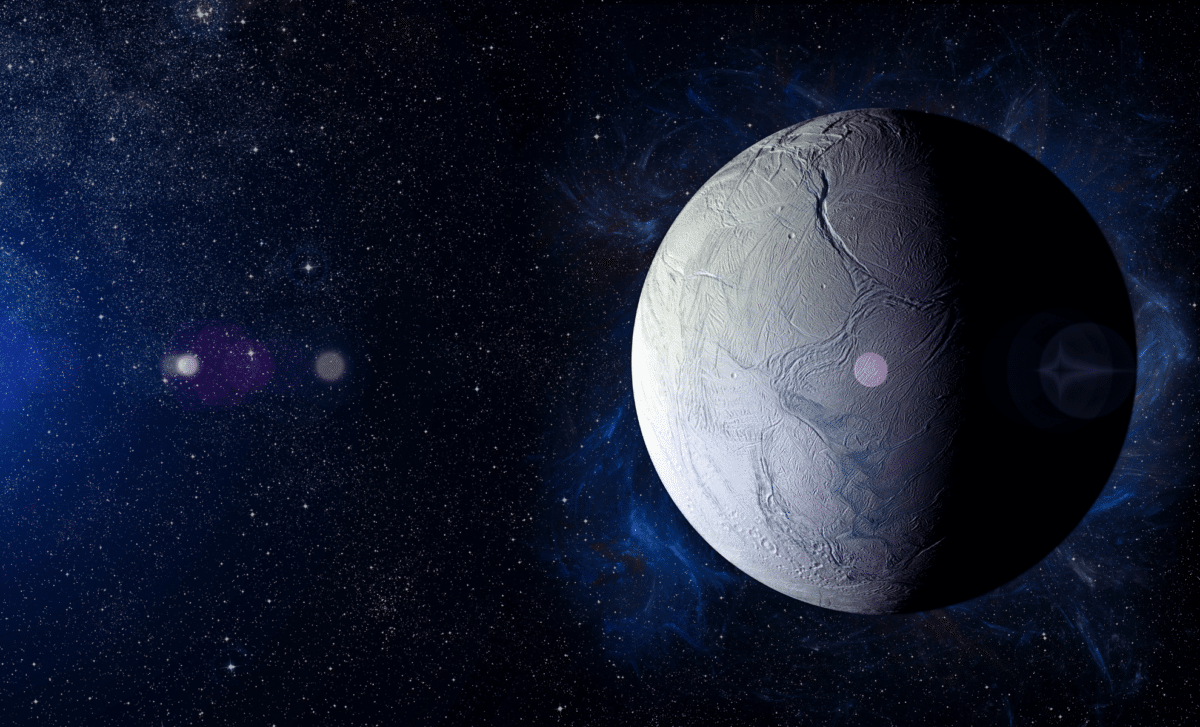
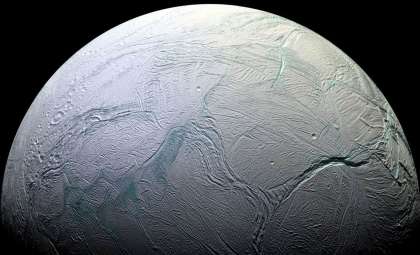
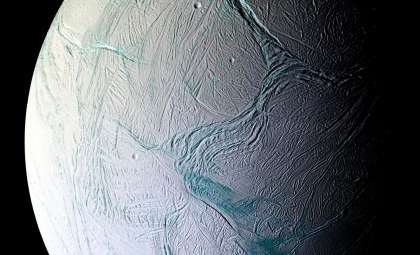
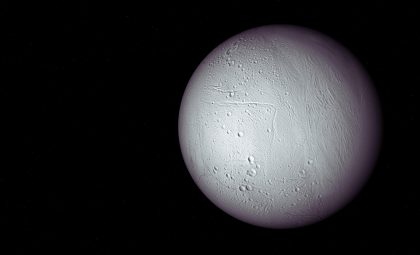
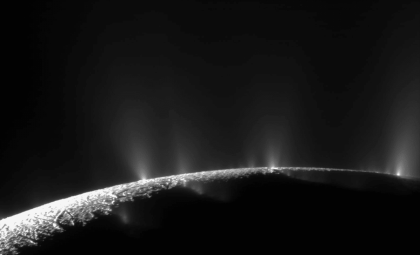
Enceladus, one of Saturn’s diminutive moons, has captivated researchers with its icy exterior and enigmatic geysers. Recently, scientists have uncovered that this small moon exerts a substantial electromagnetic influence that far surpasses what was previously believed. Utilizing data collected by NASA’s Cassini mission, experts discovered that the icy plumes emitted by Enceladus are integral to creating vast electromagnetic waves extending hundreds of thousands of kilometers. This breakthrough offers new avenues for exploring interactions within planetary systems across our solar neighborhood and beyond.
Enceladus: A Small Moon with a Far-reaching Electromagnetic Impact
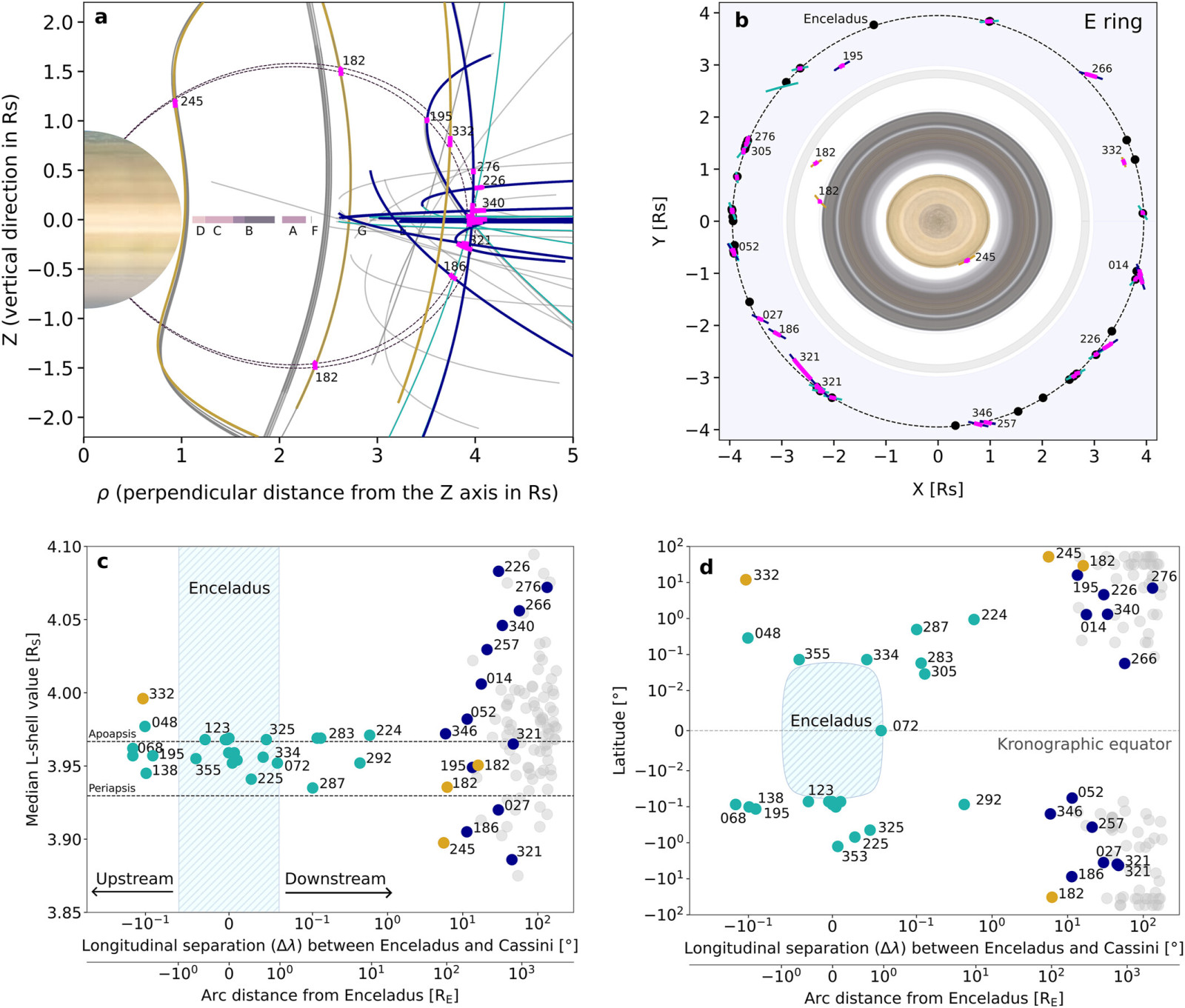
Enceladus, measuring just about 500 kilometers across, ranks among Saturn’s smallest satellites. Despite its size, it influences regions over 500,000 kilometers away through its interaction with Saturn’s intense radiation environment. The water vapor jets released by Enceladus produce charged particles that form a plasma, which then interacts dynamically with Saturn’s magnetic field. This interaction generates Alfvén waves—oscillations that travel along magnetic field lines—spreading outward and bouncing back to create an intricate electromagnetic network.
The magnitude of these waves astonished scientists. Contrary to expectations, the Alfvén waves did not simply fade upon reaching Saturn. Instead, they reflected repeatedly, weaving a complex lattice of interlacing electromagnetic waves. As Thomas Chust of the Laboratoire de Physique de Plasmas notes:

“This is the first time such an extensive electromagnetic reach by Enceladus has been observed.” This discovery highlights how a small moon can have a much larger influence on its surrounding space environment than previously thought.
Alfvén Waves: Unlocking Enceladus’ Electromagnetic Power
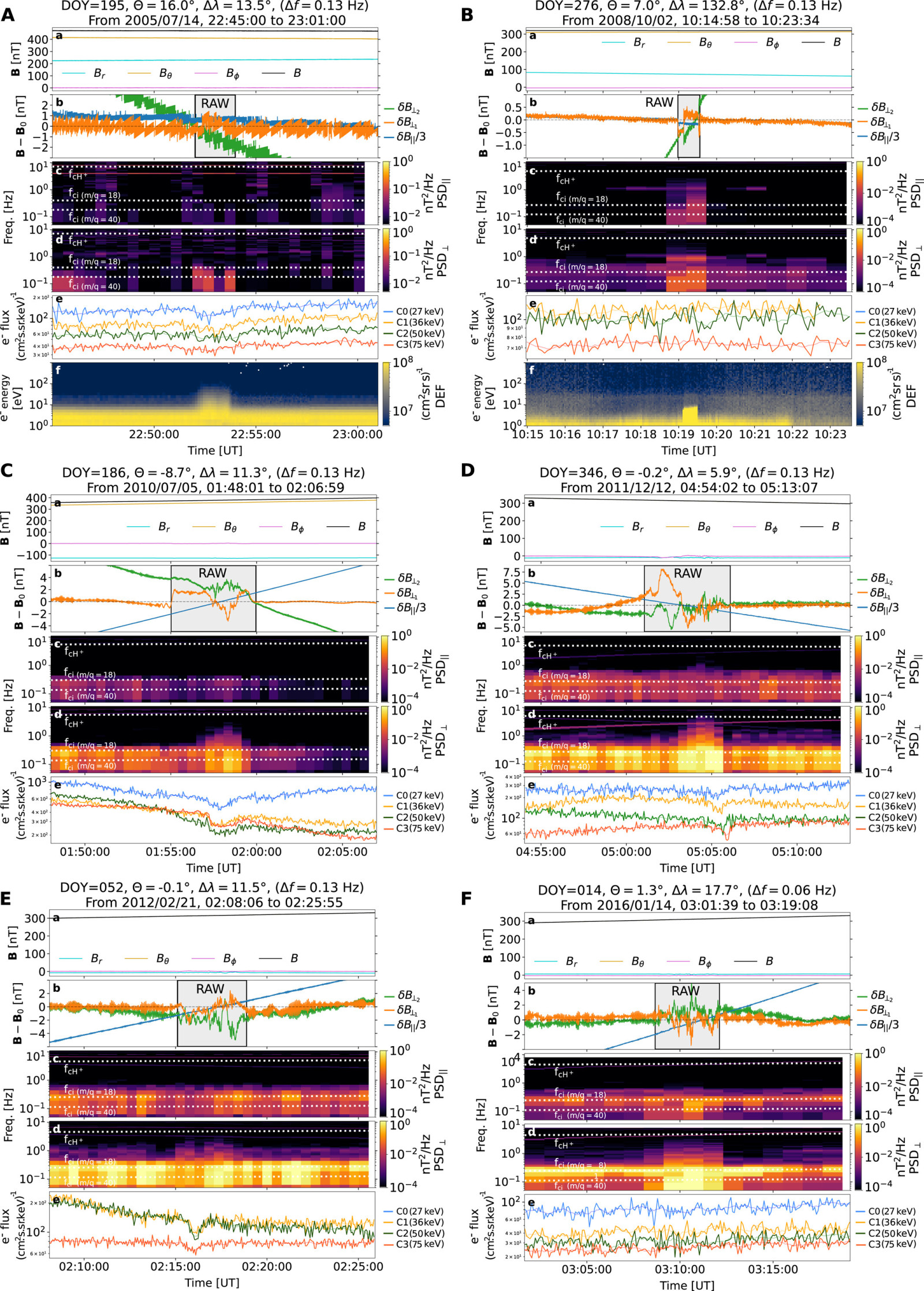
Findings reveal that the Alfvén waves produced by Enceladus represent a complex and evolving system rather than simple oscillations. They propagate through Saturn’s magnetosphere, bouncing off the planet’s ionosphere and its plasma torus — a ring of charged particles surrounding the moon’s orbit. With each reflection, new wave patterns emerge and combine, forming an elaborate and interconnected electromagnetic framework.
Published in the Journal of Geophysical Research: Space Physics, this research is groundbreaking due to the vastness and intricacy of the wave system. Unlike typical waves that fade after one bounce, the Alfvén waves encircling Enceladus sustain an ongoing energy cycle, circulating momentum and power throughout Saturn’s magnetosphere. Thomas Chust elaborates, “The findings demonstrate that this small moon functions as a giant planetary-scale Alfvén wave generator, circulating energy and momentum throughout Saturn’s space environment.”
The Influence of Enceladus’ Electromagnetic Network on Saturn’s Environment
The electromagnetic waves radiating from Enceladus extend their effects well beyond the moon itself. The interaction with Saturn’s ionosphere triggers auroral displays tied to the moon’s activity, providing a visible sign of the energy transfer between Enceladus and Saturn’s upper atmosphere. These waves also shape the behavior of Saturn’s magnetic field by affecting charged particle motions and contributing to the planet’s space weather conditions.
Exploring these electromagnetic phenomena sheds light on analogous systems within our solar system. Jupiter’s moons such as Europa, Ganymede, and Callisto similarly influence their planet’s magnetic field, and unraveling Enceladus' mechanisms could lead to advances in understanding magnetosphere-moon interactions. Moreover, the discovery holds promise for identifying comparable electromagnetic interactions in exoplanetary systems, where moons orbiting distant planets may exhibit similar behaviors.
- Categories:
- News







0 comments
Sign in to Comment