

The landscape of software engineering is on the brink of a dramatic transformation. Mark Zuckerberg recently declared that by 2025, Meta will heavily depend on artificial intelligence to produce code, significantly diminishing the reliance on human programmers.
This development reflects a broader movement within Silicon Valley, where leading tech firms are increasingly moving towards AI-powered coding solutions.
Given Zuckerberg's claim that AI can now operate as a “mid-level engineer”, does this signal a shift toward coding as a predominantly automated process rather than a human expertise?

Meta’s Vision: AI Takes on Developer Roles
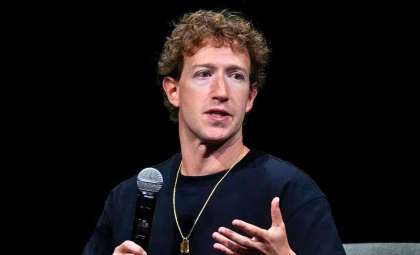
In a discussion with Joe Rogan, Mark Zuckerberg shared his insights on future programming trends, highlighting AI's capacity to generate code at a proficiency matching that of an intermediate-level software engineer.
From Meta’s perspective, this is a strategic advantage. Top-tier developers can command salaries approaching $500,000 annually, making automated systems an enticing alternative to trim expenses.
By incorporating AI deeply into their development workflows, the company anticipates faster feature rollouts and more efficient testing phases, all while managing costs.
Yet, this shift introduces a critical challenge: who will validate and debug AI-created code? Even state-of-the-art AI tools are susceptible to mistakes, underscoring the necessity for ongoing human oversight to assure quality and security.

Industry-wide Adoption of AI Coding Tools
Meta isn’t the only company embracing this direction. Salesforce has announced it will stop hiring new programmers by 2025, focusing on AI-supported software development. Meanwhile, Klarna recently cut its staff by 22%, attributing part of this reduction to AI’s growing ability to manage tasks traditionally performed by programmers.
The goal across these firms is to boost efficiency and reduce costs. Industry analyses suggest that replacing a single human coder with AI could save companies between $100,000 and $900,000 annually.
This evolution invites a bigger question: if AI can handle coding, might other tech-related roles also face similar automation risks?
The Future Role of Programmers: Replacement or Reinvention?
As AI capabilities grow, software professionals stand at a crossroads. Will AI gradually take over their roles, or will they pivot toward new responsibilities?
Mark Zuckerberg emphasizes that AI won’t fully replace programming jobs but will enable engineers to engage in higher-level strategic and creative work. Instead of manual coding, developers will oversee, tweak, and enhance the AI’s output.
Nevertheless, past trends in automation suggest the possibility of job losses. Currently, AI excels at performing routine coding tasks, which could push out junior and mid-tier developers, leaving primarily specialized positions open.
Wider Implications for the Workforce
This AI-driven overhaul extends beyond programming. As automation matures, its influence will reach multiple sectors.
With corporations investing heavily in these technologies, a sweeping workforce transformation looms, triggering important ethical and social debates:
- Will AI perpetuate biases embedded in current software development?
- Who will be responsible for governing AI-generated code quality and security?
- Could this transition exacerbate economic disparities between AI creators and those displaced by the technology?
2025: A Defining Year for Technology and Work
The shift to AI-driven software development is rapidly progressing, with 2025 poised as a pivotal landmark. This change now seems inevitable, focusing attention on how industry players and engineers will adjust to the new reality rather than if it will occur.
Are human programmers slowly becoming obsolete, or are we entering an era where coders and AI collaborate, ensuring functionality and precision? The nature of tech employment is evolving—one code iteration at a time.
- Categories:
- Tech














0 comments
Sign in to Comment