
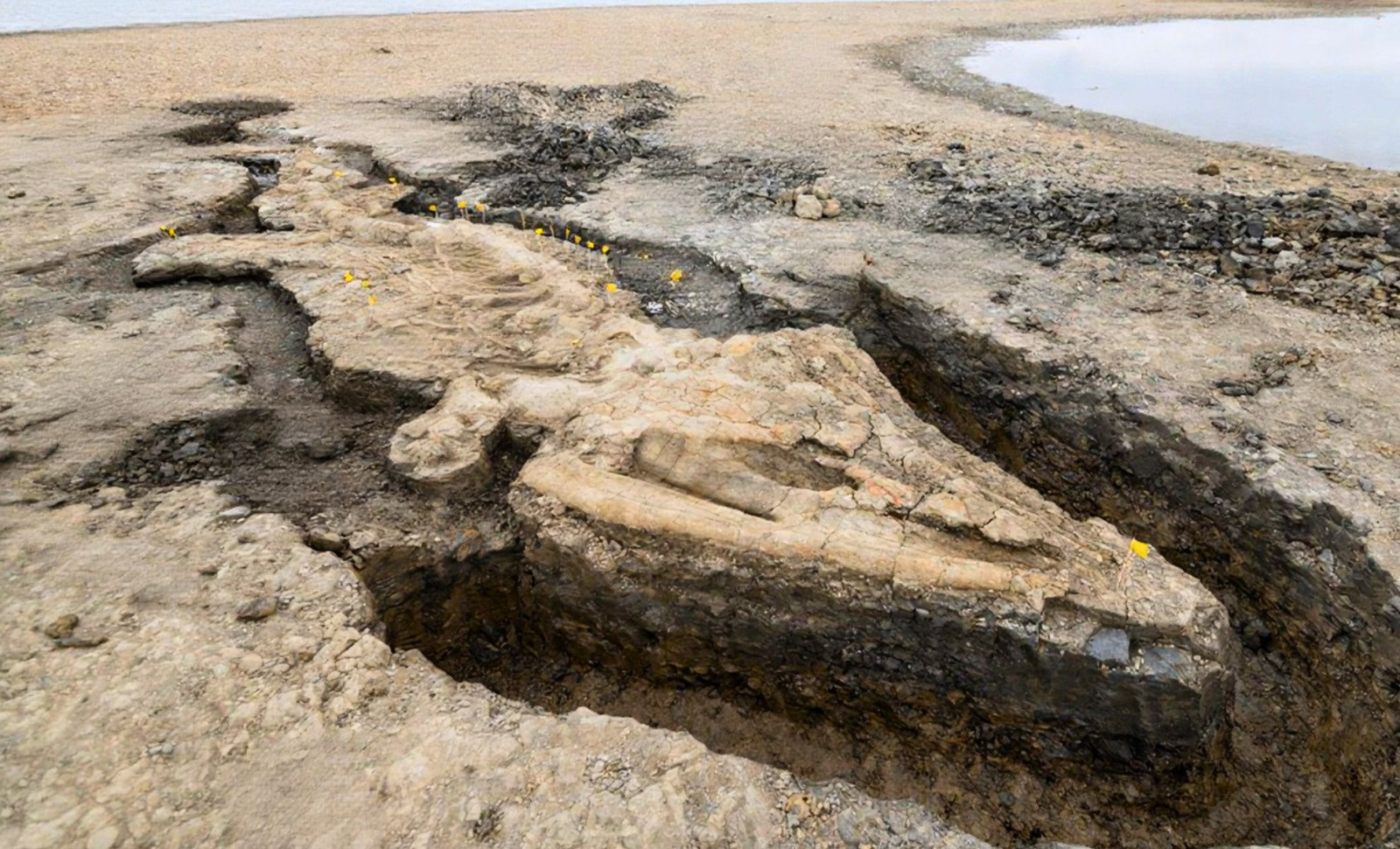
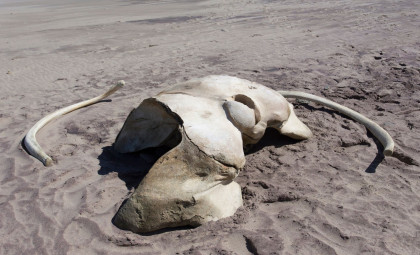
During a routine visit to a drained lagoon island at Rutland Water Nature Reserve in February 2021, Joe Davis, a conservation leader with the Leicestershire and Rutland Wildlife Trust, noticed unusual bone structures emerging from the clay soil. Having previously discovered whale and dolphin skeletons, Davis recognized the shapes and quickly informed experts, triggering one of the most remarkable palaeontological discoveries ever made in the UK.
Measuring just over 10 metres long with a skull estimated to weigh about a tonne, the fossil is tentatively classified as Temnodontosaurus trigonodon. This species is mainly known from fossil records in Germany and France. Should this initial identification be confirmed after full fossil preparation, it would represent the first confirmed finding of this species in Britain, expanding its known ancient Jurassic habitat range.
The scientific community showed immediate interest in the find. Paul Barrett, a paleontologist from the Natural History Museum in London, stated that this Rutland ichthyosaur could be among the largest fossilized reptiles ever discovered, rivaling dinosaur sizes. Dr. Dean Lomax, the specialist overseeing the excavation, hailed it as one of Britain’s most significant palaeontological breakthroughs.

Insights Into Ichthyosaurs and Their Lifestyles
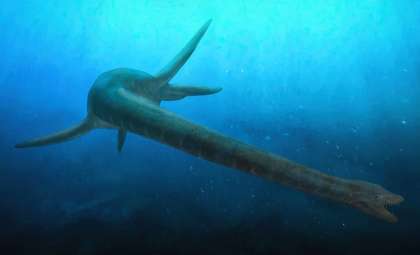
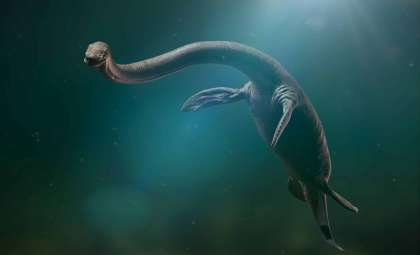
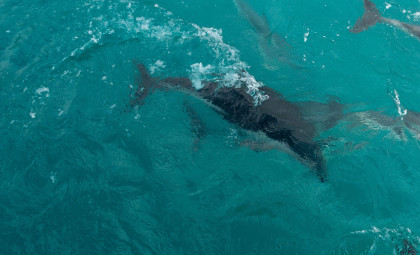
Ichthyosaurs were ancient marine reptiles coexisting with dinosaurs, originating roughly 250 million years ago in the Triassic and persisting until around 90 million years ago. Although their form resembled that of modern dolphins, ichthyosaurs were unrelated to today’s marine mammals. Tracing their lineage back to land-dwelling ancestors, they surfaced regularly for air, much like whales today.
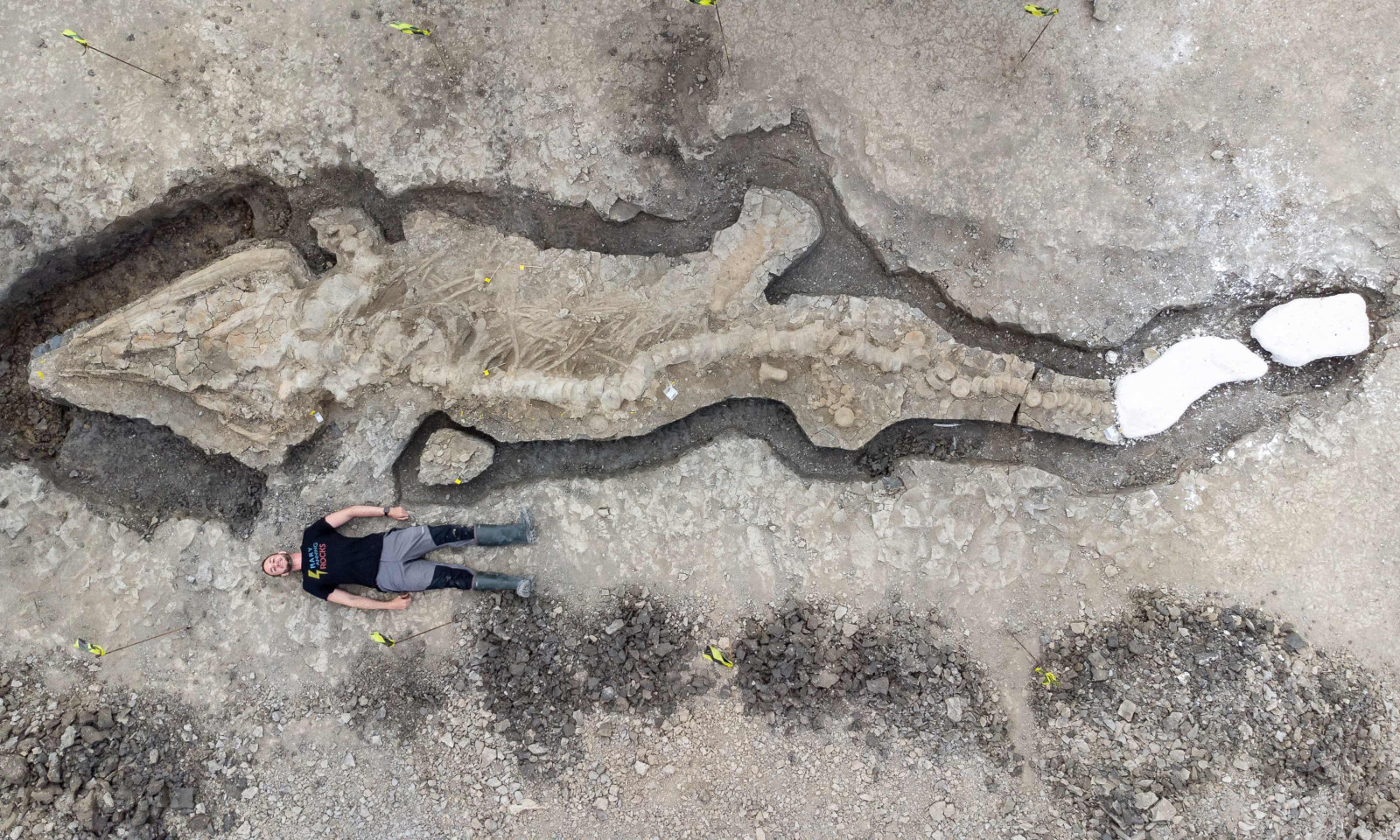
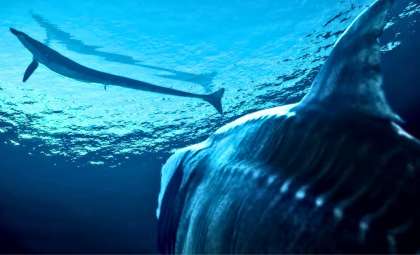
It is believed ichthyosaurs were warm-blooded, inhabiting both nearshore waters and the open ocean. Fossils preserved with stomach contents reveal a diet primarily composed of fish and squid. Large species, such as Temnodontosaurus, could reach lengths up to 12 metres, and some ichthyosaurs grew as large as 25 metres, ranking among the ocean’s largest predators in prehistoric times.
The Rutland fossil dates back roughly 181.5 to 182 million years, determined through microfossil analysis of surrounding sediment by the University of Birmingham. This places the specimen within the Early Jurassic's Toarcian Stage, during which much of present-day central England was covered by a warm shallow sea. Britain has a rich ichthyosaur fossil record dating back over two centuries to Mary Anning’s early 19th-century finds, yet none compare in scale to this discovery.
From Initial Discovery to Careful Extraction
While the team undertook standard maintenance by draining a lagoon island at Rutland Water, Davis spotted bones peeking through the clay and documented vertebrae and possible jawbone fragments. Consulting with palaeontologists confirmed the remains were from a large ichthyosaur. Subsequent excavation in August and September 2021 was carried out collaboratively by Anglian Water, Rutland County Council, and the Leicestershire and Rutland Wildlife Trust.
Leading the effort was Dr. Dean Lomax, a visiting University of Manchester scientist credited with identifying five new ichthyosaur species. He worked alongside conservator Nigel Larkin and marine reptile expert Dr. Mark Evans, supported by experts from the Horniman Museum, Peterborough Museum, and the Open University. Their careful work through Jurassic-era clay revealed an almost complete skeleton.
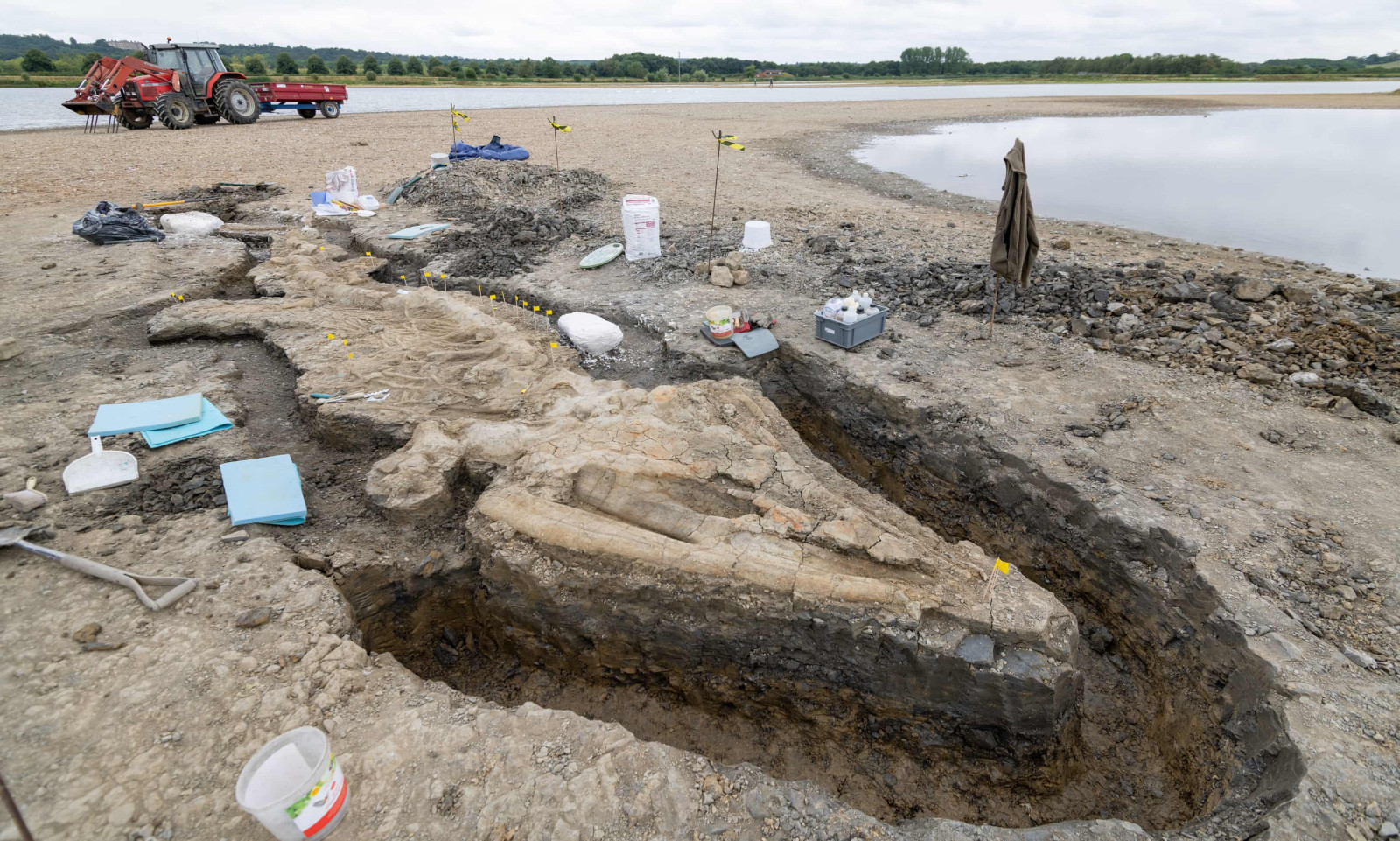
Extracting the fossil was labor-intensive, involving protective wooden braces and plaster-of-Paris jackets to secure the bones for removal in segments. The block containing the nearly two-metre skull weighed close to a tonne, with the body section adding approximately 1.5 tonnes, totaling over two tonnes of fragile material.
This remarkable specimen surpasses two smaller ichthyosaur remains found at the same site during reservoir construction in the 1970s. Once safely removed, it was transported to a conservation laboratory where ongoing fossil preparation is overseen by Nigel Larkin.
Significance of the Rutland Ichthyosaur
According to the Natural History Museum, this find represents the most intact large prehistoric reptile fossil ever uncovered in the UK, a reputation that extends beyond ichthyosaurs to include dinosaur fossils. Its exceptional size and completeness make it one of the most important vertebrate fossils ever recovered in Britain.
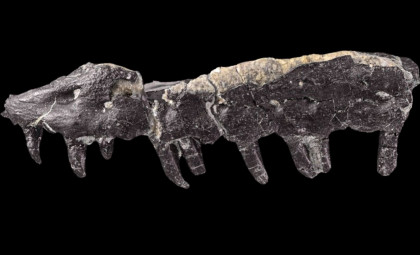
Additional excavations in August 2022 uncovered more fossils from the site, including ammonites, belemnites, nautiloids, and vertebrae from other ichthyosaurs. Intriguingly, researchers also uncovered remains of a thalattosuchian crocodylomorph, informally dubbed the “Rutland Crocodile.” The excavation report published on ScienceDirect details microfossil findings that confirm at least three Jurassic ichthyosaur species inhabit this ancient seabed’s fossil record.
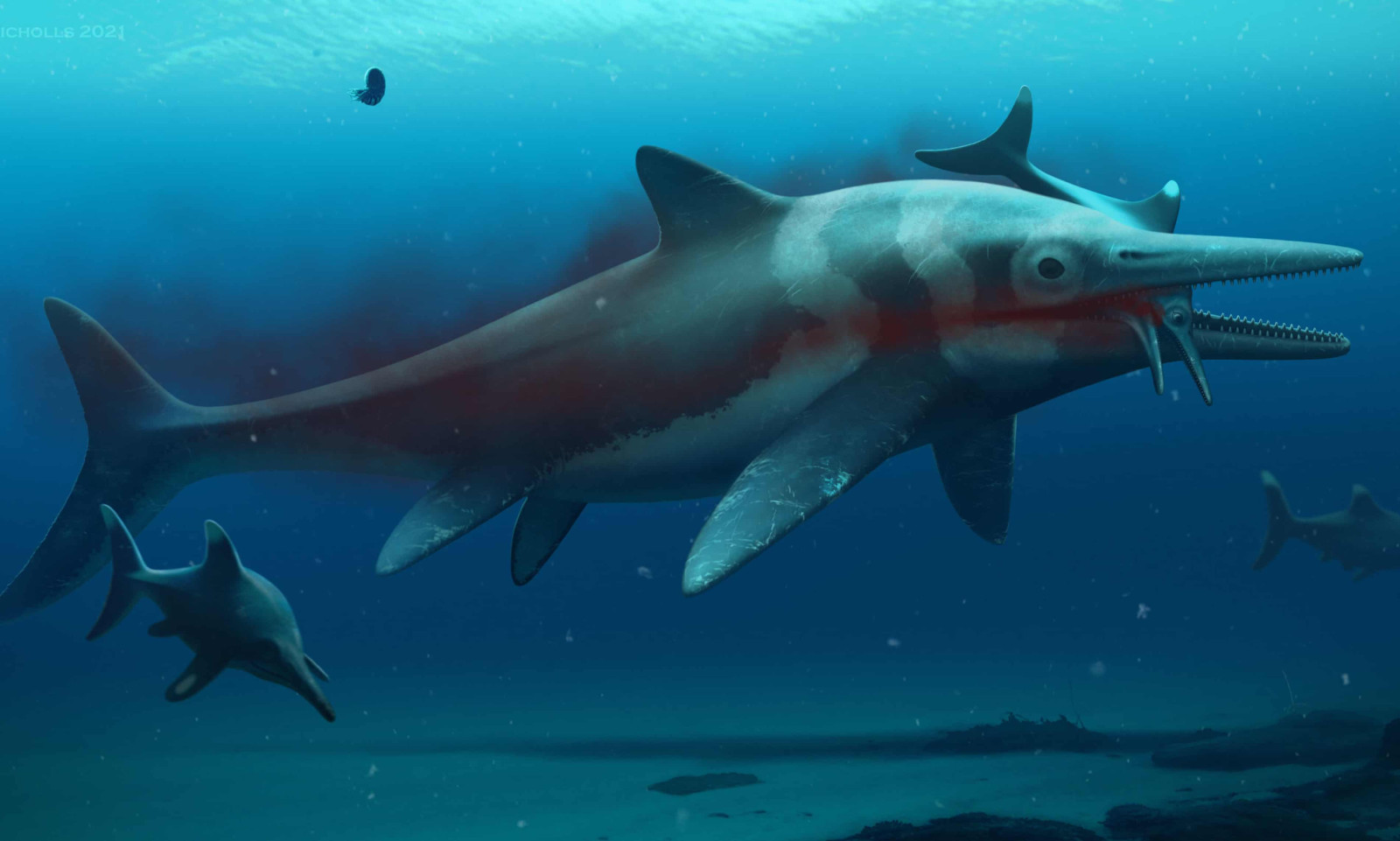
The concentration of fossils suggests that during the Early Jurassic, when the area was submerged beneath a warm, shallow sea, it supported a biologically rich ecosystem. Ongoing research is examining the invertebrates uncovered alongside the ichthyosaur to piece together a broader picture of the marine environment from that era. Biostratigraphic evidence narrows the specimen’s age to a narrow window between 181.5 and 182.5 million years ago, placing it in the late Early Toarcian Stage.
The next stage of the project seeks funds to support a 2-3 year effort to carefully remove the plaster field jackets, fully prepare, conserve, and display the fossil as a centerpiece. Anglian Water and partner organizations are actively pursuing heritage grants to keep this extraordinary specimen in Rutland, where it remained untouched for 180 million years before Joe Davis’s accidental discovery.
- Categories:
- Science

0 comments
Sign in to Comment