
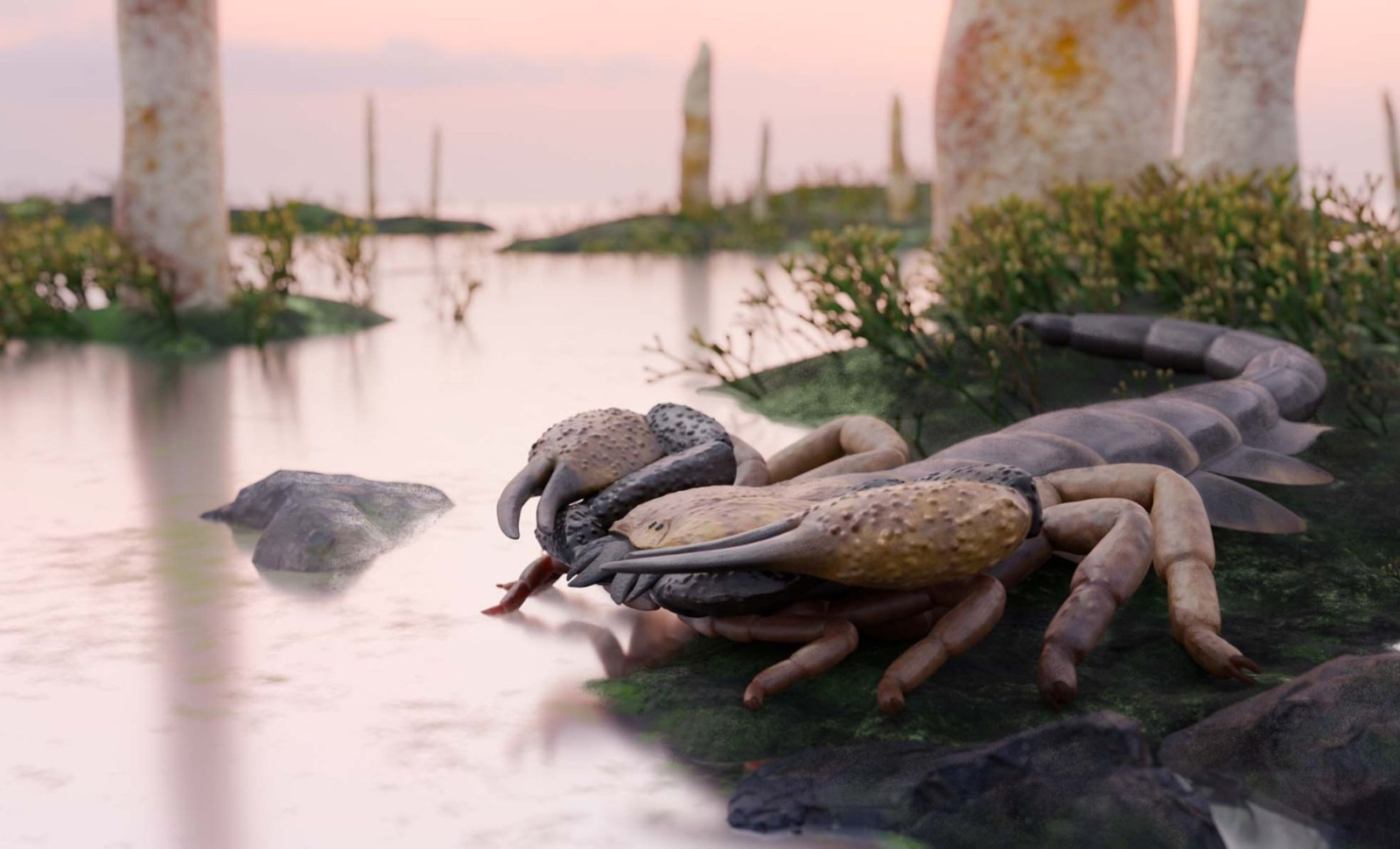
A colossal scorpion, comparable in size to a small human, roamed the region now known as Britain approximately 415 million years ago, according to recent research. Measuring close to one meter (3.3 feet) in length and boasting pincers around 16 centimeters (6.2 inches) long, the species Praearcturus gigas has been recognized as the largest scorpion ever discovered.
This breakthrough originated from a reevaluation of fossil specimens that had long puzzled scientists. Utilizing advanced imaging technologies, researchers reexamined fossils from England and Wales, uncovering compelling evidence that confirmed the creature’s classification as a scorpion.
This discovery is significant because it extends the timeline for giant scorpions far deeper into Earth’s history. During the Early Devonian period, terrestrial life was still primitive, dominated by small arthropods with forests yet to emerge.

A Fossil Mystery Finally Solved
The tale of Praearcturus gigas dates back to the 1870s when its fossils were initially identified. Early researchers debated the nature of these remains, uncertain of their true origin.
Initially, some thought the fragments belonged to a large crustacean resembling a massive woodlouse. Later, the possibility that these were scorpion fossils gained traction. However, incomplete fossil records, lacking key features such as the distinctive tail, hindered definitive classification.
The recent study, published in Palaeontology, revisited pivotal fossils housed at London’s Natural History Museum. Comparisons with other fossilized scorpions and newly described prehistoric arachnids allowed a clearer determination.
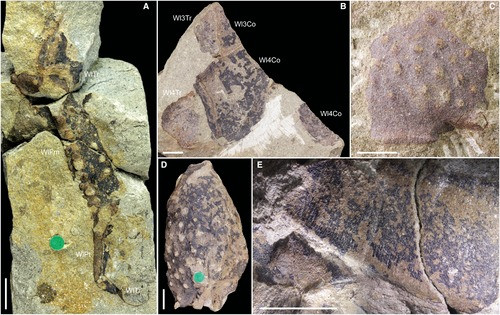
The analysis offered a renewed perspective. The research team affirmed that Praearcturus gigas was almost certainly a scorpion, effectively putting to rest a debate over 100 years old. As University of Manchester’s co-author Russell Garwood remarked:
“Praearcturus has puzzled us palaeontologists for more than a century.”
The Largest Scorpion Unearthed to Date
With its identity clarified, the scale of the creature became even more impressive. Findings from the University of Manchester highlight that Praearcturus gigas could grow to about 1 meter long, with pincers roughly 16 centimeters in length. This establishes it as the largest scorpion species ever discovered.
The team suggests it acted as an apex predator inhabiting floodplain ecosystems during the Early Devonian. At that time, land ecosystems were dominated by relatively small arthropods. Today, these include insects, spiders, crustaceans, and scorpions, but 415 million years ago, terrestrial life was far less complex.
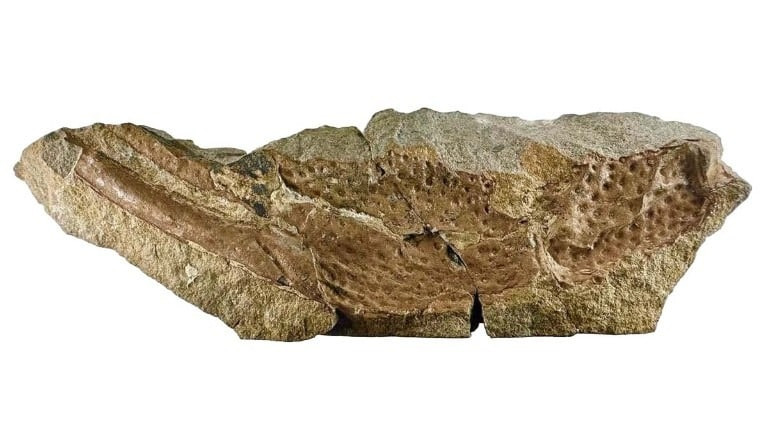
The study’s findings indicate that some arthropods reached substantial sizes far earlier than previously believed.
“Confirming that this animal is a scorpion fundamentally changes our understanding of how and when these creatures evolved to such extraordinary sizes.” lead author Richard Howard, curator of fossil arthropods at the Natural History Museum, said.
An Amphibious Ancient Predator?
The research went beyond identification to shed light on the species’ lifestyle. Scientists reassigned several other fossils from the same geological strata to Praearcturus gigas. They examined features called epimera, which are flap-like extensions similar to those in modern crustaceans like lobsters and crabs.
These characteristics suggest that this prehistoric scorpion may have been partly aquatic. This insight is intriguing because the Early Devonian featured limited land-based ecosystems compared to later eras.
A statement from the Natural History Museum noted that a semi-aquatic habit might explain how such a sizable predator could thrive when terrestrial food chains were still minimal.
“Without complex ecosystems to support Praearcturus on land, these animals probably spent part of their lives hunting in water,” explained Howard.
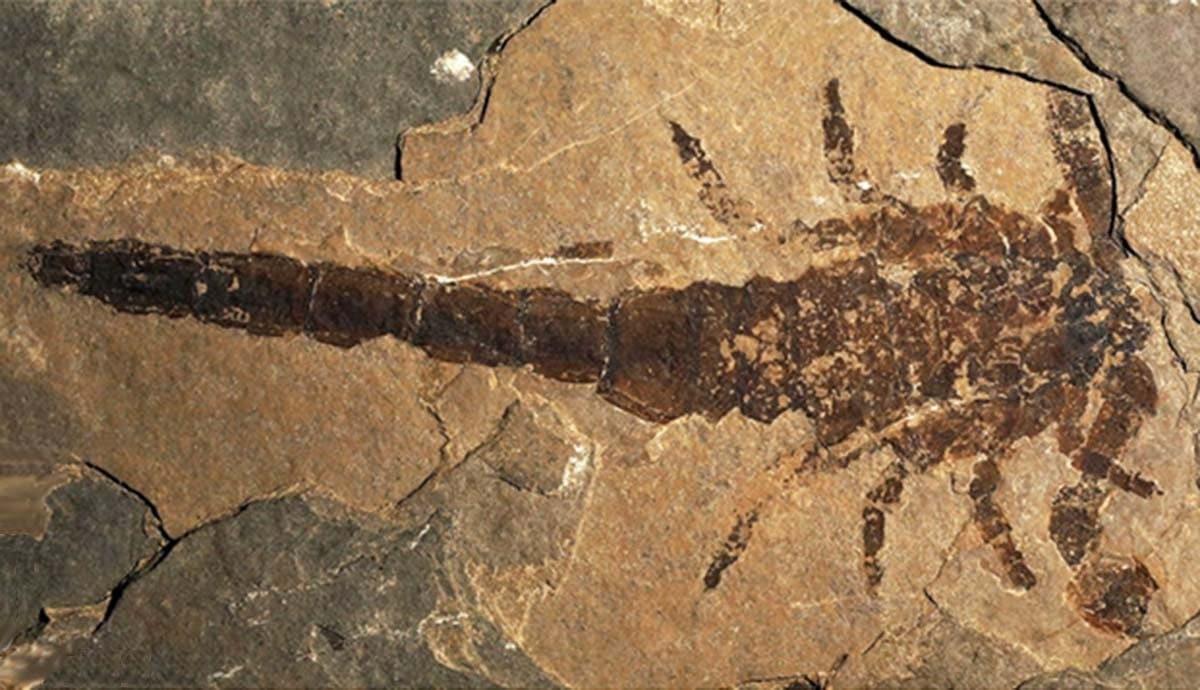
This research highlights that giant scorpions inhabited Britain hundreds of millions of years prior to the advent of modern ecosystems.
- Categories:
- Science




0 comments
Sign in to Comment