

Scientists have verified that an uncommon geological phenomenon called lithospheric dripping is dragging parts of the Earth’s lower crust deep into the mantle beneath the Konya Basin. Utilizing satellite imagery and seismic data, this breakthrough uncovers a subterranean process shaping the Central Anatolian Plateau over millions of years. The research, featured in Nature Communications, provides a detailed explanation for the continuous deepening of this basin despite the overall rise of the surrounding plateau.
The geology of the Central Anatolian Plateau has long confounded scientists. Although the region has undergone steady uplift, the central large depression—known as the Konya Basin—has progressively deepened. Led by a group from the University of Toronto, experts investigated the subterranean dynamics to uncover the unexpected cause.
Understanding Lithospheric Dripping: The Submerging Crust Phenomenon
The team identified the driving force as multi-stage lithospheric dripping. The published study explains how certain parts of the lower lithosphere, a solid rock layer beneath the crust, grow denser over time. Gravity then pulls these heavier sections downward, causing them to slowly detach and sink into the mantle. In the words of Julia Andersen:

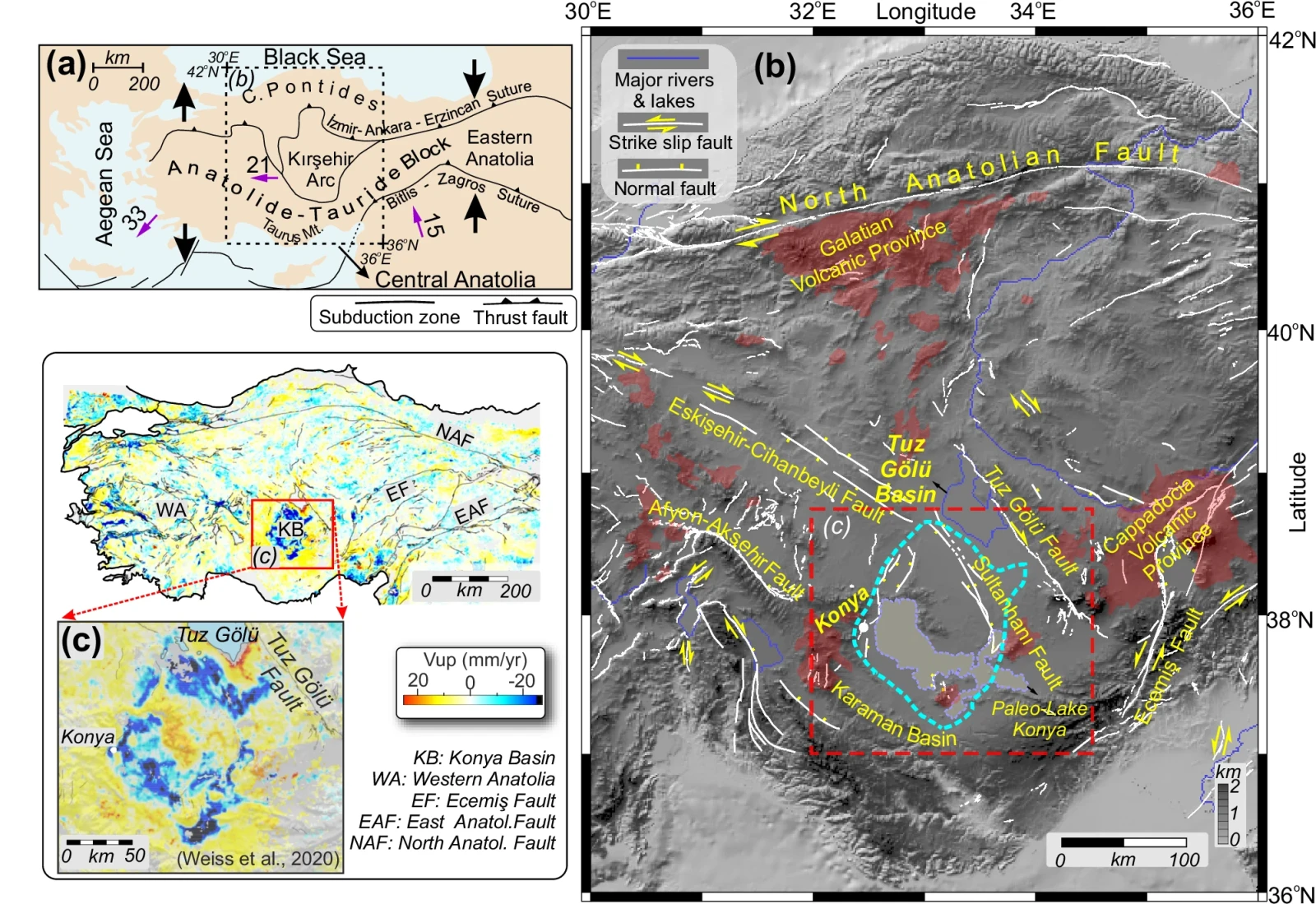
“Looking at the satellite data, we observed a circular feature at the Konya Basin where the crust is subsiding.” That subsidence, it turns out, is driven by something far below.
This downward movement changes the stress and weight distribution in the crust above, causing it to sink and create a basin. Once the dense segment fully separates and descends deeper, the surface may experience a rebound effect. At the Central Anatolian Plateau, such dripping episodes have likely repeated multiple times. According to co-author Russell Pysklywec, the initial lithospheric drip “appears to have triggered subsequent daughter events elsewhere in the region.”
Insights Into Turkey’s Subterranean Structure
To confirm the existence of the sinking lithospheric matter, researchers integrated data from satellite monitoring with seismic wave studies. By tracking subtle ground alterations over several years, satellites uncovered a persistent round pattern of sinking centered on the Konya Basin. Concurrently, the propagation speed of seismic waves slowed within certain underground zones, indicative of compositional irregularities.
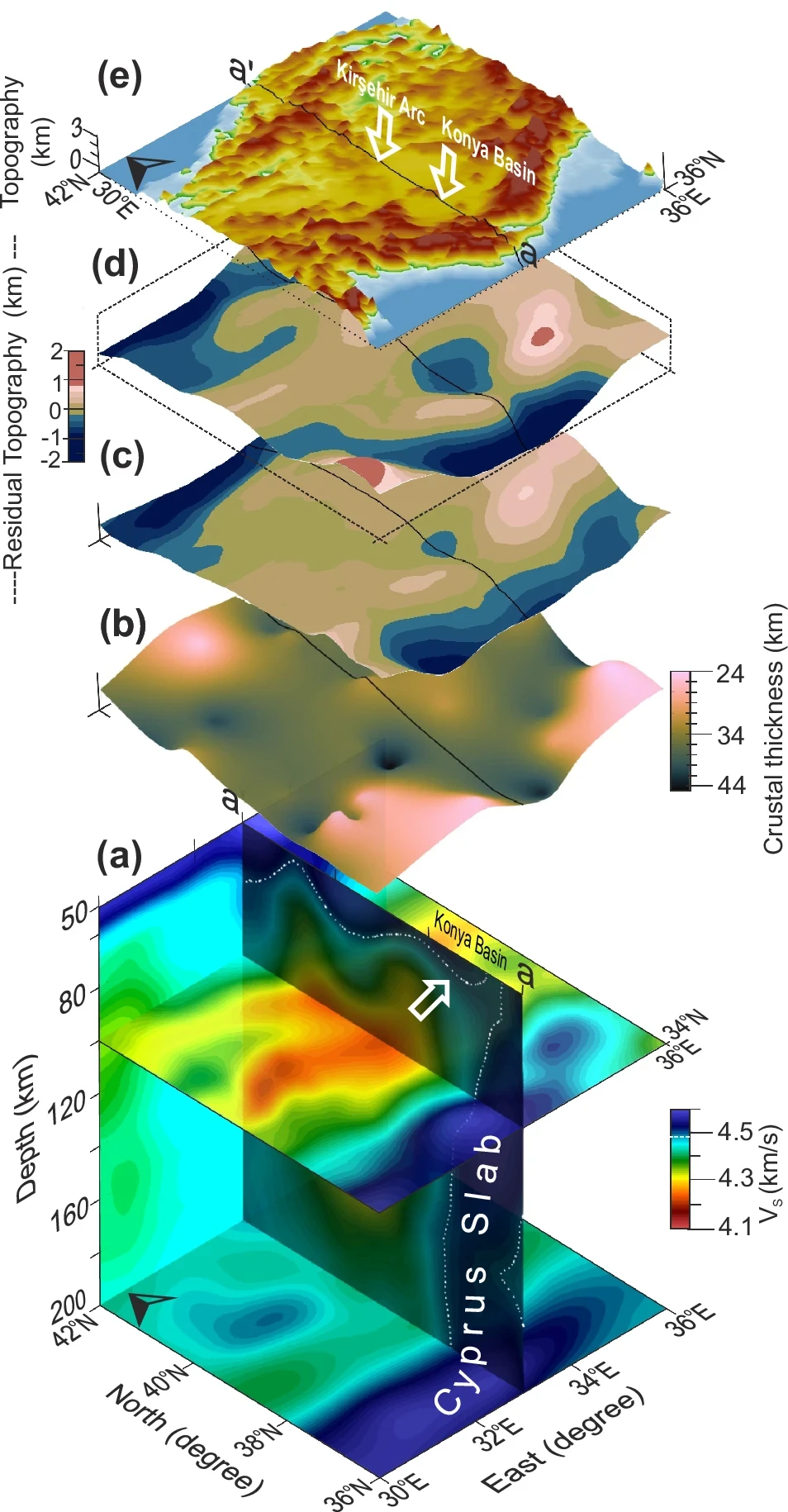
This multifaceted data pointed to a dense region in the upper mantle directly beneath the subsiding area. Lead author Andersen noted the identification of a “thickened crust,” reinforcing evidence for the dense material instigating the lithospheric drip.
Recreating Earth's Processes in Controlled Experiments
The researchers crafted physical simulations to mimic this complex geological activity. Using layered silicone polymers and solid particles in transparent tanks, they created analogue models of the mantle and crust. These experiments demonstrated how dense crustal elements gradually bend downward, break away, and ultimately descend—a process paralleling what occurs beneath central Turkey.
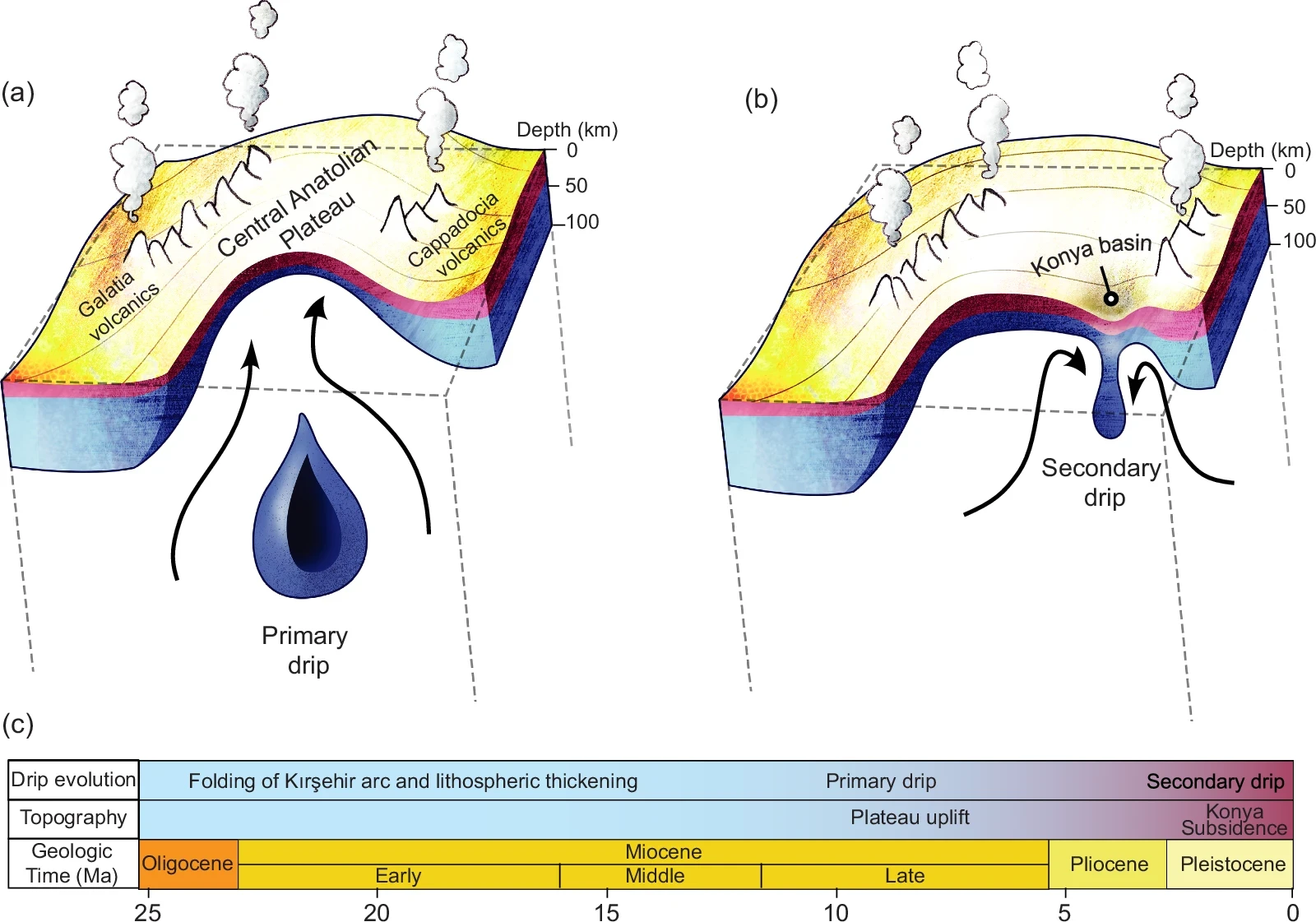
While simplified, these models illuminated the geological sequences that could cause both the uplift surrounding the plateau and the ongoing deepening of the Konya Basin. In summary, Andersen emphasized that major tectonic forces are interconnected, asserting that a single lithospheric drip can “initiate a cascade of deep Earth activity.”
- Categories:
- Science





0 comments
Sign in to Comment