
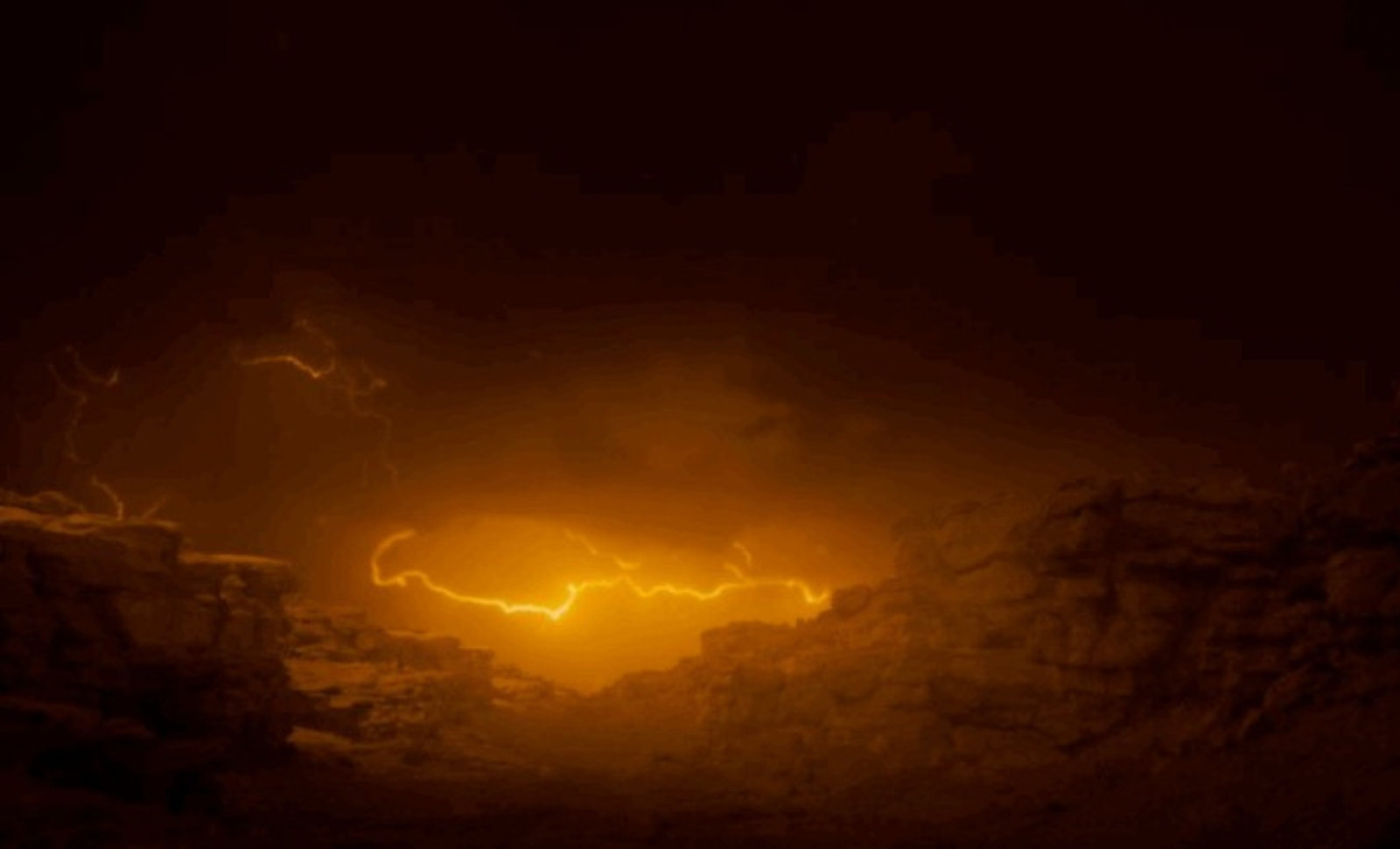
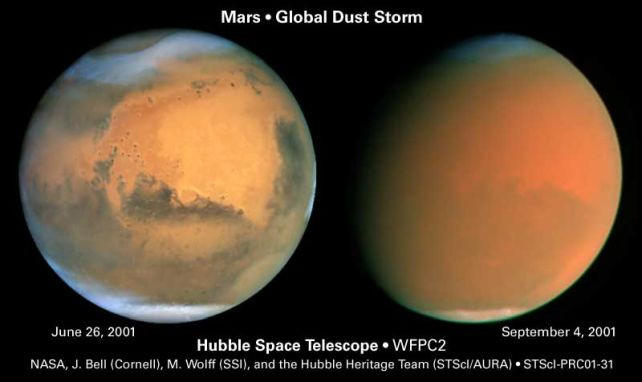
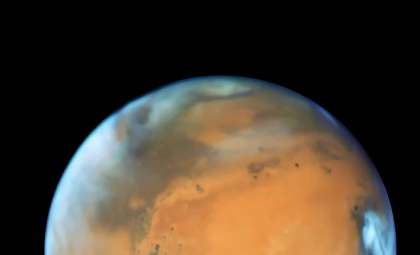
For years, scientists studying Mars have pondered whether the planet’s towering dust storms generate electrical charges. These immense storms can envelop the entire globe, lifting millions of tons of abrasive sand particles through its thin atmosphere. On Earth, similar atmospheric phenomena, such as volcanic plumes or desert sandstorms, often trigger strong electrical discharges.
Attempts to detect lightning on Mars through visible flashes or radio wave bursts have long yielded inconclusive results. Despite ongoing efforts using orbiters and rover-based instruments, the Martian sky remained seemingly devoid of lightning during intense dust events.
In late 2024, an onboard instrument aboard an orbiting spacecraft began detecting unique signals not as visible flashes but as low-frequency electromagnetic waves. These signals, distinct from ordinary radio waves, require precise atmospheric circumstances to be generated and propagated.

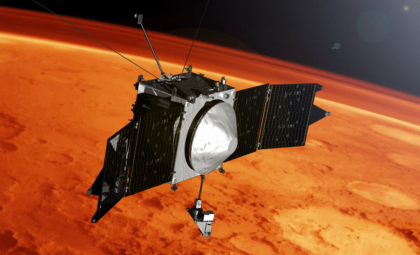
The MAVEN mission, operational since 2014, carries a device called the Langmuir Probe and Waves instrument, intended to examine Mars’ upper atmospheric conditions and interactions with solar wind. It continuously surveys the plasma environment to better understand how gases escape the planet.
Unraveling MAVEN’s Detection of Martian Electrical Signals
Scientists led by Dr. David Andrews from the Swedish Institute of Space Physics delved into MAVEN’s data in search of signals known as lightning whistlers. On Earth, these low-frequency radio waves are generated by lightning strokes and travel through magnetic field lines into the upper atmosphere.
The team identified one definitive signal fitting the profile of a lightning whistler: a high-frequency tone rapidly descending to a lower frequency within milliseconds. This whistling feature results from the wave’s travel through charged particles in the ionosphere.
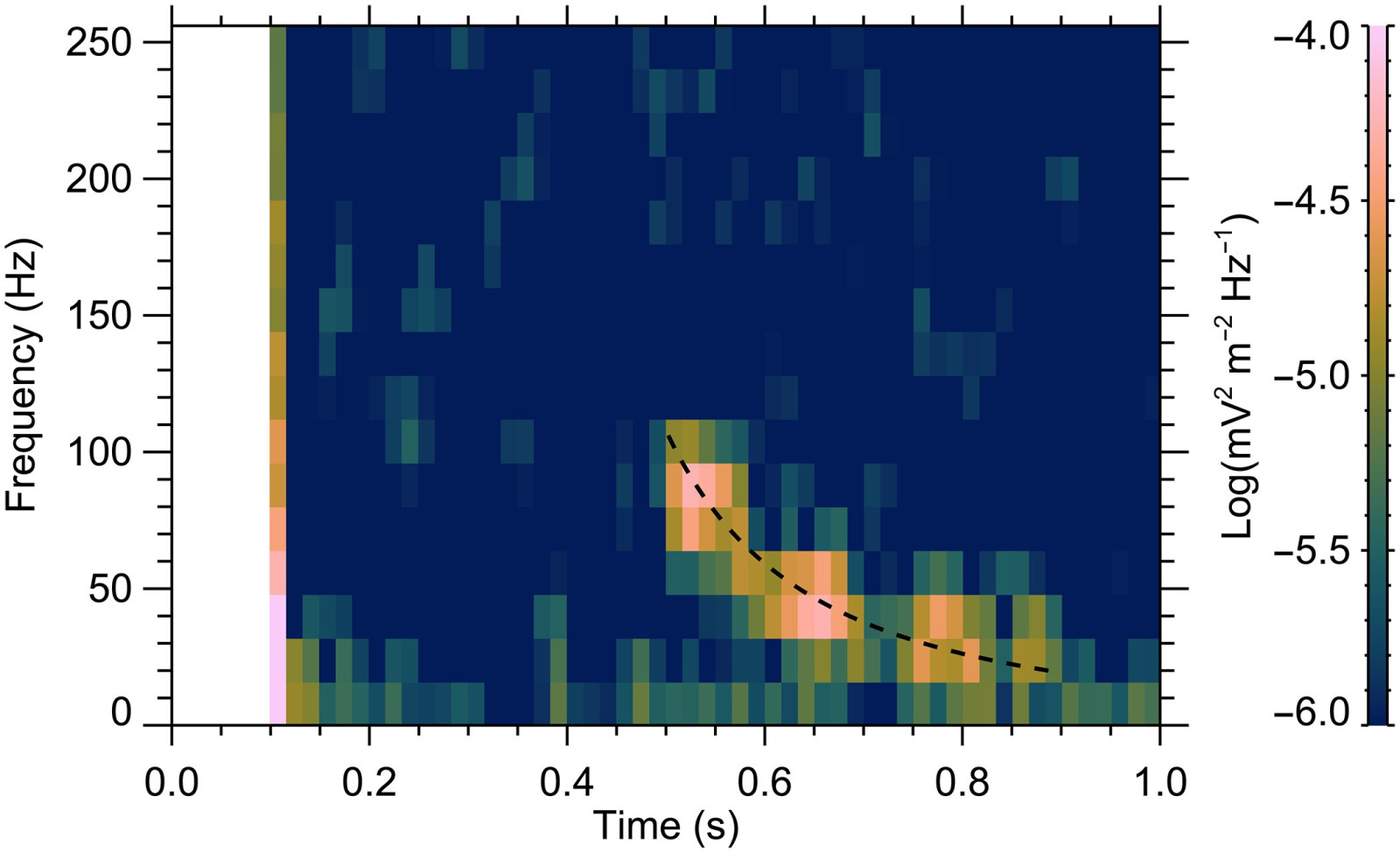
This marks the inaugural confirmation of lightning whistlers on Mars. Earlier missions, such as the Viking landers and Mars Global Surveyor, hinted at electrical activity but lacked the advanced instruments to confirm these signals’ origins. MAVEN’s refined readings allowed the team to separate these findings from solar noise.
Electric Discharges Within Martian Dust Storms
The findings imply that Martian lightning is not a visible, intense bolt like Earth’s but more subtle discharges within dust storms. Dust particles rubbing together cause electrons to transfer in a process called triboelectric charging, generating static electricity that eventually releases as sparks.
Dr. Andrews highlighted that the Martian atmosphere, being about 100 times thinner than Earth’s, modifies electrical behavior. In this low-density air, sparks require less electrical energy to ignite but produce weaker discharges, explaining why no bright lightning has been detected previously.
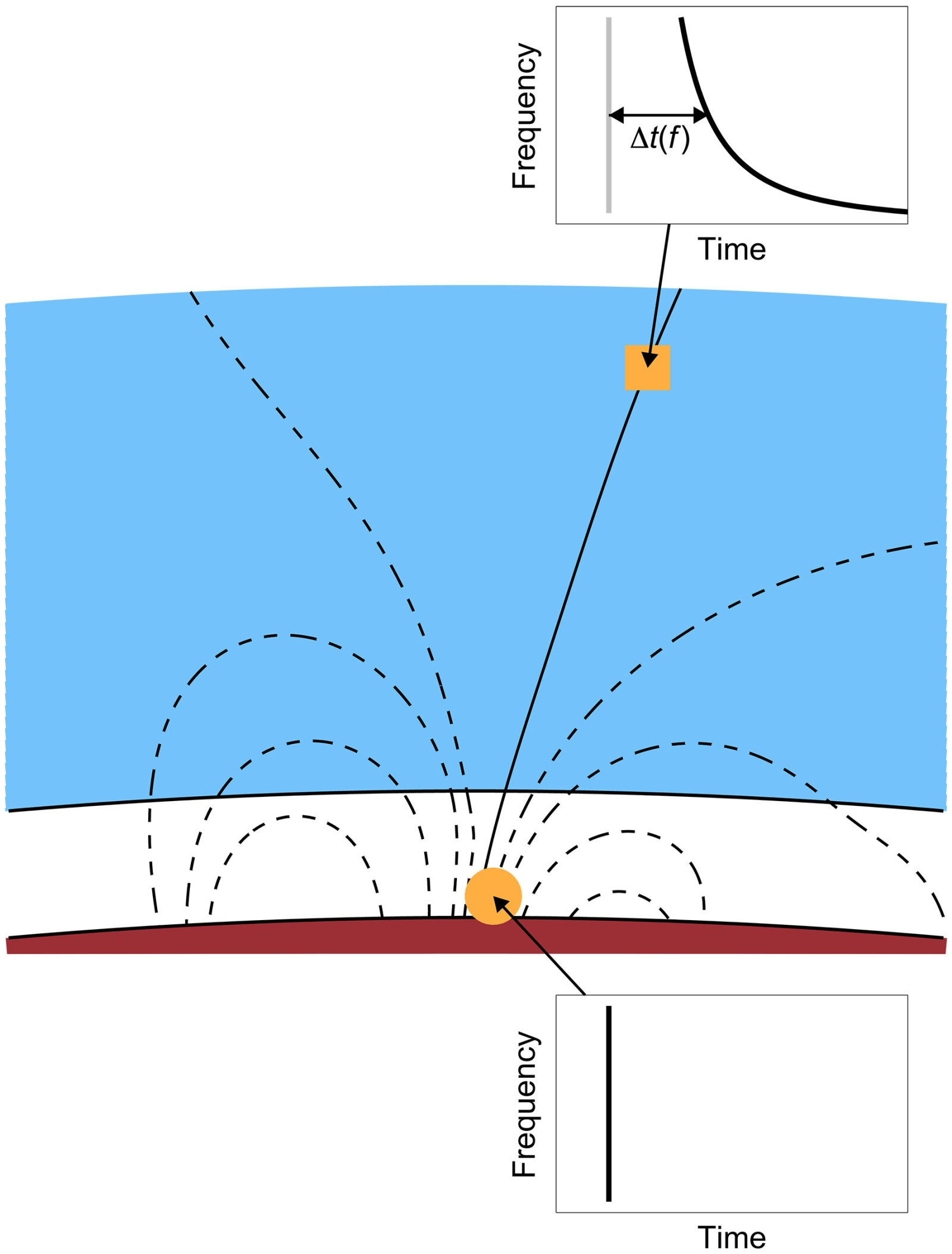
MAVEN detected the signal in a transitional atmospheric layer. At this altitude, Mars’ patchy crustal magnetic fields allow these electromagnetic waves to propagate outward into space, near the planet’s surface.
Analyzing Wave Frequency to Locate Lightning Sources
Data from the Swedish Institute of Space Physics demonstrated the wave frequency declined from about 4,000 Hz to 500 Hz. This decreasing frequency helped calculate the electron density in the wave’s path, confirming the discharge originated below the ionosphere within Mars’ storm-rich weather layers.
Models indicate these electrical events are frequent but resemble a steady glow or “St. Elmo’s Fire” rather than sharp lightning bolts. As reported by Science Alert, the energy involved is far lower than Earth’s lightning, yet still significant for Martian atmospheric chemistry.
Electrons streaming through Mars’ atmosphere can fragment molecules like carbon dioxide and water vapor, initiating chemical reactions that form compounds such as perchlorates. These compounds have been discovered by landers in the Martian soil. As noted by Scientific American, electrical events act as catalysts for reactions not driven solely by sunlight.
Years of Data Analysis Reveal New Insights
Scientists at the Swedish Institute of Space Physics invested several years disentangling MAVEN’s electromagnetic signals from onboard interference. Because the spacecraft generates its own electrical noise, the team had to meticulously analyze thousands of passes to validate that the lightning whistler was a natural Martian occurrence.
Research continues as MAVEN modifies its orbit to seek clusters of these signals. Identifying these hotspots could help pinpoint areas of Mars with stronger crustal magnetism that allow electrical waves to escape into space.
D. A. Gurnett, D. D. Morgan, L. J. Granroth, B. A. Cantor, W. M. Farrell, J. R. Espley, Non-detection of impulsive radio signals from lightning in Martian dust storms using the radar receiver on the Mars Express spacecraft. Geophys. Res. Lett. 37, 10.1029/2010GL044368 (2010).
- Categories:
- Space




0 comments
Sign in to Comment