
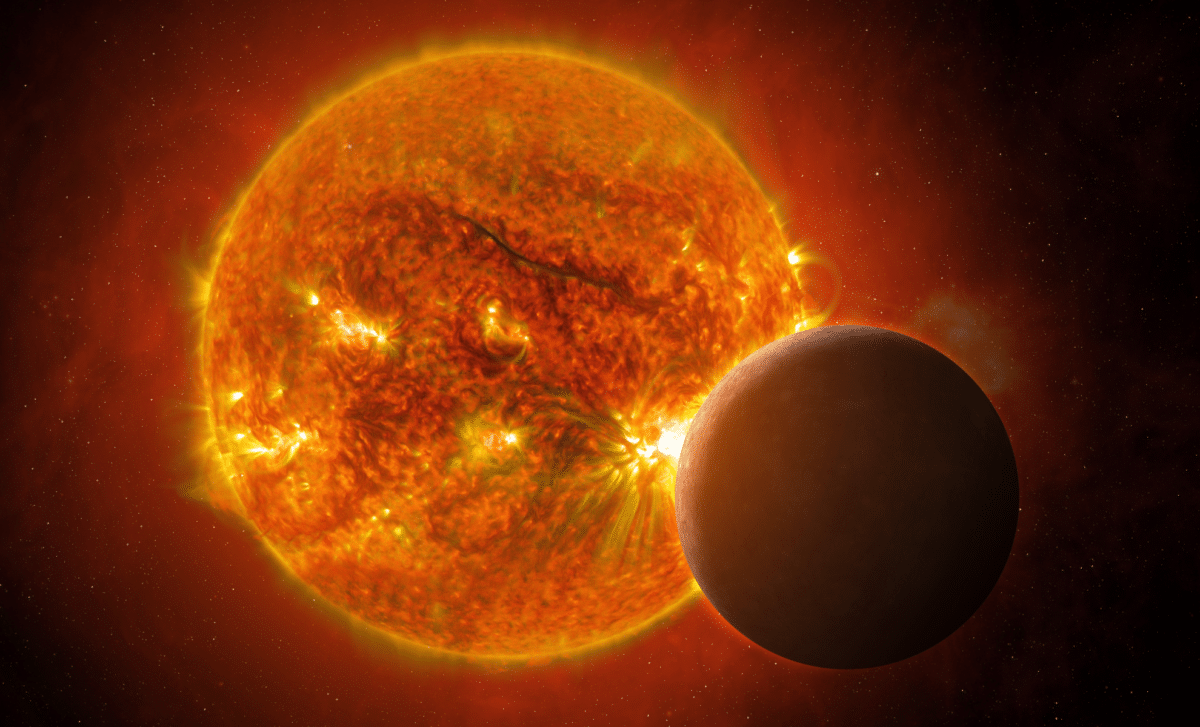
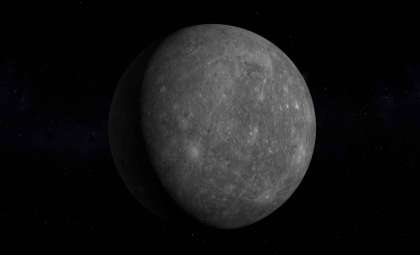
Recent experiments published in Geochimica et Cosmochimica Acta reveal that Mercury's sulfur-enriched interior exhibits behaviors that defy established Earth-centric theories on planetary growth, offering fresh insights into the processes shaping rocky planets.
Mercury Defies Conventional Earth-Based Planetary Models
For many years, Earth has served as the standard reference for deciphering the formation and development of rocky planets. However, new laboratory recreations of Mercury’s distinctive and extreme chemistry are testing this paradigm. Mercury’s surface, characterized by low iron and high sulfur content, is unlike any other terrestrial planet explored so far.
“Mercury’s surface composition is radically different from Earth’s,” explained Rajdeep Dasgupta, Maurice Ewing Professor in Earth Systems Science and director of the Rice Space Institute Center for Planetary Origins to Habitability. “We were unable to analyze its magmatic history using Earth-based assumptions, and interpreting data from missions posed challenges. Our solution was to simulate Mercury’s conditions via the meteorite Indarch in the lab.”

This novel strategy represents a crucial shift: instead of applying familiar Earth frameworks to Mercury, scientists are constructing models based on the planet’s unique chemistry. The broader consequence is profound — if Mercury formed and evolved under such distinct internal mechanisms, then the variety of rocky planets in the universe might be far broader than previously thought. This research points to an era of planet-focused geochemistry, interpreting planets on their own terms instead of through Earth analogies.
Using a 19th Century Meteorite to Simulate Mercury’s Interior
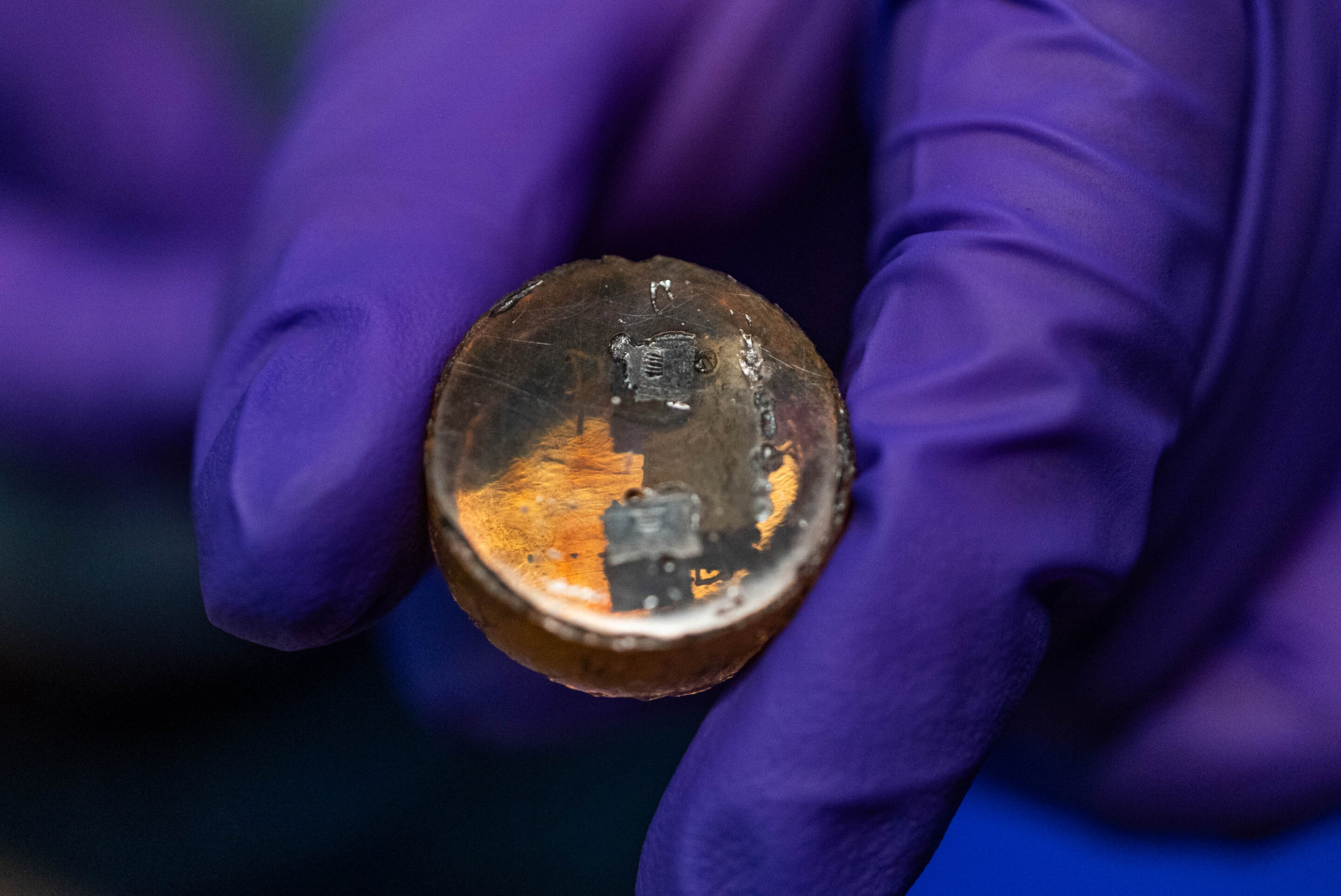
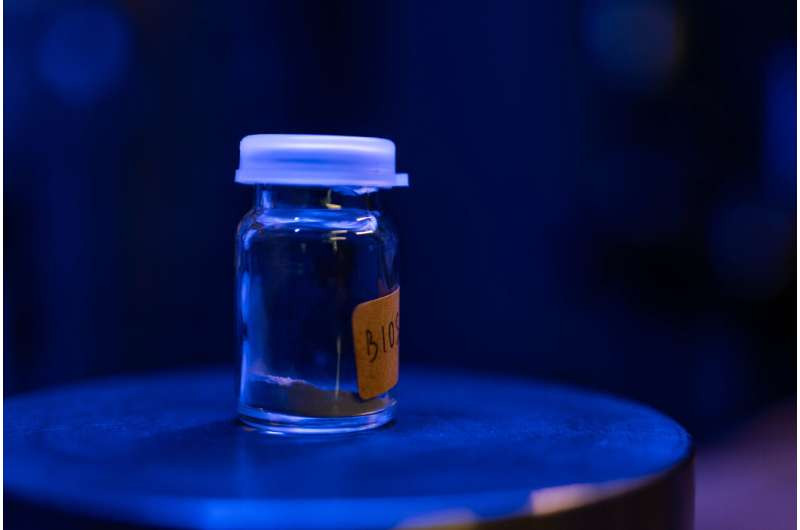
The breakthrough came from the meteorite Indarch, which landed in Azerbaijan in 1891. Its chemical make-up closely resembles Mercury’s, particularly its reduced chemical state and high sulfur content. Leveraging Indarch as a baseline, scientists created Mercury-like magmas under tightly controlled lab conditions.
“Indarch chemically is as reduced as rocks on Mercury,” said Yishen Zhang, a postdoctoral researcher in Dasgupta’s lab and lead author of the study. “It is believed to be a possible building block of the planet,”
Employing high-pressure and high-temperature experimental setups, researchers mimicked Mercury’s interior environment, fine-tuning temperature, pressure, and chemistry to align with spacecraft data.
“This process of cooking a rock can show us what happened chemically inside of Mercury,” Zhang said. “By using the temperature, pressure and chemical constraints derived from spacecraft observations and models, we recreate Mercurylike conditions to understand how magmas form and evolve there—even without direct samples from the planet.”
The experiments uncovered a remarkable fact: sulfur substantially reduces the temperature at which magma solidifies. Consequently, Mercury’s molten rock could remain liquid over longer durations and at cooler temperatures than comparable magmas on Earth. This finding profoundly alters scientific perspectives on Mercury's interior cooling rates, volcanic activity, and surface development.
Sulfur Replaces Oxygen’s Structural Role, Transforming Planetary Chemistry
On Earth, oxygen dominates rock structure by bonding with silicon and other elements to create stable silicate frameworks. These frameworks determine how magma behaves, cools, and solidifies. Mercury fundamentally breaks this mold.
Mercury’s deficiency in iron means sulfur does not bind into iron compounds as it does on Earth or Mars. Instead, sulfur bonds with key rock-forming elements like magnesium and calcium, effectively assuming a structural role typically held by oxygen.
“As Indarch may represent Mercury’s proto-planet state,” Zhang said, “these experiments show that Mercury likely formed with sulfur occupying a structural position that on Earth belongs to oxygen. This fundamentally changes how the planet’s mantle solidified.”
This substitution weakens mineral bonding, reduces crystallization temperature, and modifies magma properties. The interior thus behaves unlike anything found on Earth, likely leading to a mantle that cooled and solidified over an entirely different timeline, influencing volcanic and crustal processes.
Towards a New Paradigm for Alien Planet Geochemistry
Published in Geochimica et Cosmochimica Acta, these results extend beyond Mercury, highlighting the pitfalls of Earth-centric approaches to rocky planets and advocating for more adaptable models accommodating varied chemical systems.
“This is a fascinating glimpse of how Mercury may have evolved as a planet to its unique current-day surface chemistry,” Dasgupta said. “More importantly, it provides a way for us to think about planets not based on how Earth was formed, but based on their own unique chemistry and magmatic processes under vastly different conditions. What water or carbon does to the magmatic evolution of Earth, sulfur does on Mercury.”
This approach impacts interpretation of data from ongoing and future missions to Mercury, Mars, and distant rocky exoplanets. A planet's unique chemistry becomes a key factor shaping its geological identity, rather than a mere detail.
Moving forward, Mercury reminds us that even the smallest terrestrial planet can challenge prevailing scientific assumptions and inspire a fundamental reevaluation of how rocky worlds develop internally.
- Categories:
- Astronomy






0 comments
Sign in to Comment