
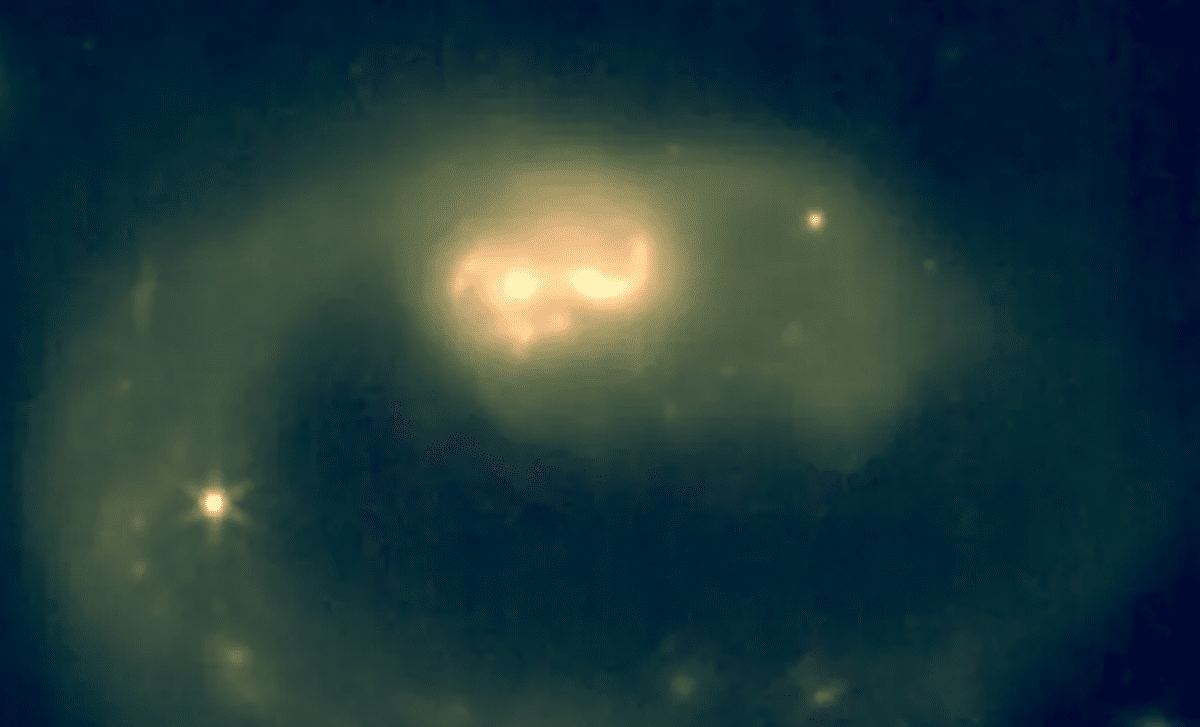
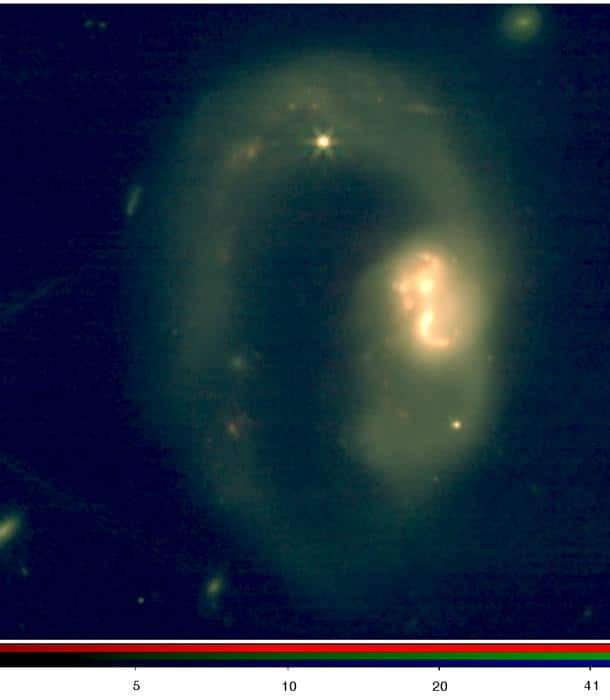
A recent investigation led by astronomers utilizing the James Webb Space Telescope (JWST) has identified a rich assortment of organic compounds within the remote galaxy IRAS 07251–0248. This finding provides new perspectives on the formation of life's fundamental molecules, illustrating how intricate chemical structures can develop in some of the universe's most extreme environments. By exploiting JWST’s advanced infrared detection capabilities, researchers gained an unprecedented look into the galaxy's heavily obscured core, discovering a remarkable variety of molecules that could illuminate how life emerges beyond our planet.
A Surprising Chemical Diversity
JWST's examination of the ultra-luminous infrared galaxy IRAS 07251–0248 allowed scientists to capture a detailed snapshot of the molecular landscape in a distant galactic setting. Known for its dense, dust-enshrouded center, this galaxy emits intense infrared radiation that JWST can observe without interference, enabling the team to study the composition of its gas, dust, and icy components with exceptional clarity.
“We found an unexpected chemical complexity, with abundances far higher than predicted by current theoretical models,” said Ismael García Bernete, team leader and researcher at the Center for Astrobiology (CAB).
Add Cosmo Herald as a Preferred Source

Findings revealed a far greater network of molecules than scientists had expected, implying that the cores of some galaxies may serve as ongoing sources of carbon. This carbon likely fuels the chemical reactions necessary to form organic molecules, challenging earlier ideas about the presence and spread of complex organics in such harsh cosmic regions. The results point to a surprisingly prolific generation of molecules in environments thought to be inhospitable for such chemistry.
Essential Organic Molecules Discovered
Within the mix of detected chemicals, several simple organic molecules such as methane, acetylene, benzene, and the highly reactive methyl radical emerged prominently. These compounds are considered the fundamental elements in the pathway toward more complex life-supporting molecules. Detecting them in such a far-flung galaxy has the potential to transform our understanding of how life's precursors arise in the cosmos.
Though these small organic molecules are not components of living organisms themselves, they are critical in prebiotic chemistry processes. "Although small organic molecules are not found in living cells, they could play a vital role in prebiotic chemistry, representing an important step towards the formation of amino acids and nucleotides," stated Dimitra Rigopoulou from the University of Oxford. This highlights their importance as transitional compounds leading to life's essential macromolecules.
Influence of Cosmic Rays on Organic Chemistry
The study also highlights the influential role of cosmic rays on the galaxy’s chemical environment. While factors like high temperatures and turbulent gas motions partly explain the molecular complexity, the team suggests that cosmic rays—high-energy particles traveling through space—are instrumental in breaking down larger carbonaceous dust grains. This process generates smaller, organic molecules, adding a dynamic layer to the molecular growth occurring in space and emphasizing the impact of energetic particles on chemical evolution.
Wider Implications for the Search for Life
These insights have profound implications beyond IRAS 07251–0248. The presence of rich organic chemistry in distant galaxies supports the possibility that the building blocks for life might be widespread throughout the universe. This galaxy may act as a molecular factory, where cosmic phenomena contribute to producing life's precursors. The findings pave the way for future research into the chemical development of other galaxies and planetary systems that might harbor conditions conducive to life.
Published in Nature on February 6, the paper showcases JWST’s exceptional ability to explore remote, dust-enshrouded cosmic locales, promising to revolutionize our understanding of the universe's molecular makeup and the pathways leading to life’s origins.
- Categories:
- Astronomy





0 comments
Sign in to Comment