
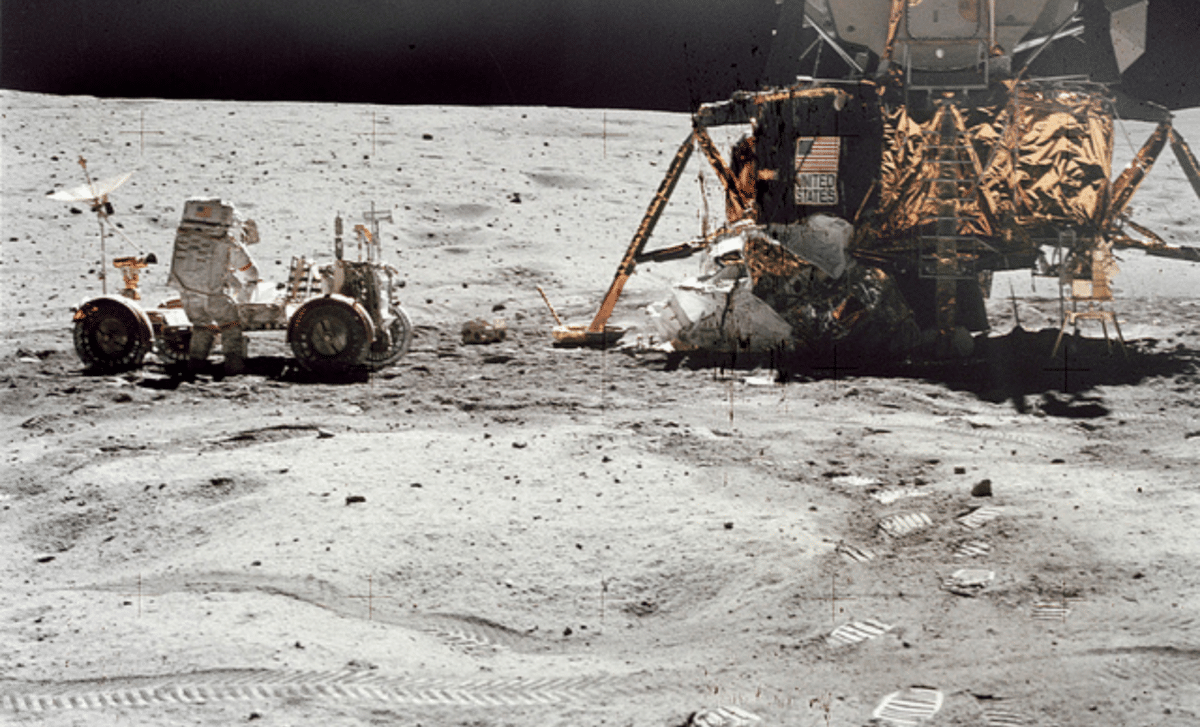
With the surge in lunar exploration, scientists are increasingly concerned about contamination from spacecraft emissions impacting the Moon’s untouched surface. A freshly published investigation in Journal of Geophysical Research: Planets underscores how exhaust gases unleashed during moon landings might disrupt the Moon’s fragile environment, especially regions rich in clues about Earth’s biological origins.
Emerging Contamination Threats in Lunar Research
The article in Journal of Geophysical indicates that emissions from spacecraft could severely hinder efforts to analyze the Moon’s ancient geological record. "Our goal is to safeguard scientific integrity and protect the investments we’ve made in space exploration," said Silvio Sinibaldi, planetary protection officer at the European Space Agency and lead author on the paper. Due to its largely unchanged surface, the Moon offers unique insights into the early solar system and potentially the origin of life on Earth, but this valuable record may be at risk from pollution generated by lunar missions.
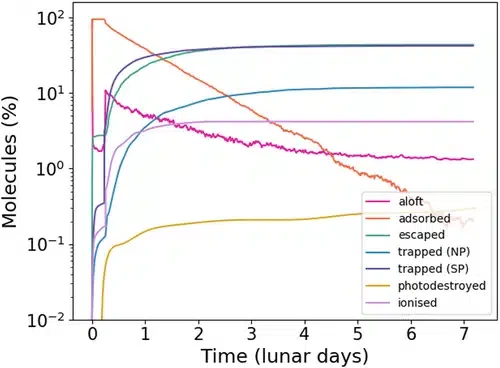
The research focused particularly on methane, a dominant organic compound emitted by rocket engines, revealing how it could rapidly spread over the lunar landscape. Sinibaldi’s team modeled methane dispersion from a spacecraft landing near the South Pole of the Moon, finding that in under two lunar days, methane could traverse all the way to the North Pole. This evidence signals that contamination could extend across the lunar surface regardless of where landings occur. "Within a week, molecules can be spread from one pole to the other," Sinibaldi warned.

Polar Regions: Crucial Sites for Understanding Life’s Precursors
The permanently shadowed areas near the Moon’s poles are scientifically invaluable. Known as permanently shadowed regions (PSRs), these zones harbor ice deposits believed to have arrived via asteroid and comet impacts billions of years ago. These ices might contain prebiotic organics—the chemical building blocks of life—such as DNA, potentially shedding light on the emergence of life on Earth. Yet Sinibaldi cautions that organic gases from spacecraft exhaust may jeopardize the purity of these vital deposits.
“We know we have organic molecules in the solar system—in asteroids, for example,” Sinibaldi said. “But how they came to perform specific functions like they do in biological matter is a gap we need to fill.”
The Moon’s undisturbed polar craters offer a rare chance to investigate such organics in their original, unmodified state, unlike Earth’s dynamic geosphere. However, with growing numbers of missions planned, the risk of contaminating these critical sites continues to rise.
Advanced Simulations Illuminate Methane’s Lunar Behavior
To understand the potential reach and consequences of methane contamination, Sinibaldi and physicist Francisca Paiva from Instituto Superior Técnico created detailed computational models simulating methane molecule movement across the lunar surface, incorporating influences from solar wind and ultraviolet radiation.
“We were trying to model thousands of molecules and how they move, how they collide with one another, and how they interact with the surface,” said Paiva. “It required a lot of computational power. We had to run each simulation for days or weeks.”
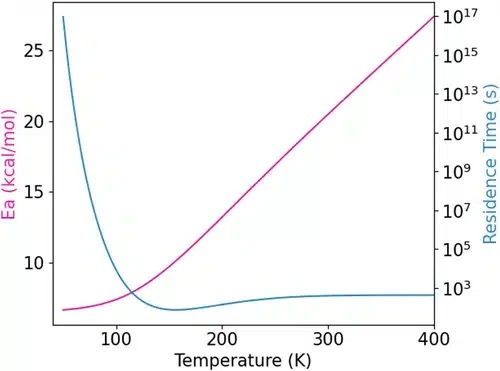
The findings were striking. Methane molecules, driven by solar radiation but slowed by the Moon’s cold terrain, can hop over long distances in a ballistic manner. “Their paths resemble a series of jumps from one spot to another,” Paiva explained, emphasizing the complexity of avoiding widespread contamination since these molecules can traverse the entire lunar surface freely.
Strategies to Preserve the Moon’s Pristine Environment
This research has significant implications as more countries and private enterprises gear up for lunar ventures.
“I want to bring this discussion to mission teams, because at the end of the day, it’s not theoretical—it’s a reality that we’re going to go there,” said Sinibaldi. “We will miss an opportunity if we don’t have instruments on board to validate those models.”
The authors stress that future moon missions must carefully consider contamination risks from exhaust emissions and adopt policies to protect key research sites.
While the study identifies contamination challenges, it also suggests mitigation tactics. Choosing colder landing zones could help reduce molecule dispersion. Furthermore, scientists are investigating whether exhaust molecules settle on the icy surfaces of PSRs without penetrating deeper layers beneath. Such approaches could help shield the Moon’s ancient environmental legacy.
Advocating Strong Planetary Protection for Lunar Exploration
The Moon represents a rare and valuable natural archive. Just as terrestrial environments like Antarctica are governed by strict contamination laws, the same protections should extend to lunar landscapes. Paiva likens the Moon’s need for safeguards directly to existing Earth regulations.
“We have laws regulating contamination of Earth environments like Antarctica and national parks,” she said. “I think the Moon is an environment as valuable as those.”
As humanity advances its lunar ambitions, developing comprehensive planetary protection measures will be vital to preserve the Moon’s scientific potential.
- Categories:
- Astronomy









0 comments
Sign in to Comment