
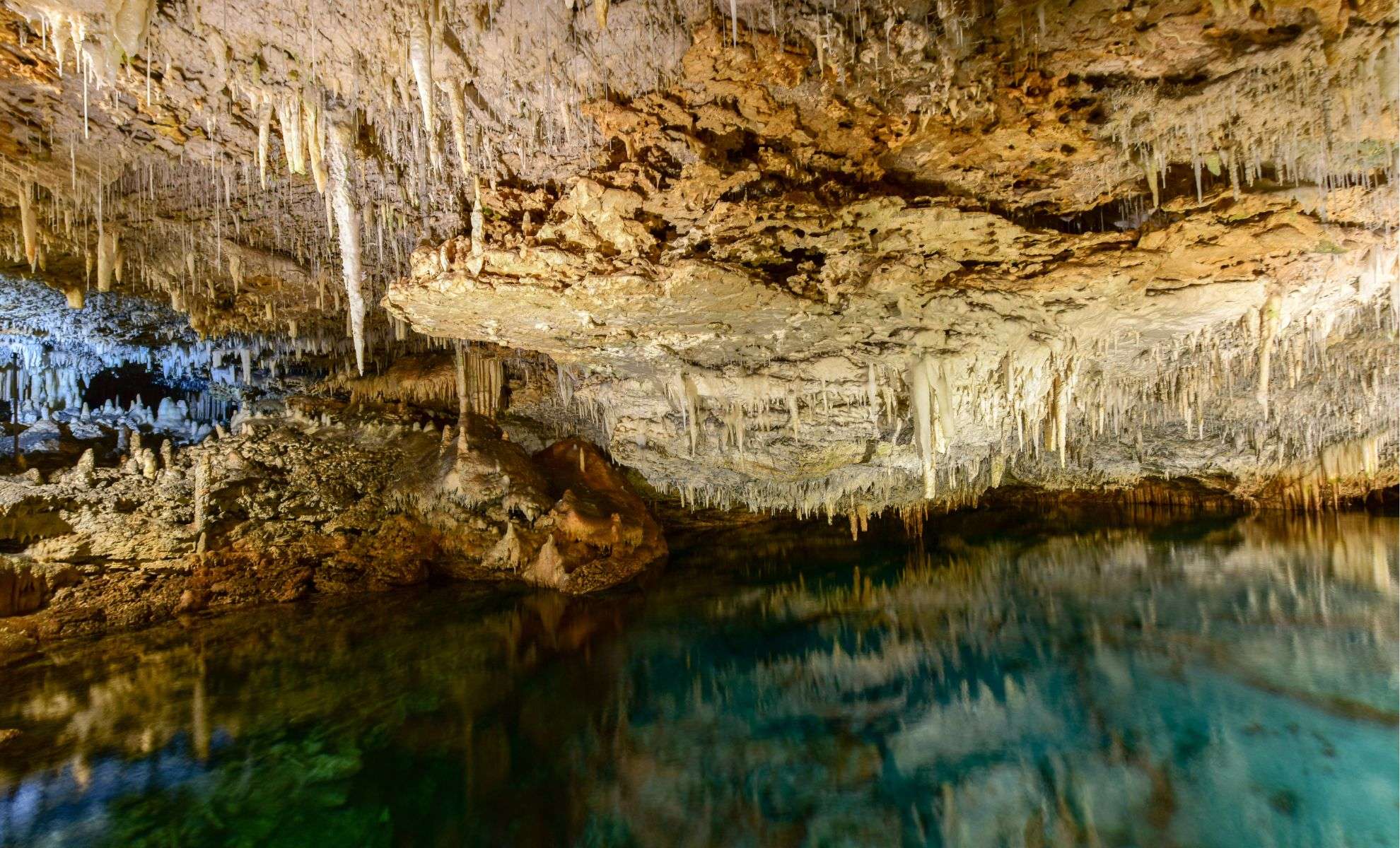
Far beneath the blazing northern Mexican desert, an extraordinary cave challenges imagination. Located inside the Naica Mine of Chihuahua, renowned for silver and lead mining, workers uncovered a chamber so surreal it seemed otherworldly. Witnesses likened the massive crystal formations to the remnants of ancient deities.
An Unexpected Find That Revolutionized Mineralogy
In 2000, miners broke through a sealed chamber now famed as the Giant Crystal Cave. Preserved and hidden for hundreds of thousands of years, this cave revealed gigantic selenite crystals, a form of gypsum, with some exceeding 30 feet in length.
These gigantic crystal structures extended from every surface—walls, floors, and ceilings—creating a complex network of translucent monoliths. Descriptions from those who entered include phrases like “a setting from a fantasy tale.” Protected by darkness and isolation, this subterranean wonder remained untouched by natural or human forces for over half a million years.

The Unique Conditions Behind Crystal Growth
National Geographic reports that these impressive crystals formed due to a finely tuned combination of temperature, chemical environment, and geological time. A magma chamber beneath Naica maintained groundwater at a consistent 58°C (136°F), saturated with calcium sulfate, which is essential for gypsum crystal formation.
Over thousands of years, minerals dissolved in this hot water slowly crystallized as selenite, stacking layer upon layer. The steady temperature was critical—any fluctuation would have interrupted growth or dissolved the formations entirely.
Mining activities that pumped out groundwater upset this balance. As water drained from the cave, the crystals came into direct contact with air, halting their growth and prompting gradual degradation. Temperature and humidity changes have led to cracks appearing in some of these enormous crystals.
A Hostile Habitat for Humans—or Possibly Microbial Life?
The cave’s environment is extremely harsh, characterized by intense heat and heavy humidity. Conditions inside can cause heat exhaustion within minutes, necessitating explorers to wear specialized cooling gear and carry cold packs for brief exploration.
Due to the thick, saturated air, breathing is difficult, and spoken communication is often compromised. The cave environment has been likened to a space mission setting, where survival depends entirely on protective equipment and careful preparation.
Remarkably, despite its extreme nature, scientists have identified ancient microbes trapped within the crystals. These hardy microorganisms potentially survived tens of thousands of years by subsisting on trace minerals dissolved in the water, expanding our understanding of life's adaptability under severe conditions.
Timeless Geological Artistry
According to geologist García-Ruiz, every crystal in the Naica cave is “a natural masterpiece,” ranging from crystal-clear forms to those with tiny shimmering inclusions. Together, they construct a dazzling labyrinth of sparkling corridors. This formation is the product of tectonic movements that sculpted the mine’s geology millions of years ago. Such a unique combination of factors makes this cave an extraordinary geological treasure unlikely to be replicated.
- Categories:
- News









0 comments
Sign in to Comment