
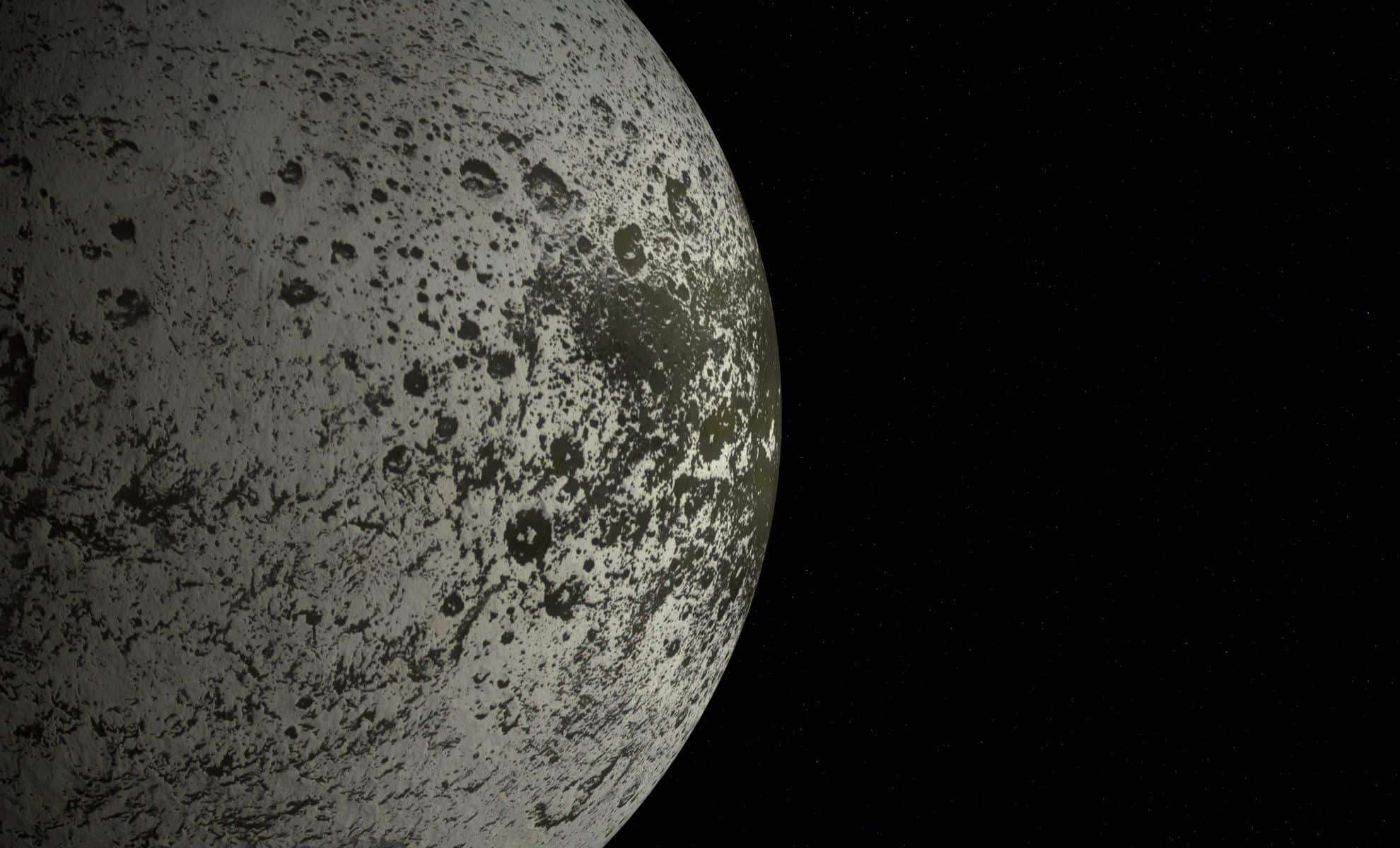
An intriguing NASA photograph of Saturn’s moon Iapetus, originally taken in 2007 by the Cassini spacecraft, has resurfaced online, reigniting curiosity about a puzzling geological formation. This image highlights a remarkable feature that has baffled scientists for years, captivating the online community once again, especially users on Reddit who are fascinated by the moon’s distinctive equatorial ridge.
A Moon Divided by a Unique Ridge
Located over two million miles (3.22 million kilometers) from Saturn, Iapetus stands out among the solar system’s moons due to its unusual appearance. Locked in synchronous rotation with Saturn, always presenting the same side to the planet, Iapetus reveals a distinct division first documented in the 17th century. The astronomer Giovanni Cassini noted a marked difference between the brightness of its hemispheres—a phenomenon that continues to puzzle researchers.
Beyond this striking contrast lies an extraordinary raised ridge that runs nearly along the entire equator. In the Cassini image, this ridge looks almost like a seam joining two halves, giving the impression of a celestial body forged and left incomplete.

Standing about six miles (10 kilometers) high and extending around much of Iapetus’s equator, the jagged formation has been dubbed the “Voyager Mountains”, named after the Voyager I and II spacecraft that first discovered it in the 1980s.
Captivating Online Interest
Interest in Iapetus’s mysteries has surged on Reddit, particularly within the r/SpacePorn subreddit, where members debate the formation’s origin, mixing scientific curiosity with playful speculation.
Users have described the ridge as a “bizarre equatorial line,” while others humorously likened the moon to a molded object or a “Kinder moon” waiting to be cracked open like a chocolate treat. This discussion rapidly gained traction with thousands of upvotes and numerous comments.
Exploring Scientific Explanations
While the true origins of the ridge are still debated, NASA researchers have suggested several plausible scenarios. One idea proposes that the ridge formed during a period when Iapetus spun much faster than it does currently.
Another theory suggests the ridge resulted from debris remaining after the collapse of a once-present ring system surrounding the moon. Alternatively, some scientists are investigating whether the feature emerged from icy material that pushed up from beneath the surface and froze solid.
An Enigmatic Feature Waiting to Be Decoded
Despite the high-resolution images provided by advanced spacecraft, the geological processes that created Iapetus’s dramatic landscape remain a mystery. As ongoing analysis of archival data continues and online communities engage in discussion, the expansive ridge offers a striking testament to planetary phenomena that humanity has yet to unravel fully.
- Categories:
- Space










0 comments
Sign in to Comment