
The International Space Station is once more hosting pioneering experiments, as NASA enhances its Cold Atom Lab—a specialized facility engineered to generate a rare quantum state. With the latest upgrades, this orbital lab enables scientists to investigate quantum behaviors under unique conditions unachievable on Earth. This breakthrough brings us closer to decoding the fundamental physics of the cosmos and supports the development of future quantum innovations.
Microgravity on the ISS Unlocks New Quantum Possibilities
For many years, physicists have pursued methods to observe matter governed by quantum mechanics. These quantum effects become pronounced when atoms are chilled to near absolute zero temperatures, forming a Bose-Einstein condensate. The existence of this extraordinary state was theoretically suggested in 1924 by Albert Einstein and physicist Satyendra Nath Bose, though it wasn’t experimentally achieved until 1995, a feat honored with the Nobel Prize in Physics.
Unlike Earth-bound laboratories, the International Space Station offers extended periods of microgravity, improving the quality of these delicate experiments. In the absence of gravitational forces acting on ultracold atoms, researchers can study their quantum wave properties for longer durations. This leads to more accurate data and uncovers subtle quantum phenomena that vanish rapidly under normal conditions. According to NASA, the Cold Atom Lab’s recent upgrade increases its research potential, allowing deeper exploration into complex quantum mysteries.

Exploring a New State of Matter to Revolutionize Technology
While most are familiar with solids, liquids, gases, and plasma, Bose-Einstein condensates represent a distinct state where individual atoms lose their separate identities at temperatures nearing absolute zero and act collectively as a singular quantum entity. This unique behavior enables direct examination of quantum mechanics on macroscopic scales uncommon in typical experiments.
With the enhanced Cold Atom Lab, scientists anticipate accelerated investigations into quantum properties like superfluidity and superconductivity. These phenomena hold promise for advancements in fields such as computing, navigation, and communications. As Ethan Elliott, deputy project scientist for Cold Atom Lab at NASA’s Jet Propulsion Laboratory (JPL) stated:
“In the previous century, there was a quantum revolution that led to lasers, cellphones, and MRIs for medical imaging. We’re performing quantum 2.0—direct manipulation of large quantum states—and we hope for similar gains in quantum tech by advancing this science in orbit.”
His words emphasize the project's vision: to transcend theoretical studies and foster discoveries that could ultimately drive new technological paradigms across multiple sectors.
Achieving Near-Absolute Zero Temperatures Demands Delicate Precision
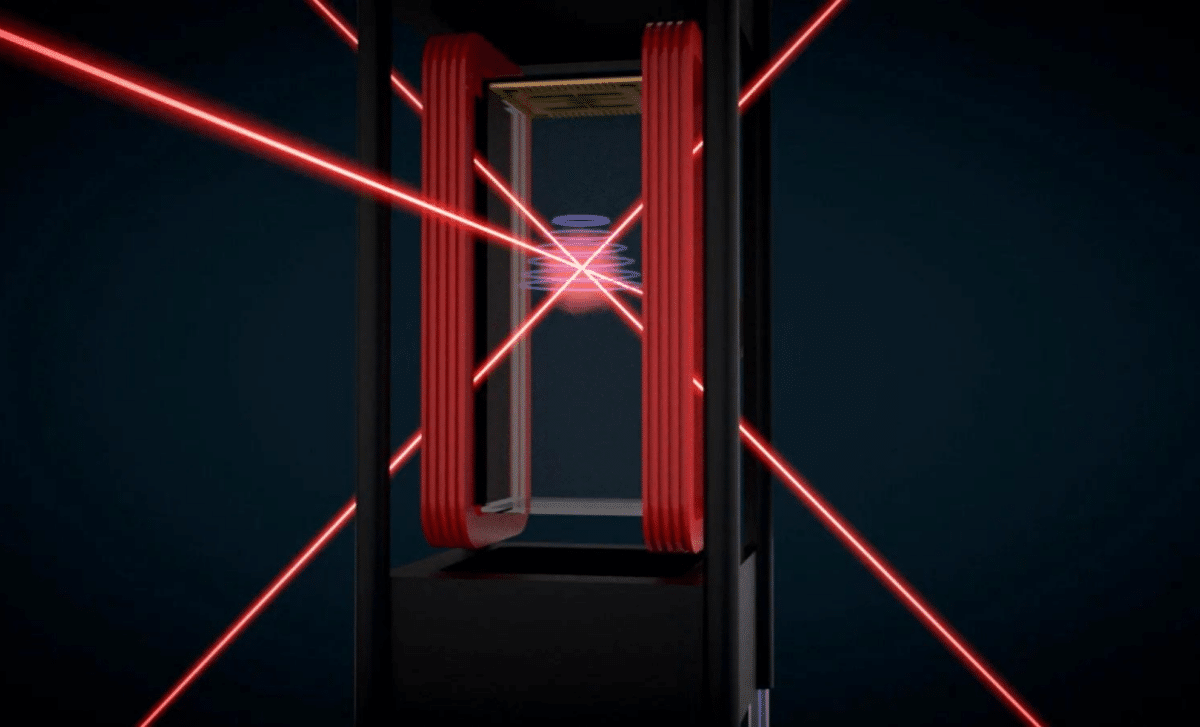
Generating a Bose-Einstein condensate requires exceptional technological control. Inside the Cold Atom Lab, scientists heat strips of rubidium or potassium to release atom clouds into an ultra-high vacuum environment. These atoms are then cooled using powerful lasers that reduce their kinetic energy, slowing their movement dramatically. Magnetic fields hold the atoms in place while additional cooling pushes them incredibly close to absolute zero, enabling quantum phenomena to become dominant.
The station’s microgravity extends the lifespan of these ultracold atomic clouds far beyond what’s achievable on Earth, allowing researchers to detect minute variations in atomic behavior with unmatched accuracy.
Jason Williams, a JPL scientist involved with the Cold Atom Lab, explained the experiment’s significance:
“Ultracold matter can behave in ways that are not only unexpected but that also enable extremely precise measurements of time, gravity, and motion. The lab has lots of tools—especially with this latest upgrade—to let us probe the nature of the universe.”
These detailed observations may improve ultra-sensitive technology used in navigation, gravitational research, and other sophisticated measuring techniques.
The Newest Upgrade Pushes Quantum Boundaries Even Further
The Cold Atom Lab’s fourth major enhancement introduces fresh hardware that broadens the scope and accuracy of experiments conducted aboard the ISS. Each advancement empowers scientists to manipulate ultracold atoms more intricately as they probe the interface where classical physics fades into quantum effects.
Project manager Kamal Oudrhiri summed up the significance of this development:
“It’s the closest thing we have to controlling the boundary of the quantum world. This new upgrade pushes that boundary even further.”
This statement underlines the mission's broader aim—not merely verifying existing models but perpetually expanding the horizons of quantum observation. As these orbital experiments progress, findings will likely shape the future of quantum computing, ultra-precise sensors, next-generation clocks, and innovative instruments still in theoretical stages.
- Categories:
- Nasa









0 comments
Sign in to Comment