
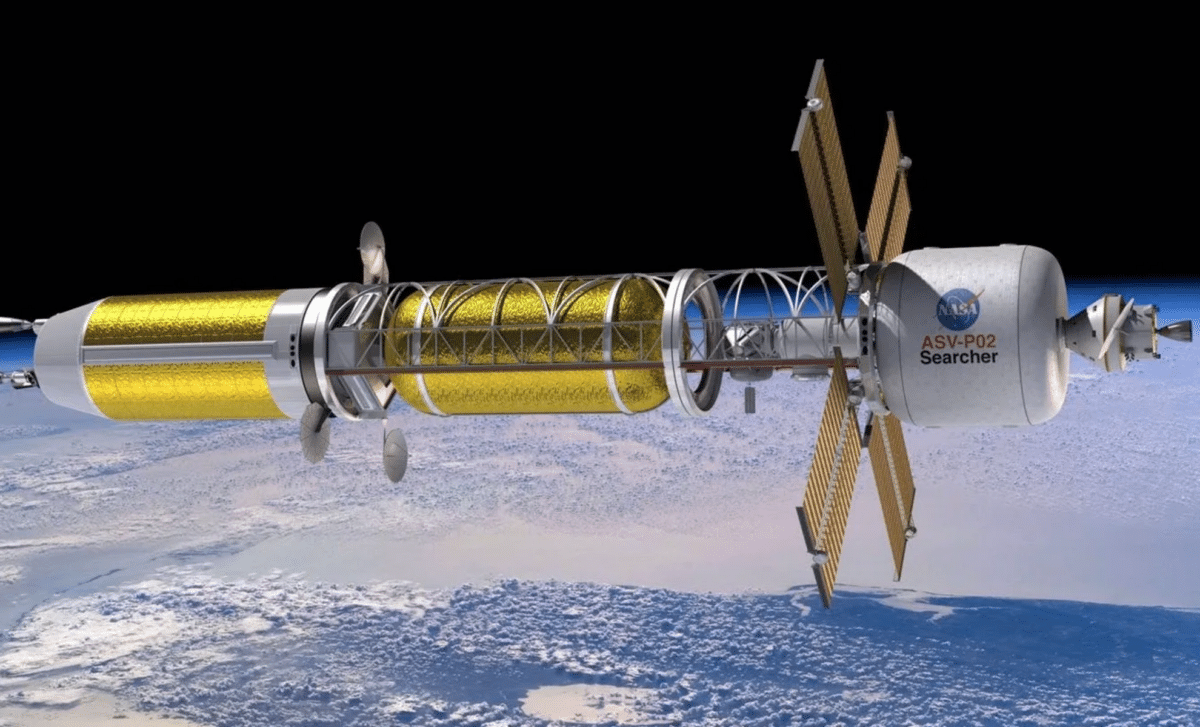
Upcoming journeys to the Moon, Mars, and beyond might no longer require carrying all fueling supplies from Earth. NASA has achieved a breakthrough with an innovative cryocoupler, a device engineered to transfer ultra-cold rocket fuels between spacecraft in orbit. This milestone marks progress toward establishing orbital fuel stations that could revolutionize space travel by easing launch limitations and enabling ambitious missions previously out of reach.
Compact Innovation Holds Vast Potential
Fuel remains one of the most significant challenges for deep space travel. The cost and weight of carrying every kilogram of propellant from Earth restrict payload and shape spacecraft design. For years, scientists have envisioned orbital refueling hubs where spacecraft could replenish supplies mid-mission. Making this a reality demands novel technology capable of safely handling cryogenic fluids like liquid hydrogen and liquid oxygen in the harsh vacuum of space.
Unlike ground-based fueling setups, in-space refueling equipment must repeatedly connect and disconnect autonomously under extreme conditions. Subzero temperatures, vacuum exposure, and tight docking tolerances present complex engineering hurdles. As NASA explains, overcoming these challenges is critical for upcoming exploration strategies focused on reusable spacecraft and space logistics over fully fueled single-use launches.

Travis Belcher, the cryocoupler project lead at NASA’s Marshall Space Flight Center, noted,
“In-orbit cryogenic refueling between two spacecraft has yet to be done and remains one of the toughest engineering challenges in spaceflight. These propellant transfers are essential for the kinds of missions NASA wants to fly in the future, so developing a coupler that can handle ultra-cold propellants is a critical step toward making that capability real.”
His insights highlight why even a small device like this cryocoupler could become a cornerstone for next-generation space exploration infrastructure.
Rigorous Trials Validate Cryocoupler Design
Developed by L3Harris, the cryocoupler was subjected to extensive evaluations at NASA’s Marshall Space Flight Center. Testing involved exposing the device to liquid nitrogen temperatures near minus 321 degrees Fahrenheit to examine how seals and mechanical components withstand intense thermal stress during anticipated orbital use.
Cryogenic fuels pose particular challenges as minor heat intrusion can provoke rapid vaporization and fuel loss. Additionally, materials contract at these frigid temperatures, threatening the tight tolerances needed to maintain sealed connections during fuel transfers. Engineers focused on not just successful fluid flow but also the system’s durability through numerous automated coupling cycles.
Part of the testing recreated authentic spacecraft docking dynamics. By mounting one half of the coupler on a robotic arm capable of multi-axis movement, engineers introduced intentional misalignments to assess performance under realistic conditions. This ensures the hardware can compensate for minor positioning differences during autonomous rendezvous, a vital capability as future fueling will rely heavily on automated operations.
Automation Enhances Safety, Reduces Need for Spacewalks
The fully automated nature of the cryocoupler sets it apart from conventional fueling systems, which require manual connection at launch pads and disconnection shortly after liftoff. These traditional mechanisms were never designed for multiple dockings in orbit over a spacecraft’s lifespan.
Belcher emphasized this shift from past approaches:
“The cryocouplers we’re working on can attach and detach multiple times and are fully automated, so astronauts won’t have to perform a spacewalk to transfer propellant,” he said. “They’re rigorously designed to withstand space and sized for the expected tank designs.”
Eliminating the need for astronauts to conduct refueling spacewalks enhances mission efficiency and safety. Automated systems could support refueling of reusable lunar landers, cargo transports, deep-space vehicles, and orbital fuel stations with minimal human oversight. As governments and commercial operators aim for ongoing missions beyond Earth’s orbit, such technologies are increasingly crucial.
This innovation also aligns with the vision of a sustainable space economy, where spacecraft can be serviced and refueled rather than discarded after a single journey. Robust cryogenic transfer systems are essential to realizing that vision.
Progress Toward Functional Orbital Fuel Stations
While recent tests yielded promising outcomes, the cryocoupler is still in early development stages. Current efforts focus on validating basic performance before tailoring designs to specific spacecraft types and mission needs. Each application will demand unique engineering to accommodate varying propellants, tank capacities, docking procedures, and operational criteria.
Belcher remarked on the future work ahead:
“These cryocouplers are very early in development, so the testing is mostly focused on basic functionality. Future test campaigns will design them for specific missions and assess them more meticulously based on that mission’s requirements.”
This initiative is part of NASA’s Cryogenic Fluid Management Portfolio, a joint project between Marshall Space Flight Center and Glenn Research Center. The latest evaluations were performed through collaboration with L3Harris under a 2022 Announcement of Collaboration Opportunity. As development continues, this technology could evolve from an experimental prototype into a vital component empowering expeditions to the Moon, Mars, and far beyond. Operational orbital refueling stations promise spacecraft that launch with less bulk, travel greater distances, and enjoy extended mission lifespans compared to today’s vehicles.
- Categories:
- Nasa





0 comments
Sign in to Comment