
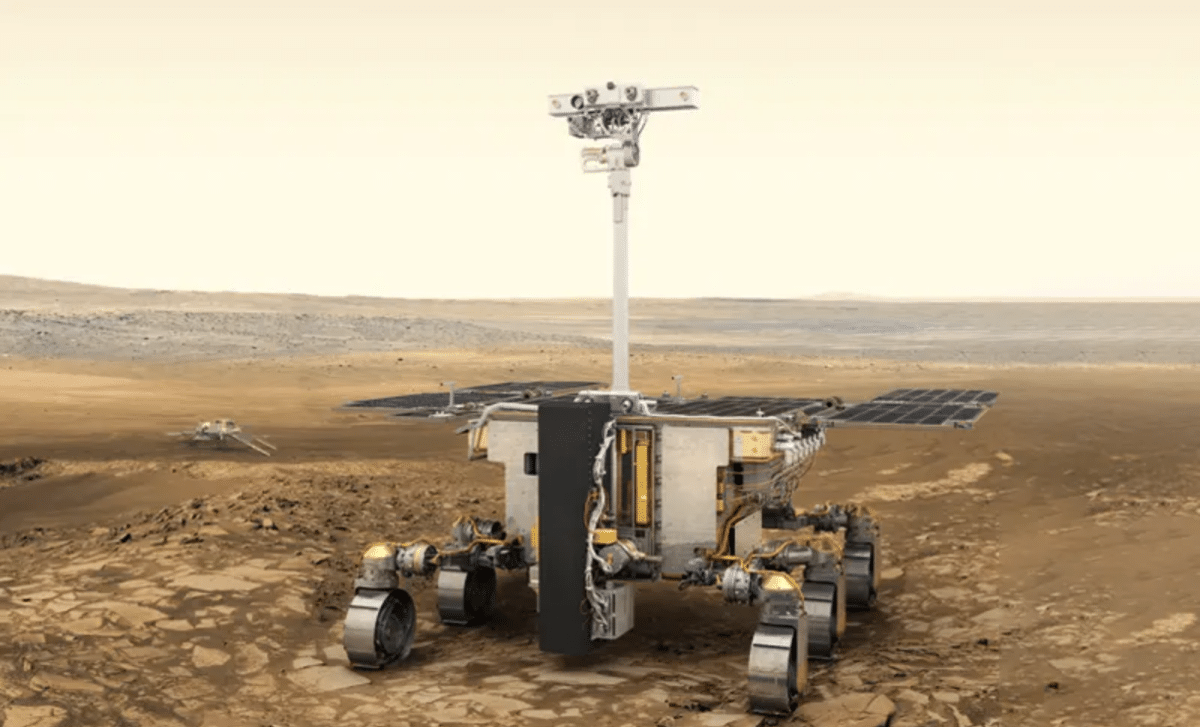
NASA has initiated the deployment phase of its involvement in the European Space Agency’s Rosalind Franklin mission to Mars, planned for a 2028 launch. This groundbreaking mission aims to explore beneath Mars' surface to discover evidence of life, whether ancient or existing. By supplying critical systems and innovative technology, NASA's partnership could unlock revolutionary findings that address the profound question of extraterrestrial life.
Rosalind Franklin Rover: Pioneering Subsurface Mars Exploration
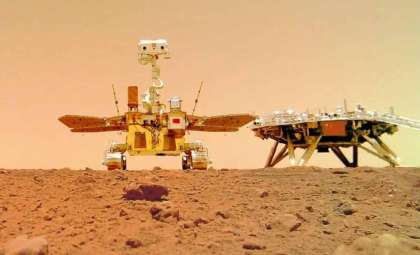
Planned for launch in late 2028, the Rosalind Franklin rover is set to become the first to investigate subsurface environments on Mars in the search for biological signatures. Unlike previous missions focused on surface analysis, this rover targets the unexplored depths beneath the Martian soil.
NASA’s dedication to this mission highlights a strong commitment to uncovering Mars’ geological traits, atmospheric conditions, and its capability to have once harbored life. Led by ESA, the mission will investigate Oxia Planum, a promising location believed to offer vital insights into Mars’ ancient environment and habitability prospects.

And here I am, at New Scientist Live, a few years ago with a spare of the camera from the top of the mast on Rosalind Franklin, and Mars scientist Catherine Regan from @eyesonmars_uk can’t wait to see the mission launch @esa @NASA https://t.co/64YXCuC1Ed pic.twitter.com/tWFlQY68he
— Dan Roach 🛩️ FRAS 🔭 (@dannydenfisch) April 17, 2026
NASA’s Essential Contributions to the Rosalind Franklin Mission
NASA’s involvement with the Rosalind Franklin mission is comprehensive and indispensable. Through the Rosalind Franklin Support and Augmentation (ROSA) initiative, NASA is supplying key elements critical to the rover’s operation. These include launch services, braking thrusters for the lander, and radioisotope heater units designed to keep internal systems functional amid Mars’ extreme cold.
Among NASA’s prominent technological inputs is the Mars Organic Molecule Analyzer (MOMA), a specialized mass spectrometer created to identify organic compounds. Such molecules may point to fundamental components essential to life, deepening our understanding of Mars’ potential to have supported living organisms.
This partnership embodies a major achievement, highlighting international teamwork between NASA and ESA to confront profound extraterrestrial questions. The two agencies cemented their alliance in 2024 with a Memorandum of Understanding, which paved the way for the ROSA project. After successful reviews, the mission is now progressing toward final preparation stages before launch.
Falcon Heavy Chosen as Launch Vehicle for Rosalind Franklin
NASA has selected SpaceX’s Falcon Heavy rocket as the vehicle to carry the Rosalind Franklin rover into space. Launching from Launch Complex 39A at Kennedy Space Center in Florida, the Falcon Heavy’s substantial payload capacity makes it ideal for this deep-space endeavor.
This selection underscores NASA’s strategy of collaborating with private aerospace companies. The Falcon Heavy’s track record for successful payload deployments renders it the optimal choice for delivering this advanced scientific mission to the Martian surface.
Countdown to Launch: Key Steps on the Road to Mars
The journey toward the Rosalind Franklin launch has seen significant milestones. Following the 2024 Memorandum of Understanding, the project cleared its Preliminary Design Review and advanced into Phase B, focusing on refining the mission architecture and assuring readiness to withstand the rigors of spaceflight and Mars’ environment.
As the 2028 target approaches, NASA and ESA continue joint efforts to complete hardware development and prepare for the launch. These next years will be vital as these agencies coordinate to execute one of the most ambitious explorations of Mars to date.
- Categories:
- News






0 comments
Sign in to Comment