
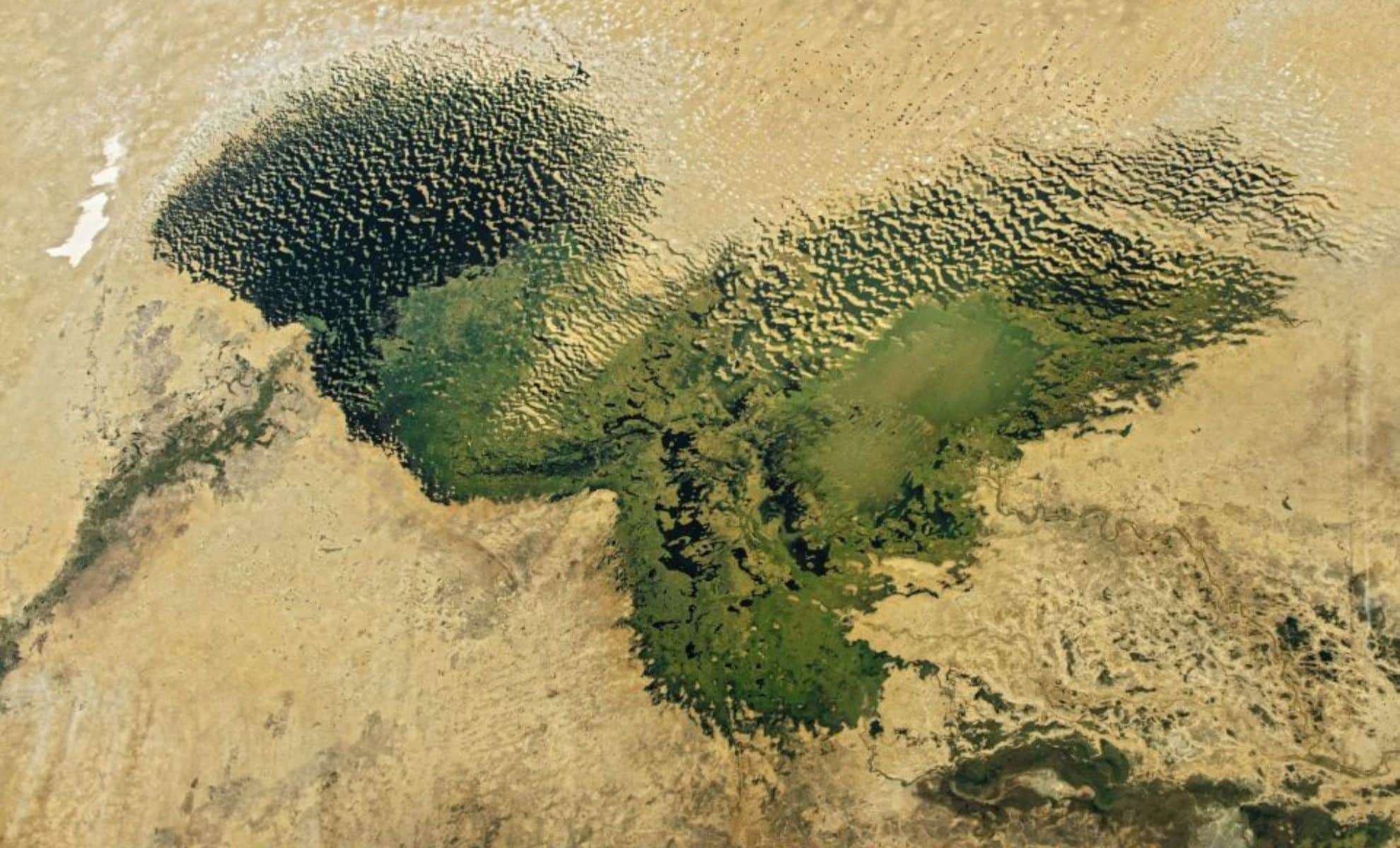
Lake Chad, once among the world's largest freshwater lakes, has experienced a severe reduction in size over recent decades. Positioned at the junction of Chad, Nigeria, Niger, and Cameroon, this lake was a crucial water reservoir supporting millions through agriculture, fishing, and commerce. Nevertheless, a combination of prolonged droughts, shifts due to climate change, and rising water consumption is causing the rapid contraction of Lake Chad, resulting in significant economic and environmental repercussions in the area. This article investigates the historical importance, ongoing transformations, and possible future scenarios of this essential water body, incorporating data from NASA Earth Observatory’s imagery that reveals the lake’s diminishing extent and vulnerable wetlands.
The Stark Reduction of Lake Chad’s Waters
Once among Africa’s largest freshwater lakes, Lake Chad has undergone a loss exceeding 90% of its surface area in the last six decades. NASA reports, “Continued drought periods and escalating freshwater demand have contracted the lake to less than ten percent of its mid-20th-century expanse.” This drastic decrease has fragmented what was a vast aquatic environment into disconnected wetlands and small ponds, disrupting habitats and threatening the livelihoods of the millions who depend on it.
In the 1960s, Lake Chad spanned roughly 25,000 square kilometers; today, it’s down to under 2,000 square kilometers. Multiple forces contribute to this decline, including climate change, which has altered precipitation patterns, along with excessive irrigation and overfishing by local populations. These factors have heightened regional vulnerabilities to water shortages, hunger, and social unrest.

Consequences for Environment and Wildlife
The ecological impact is profound. As Lake Chad recedes, once-thriving ecosystems are collapsing. Fish species, central to both local economies and nutritional access, have suffered dramatic declines due to reduced water volume and intensive fishing. Key species like tilapia, catfish, and Nile perch experience sharp population drops, threatening the stability of fishing communities.
Additionally, wildlife in the area is facing significant challenges. The lake’s wetlands historically provided essential habitats for migratory birds such as herons, storks, and geese during their journeys. With diminishing wetlands, these birds struggle to find viable stopover sites. Native mammals, including hippos and various antelope species, are losing critical habitat due to shrinking floodplains and disappearing wetlands.
Documenting Lake Chad’s Changes Over Time
NASA’s astronaut photographs have tracked Lake Chad’s shrinkage over decades. A milestone occurred during the Apollo 7 mission in 1968, when an astronaut captured images showing the lake as a vast singular water body. This iconic picture reflects the lake’s state prior to environmental disruption.
By 1982, images from the Space Shuttle STS-5 mission showed early signs of retreating waters and the increasing encroachment of sand dunes near the lake’s edge. Continued observations, including a 2015 photo taken during International Space Station Expedition 42, present a lake reduced in size with scattered wetlands visible in shades of green, blue, and brown, contrasting sharply against the arid surrounding landscape, illustrating ongoing environmental shifts.
Regional Stability Threatened by Lake Chad’s Reduction
Beyond its geographic and ecological importance, Lake Chad plays a critical role politically and economically among the bordering nations. The lake remains a key resource for Chad, Nigeria, Niger, and Cameroon, and its ongoing shrinkage has intensified conflicts where water scarcity is already a serious predicament. The presence of the Boko Haram insurgency in northeastern Nigeria, responsible for mass displacement, further complicates conservation and management of this fragile ecosystem.
As water recedes, competition over the lake’s dwindling resources—such as water and arable land—has increased sharply. Local populations face mounting hardships, and food insecurity intensifies, driving tensions both within and between states vying for access to these precious resources.
- Categories:
- News






0 comments
Sign in to Comment