
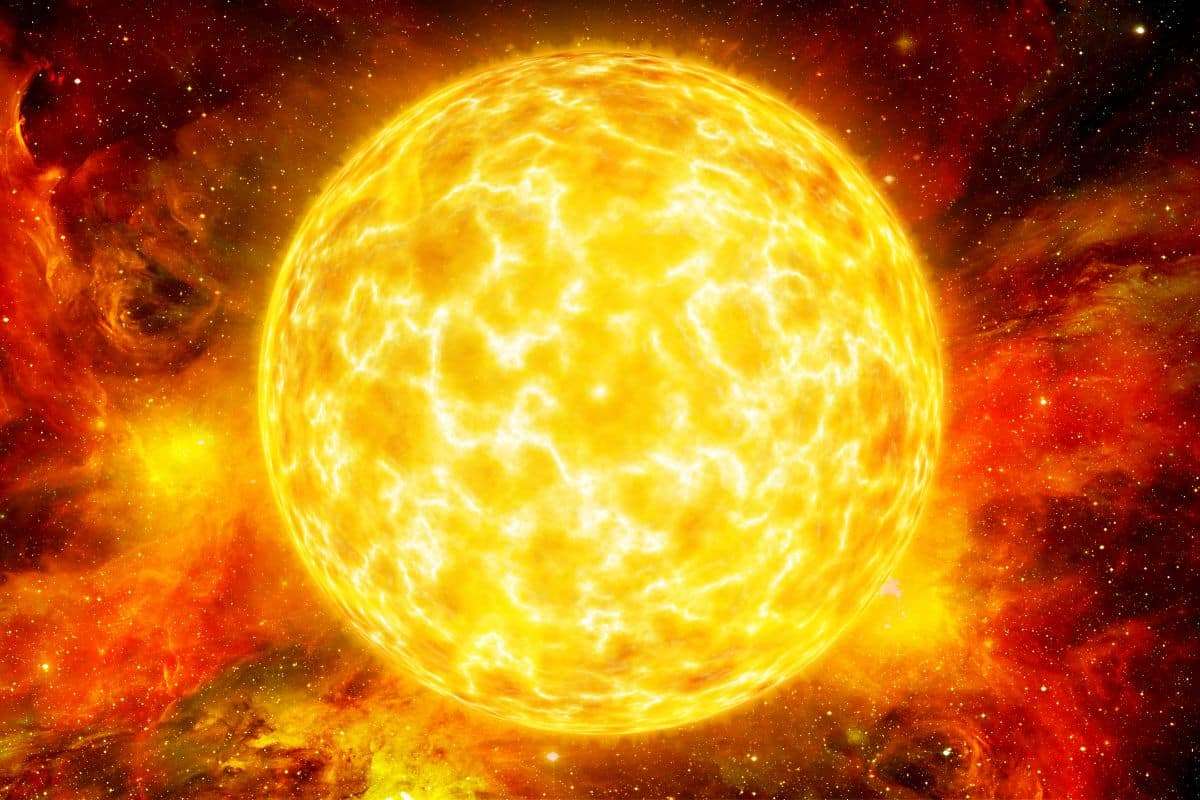
After nearly two decades, a crucial theory explaining the origin of intense solar flares has been substantiated through data collected by NASA’s IRIS satellite. This validation clarifies the swift magnetic field changes leading to these eruptions and enhances forecasting models for solar storms impacting our planet.
Unraveling the Secrets of Solar Flares
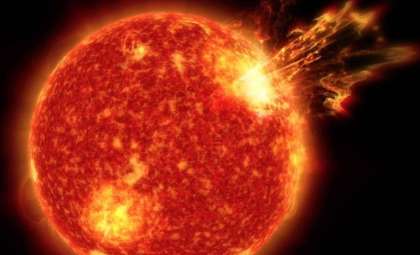
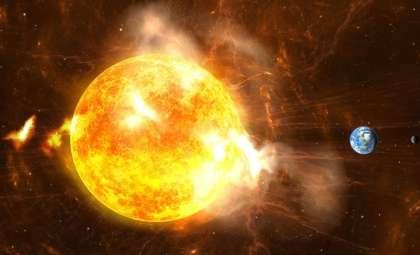
Solar flares rank among the universe’s most powerful explosions, releasing energy comparable to millions of nuclear bombs detonating simultaneously. These radiation bursts result from the Sun’s contorted magnetic fields snapping into new configurations and have major consequences on space weather, affecting satellite operations, electrical grids, and the safety of astronauts.
In 2005, astrophysicist Guillaume Aulanier at the Paris Observatory introduced the concept of slip-running reconnection, a process where magnetic field lines in the solar atmosphere rapidly realign and slide past each other at extraordinary speeds.

This mechanism was hypothesized to drive the formation of solar flares, yet observational proof remained elusive until recent advancements.
IRIS Observations Capture Slip-running Reconnection in Action
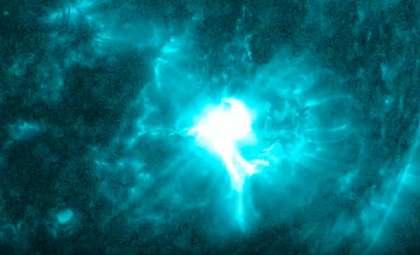
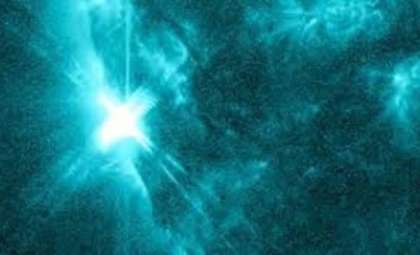
The Interface Region Imaging Spectrograph (IRIS), launched in 2013 to study the Sun’s lower atmosphere in unprecedented detail, enabled a global research team led by Oregon State University astrophysicist Vanessa Polito to observe luminous, rapidly moving features traveling at speeds up to 2,600 kilometers (1,600 miles) per second in the Sun’s atmosphere.
These bright spots, known as flare kernels, pinpoint where magnetic lines reconnect and unleash vast amounts of energy. Their velocity and behavior align exactly with predictions from the slip-running reconnection model formulated nearly 20 years ago.
Deputy principal investigator for the IRIS project, Polito, stressed the significance of this finding:
“Flares and magnetic reconnection are phenomena that occur in all stars and in different astrophysical objects throughout the universe, such as pulsars and black holes. On the sun, our closest star, we can study them in great detail as demonstrated by our study”.
Implications for Space Weather Readiness
Confirming the slip-running reconnection process greatly advances space weather prediction efforts. Solar flares often accompany coronal mass ejections (CMEs), massive plasma bursts that surge across millions of kilometers in space. When CMEs collide with Earth’s magnetic field, they can provoke:
- Geomagnetic storms that disrupt satellite communications, GPS signals, and radio transmissions
- Failures in electrical grids, causing widespread power outages
- Elevated radiation risks for astronauts and spacecraft operations
Broader Insights Into Astrophysical Phenomena
Magnetic reconnection is not unique to our Sun; it is fundamental in extreme cosmic environments such as black holes, neutron stars, and distant galaxies. Studying it up close on the Sun provides valuable clues about these violent astrophysical events.
The findings, detailed in a paper published in Nature Astronomy, mark a significant leap in understanding solar magnetism. As solar activity is projected to intensify, this insight is timely for improving preparedness against solar-driven disruptions.





0 comments
Sign in to Comment