
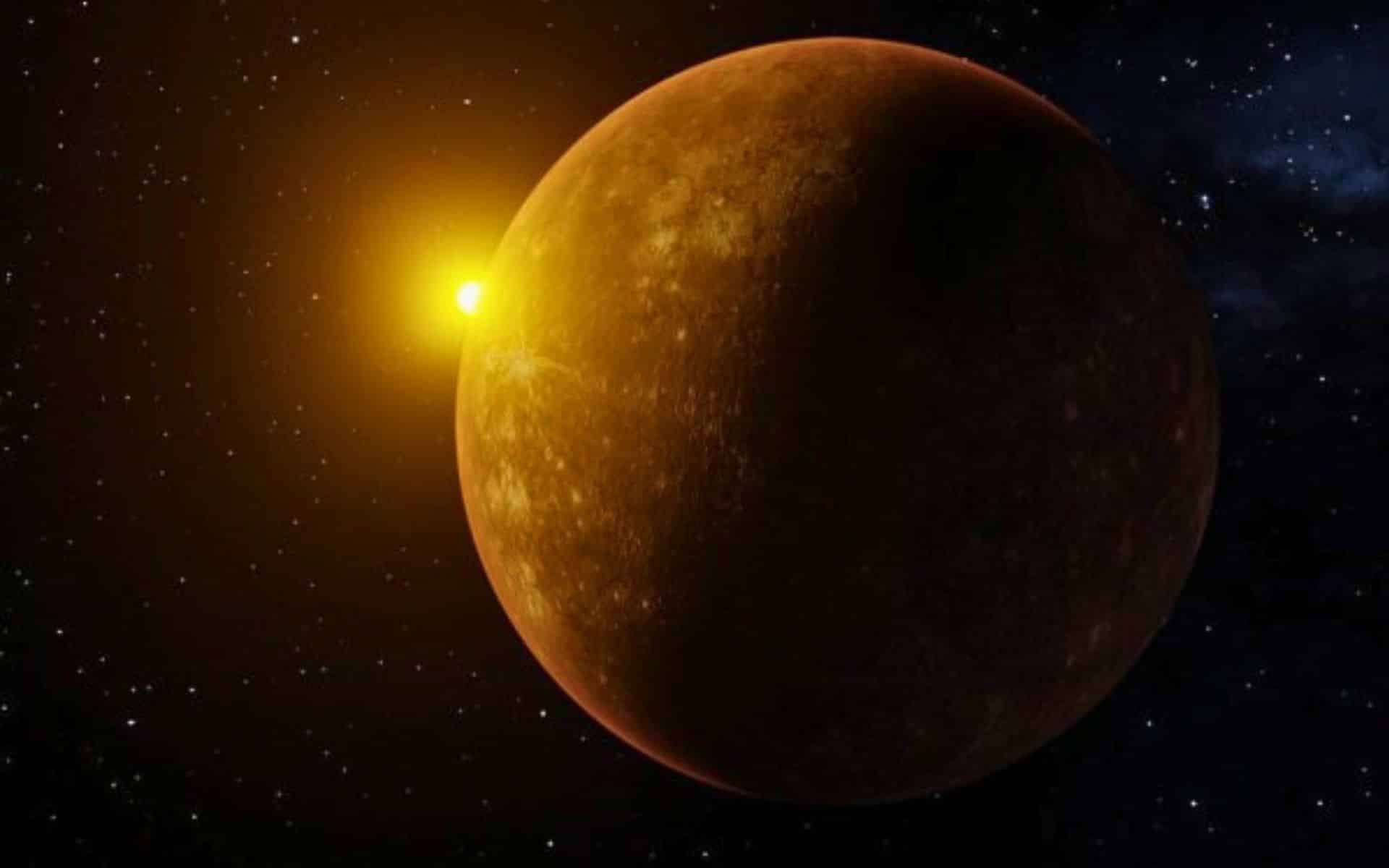
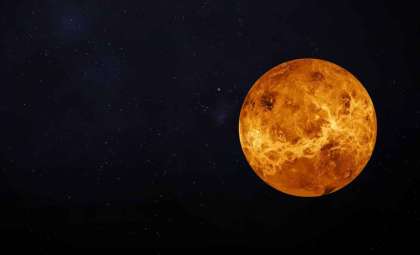
Venus, often called Earth’s sister planet, is revealing surprising secrets that may alter our perception of the early Solar System’s violent past.
Unveiling the Secret Impact on Venus
During the chaotic formative years of our Solar System, planetary surfaces were relentlessly bombarded by space debris. This era left behind striking evidence—Mercury’s cratered landscape, Mars’ battered surface, and the heavily scarred Moon all attest to these cosmic collisions. Even Earth carries subtle reminders of this turbulent era despite its dynamic geology.
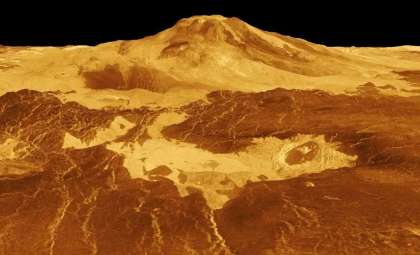
Venus’s Missing Giant Craters Within this context, Venus presented a perplexing anomaly. While its surface features numerous well-preserved impact craters, scientists had long been puzzled by the apparent lack of gigantic impact basins greater than 300 kilometers. However, new research reveals that such ancient structures were simply overlooked, camouflaged by Venus’s unique geology.

The Haastte-Baad Phenomenon
- An enormous geological formation stretching about 1,500 kilometers across
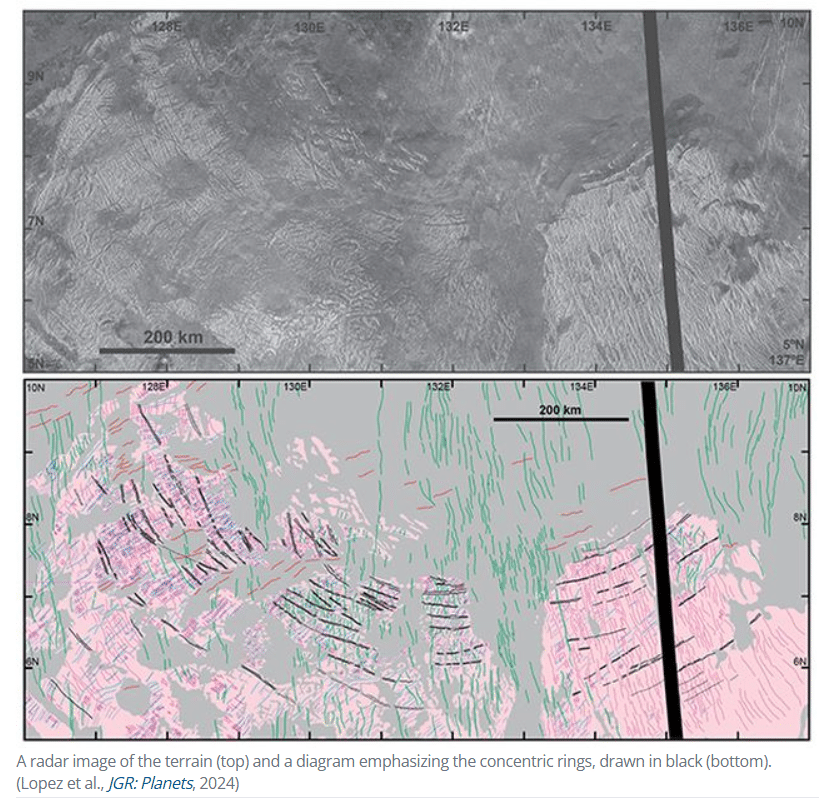
- Characterized by distinctive concentric rings of tessera terrain
- Dating back roughly 3.5 billion years
- Created by two massive sequential impact events
A New Type of Impact Formation Explored
This discovery shifts how scientists think about impact crater formation. According to Dr. Vicki Hansen from the Planetary Science Institute, the structure formed through a series of steps:
- Two colossal impactors, each approximately 75 kilometers in diameter, struck Venus in quick succession
- They pierced Venus’s relatively thin crust, about 10 kilometers thick
- Molten material underneath surged upwards following the impacts
- The surface subsequently folded into the distinctive ring patterns observed today
Insights into Venus’s Formative Period
This finding sheds light on planetary development processes:
- Venus once had a thin crust overlaying a molten interior
- Impact features can vary greatly depending on the structure of the planetary crust
- Comparable features are found on other worlds, including Jupiter’s moon Callisto
Understanding Plateau Tessera Terrains Researchers also explored why some tessera terrains form elevated plateaus. Dr. Hansen describes this using the concept of residuum—denser but less heavy material left after parts of the crust melted away. “Imagine an air mattress beneath your lava flow,” she says, explaining how this buoyant material can elevate the Venusian surface.
Broader Consequences for Planetary Studies
This revelation is transforming perspectives on:
- How early planets formed and evolved
- Ways to identify ancient impact craters in unusual geologic settings
- The geological history of Venus
- Similar geological phenomena on Earth, such as those associated with Lake Victoria’s dike swarm
The discovery pushes scientists to rethink how impact structures form and how planets evolve. As Dr. Hansen points out, “We were searching for large depressions, but creating those requires a thick lithosphere, which Venus’s early crust simply didn’t have.”
- Categories:
- Space







0 comments
Sign in to Comment