
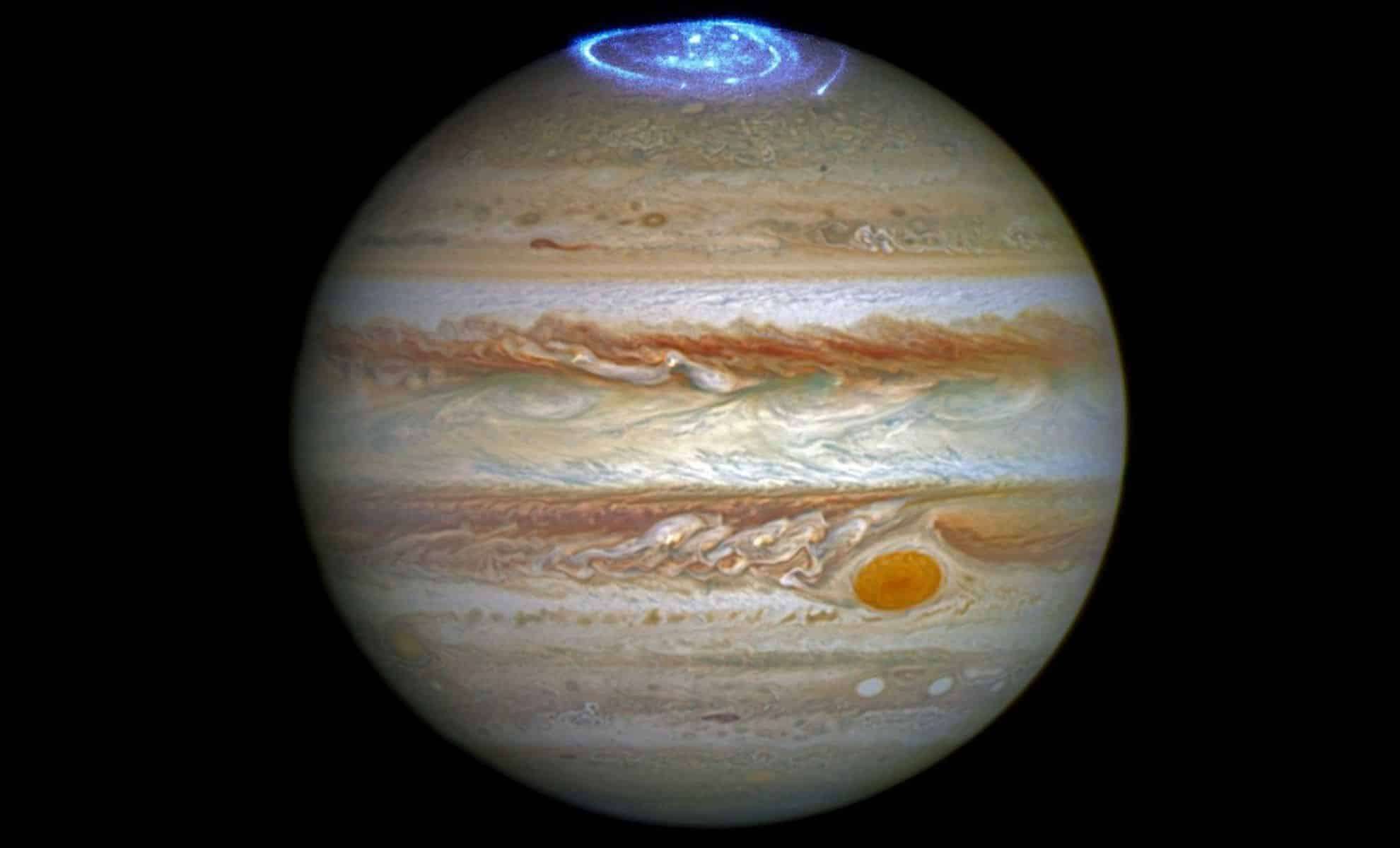
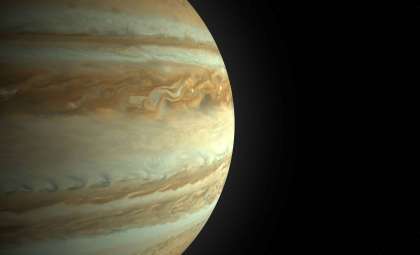
Scientists at the University of Minnesota have identified a previously unknown variety of plasma wave within the auroras of Jupiter, offering fresh perspectives on the intricacies of cosmic processes. The findings, published in Physical Review Letters, mark a pivotal advance in our comprehension of Jupiter’s distinct auroral patterns and their wider significance in planetary research. By leveraging observations from NASA’s Juno spacecraft, the team achieved an unparalleled glimpse into the giant planet’s northern auroral region, revealing plasma wave behavior unlike anything found near Earth.
Juno’s Pivotal Contribution to a Groundbreaking Discovery
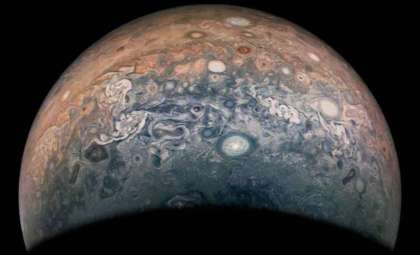
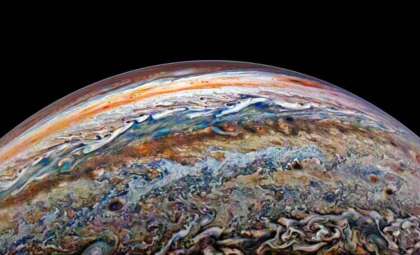
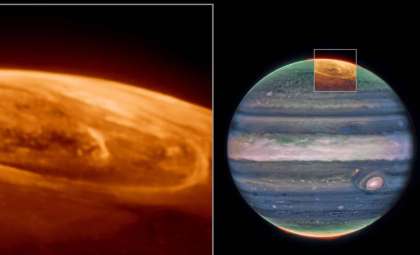
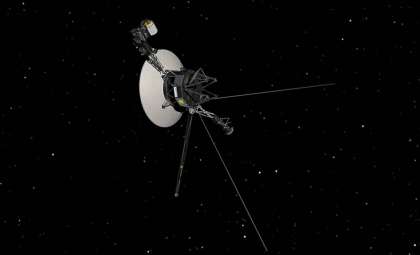
The breakthrough was made possible due to Juno’s unique polar orbit around Jupiter. Unlike earlier missions limited to equatorial trajectories, Juno’s route provided critical data from the elusive and powerful northern auroras. According to Ali Sulaiman, assistant professor at the University of Minnesota School of Physics and Astronomy, “The James Webb Space Telescope has supplied infrared views of Jupiter’s auroras, but Juno remains the first craft to orbit the planet’s poles.” This vantage point enabled the researchers to examine auroral plasma waves in greater detail, enhancing knowledge of Jupiter’s magnetic environment and auroral mechanics.
Revealing Plasma Waves: Insights from Juno’s Measurements
The crux of the discovery lies in the distinctive plasma waves encountered near Jupiter, differing substantially from terrestrial ones. Plasma—an ionized gas composed of free electrons and ions—is fundamental in auroral phenomena, which arise when charged particles collide with a planet’s magnetic cloak and atmosphere, lighting the skies. On Earth, auroras display vivid greens and blues visible to the naked eye, while Jupiter’s auroras shine primarily in ultraviolet and infrared wavelengths, invisible to human sight.

The plasma waves detected near Jupiter exhibit notably low frequencies, contrasted with Earth’s higher-frequency waves. As explained by Robert Lysak, professor at the University of Minnesota School of Physics and Astronomy, “Plasma behaves partially like a fluid but is also controlled by internal and external magnetic fields.” The low-frequency waves are thought to result from the sparse plasma density at Jupiter’s poles coupled with its intense magnetic forces. This novel observation provides essential clues about plasma dynamics under extreme magnetic and density conditions.
The Role of Jupiter’s Magnetic Field in Plasma Behavior
One remarkable attribute of Jupiter’s auroras is the complexity of its magnetic field, differing dramatically from Earth’s. Unlike Earth’s auroras, which form ring-shaped emissions around the poles, Jupiter’s auroras feature a flow of charged particles directly into the polar region. This effect stems from Jupiter’s extraordinarily powerful magnetic field that extends far beyond the planet, channeling particles straight into its upper atmosphere.
The emergence of these unique plasma waves is closely tied to these magnetic characteristics. The research indicates that the plasma density in Jupiter’s polar environment is much lower than on Earth, yet the magnetosphere’s strength causes plasma to act in distinctive ways, generating these low-frequency waves. Continued analysis of data from Juno is expected to deepen understanding of how Jupiter’s magnetic field orchestrates auroral phenomena and particle movement.
Implications for Understanding Auroras on Earth and Beyond
Although this investigation centers on Jupiter, its findings carry significant implications for auroral science across the solar system, including Earth. The observed plasma wave dynamics in Jupiter’s aurora illuminate the complex interactions between magnetic fields and plasma at planetary scales. Gaining insight into these processes on other worlds aids in decoding the mechanisms driving Earth’s auroras and assessing how our magnetic shield guards against solar radiation.
Future research into these plasma waves aims to expand our grasp of the fundamental forces shaping planetary auroras, atmospheres, and magnetospheres. Studying extraterrestrial auroras like Jupiter’s not only satisfies scientific curiosity but also advances knowledge about the protective magnetic environments that safeguard planets throughout the solar system.
- Categories:
- News


0 comments
Sign in to Comment