
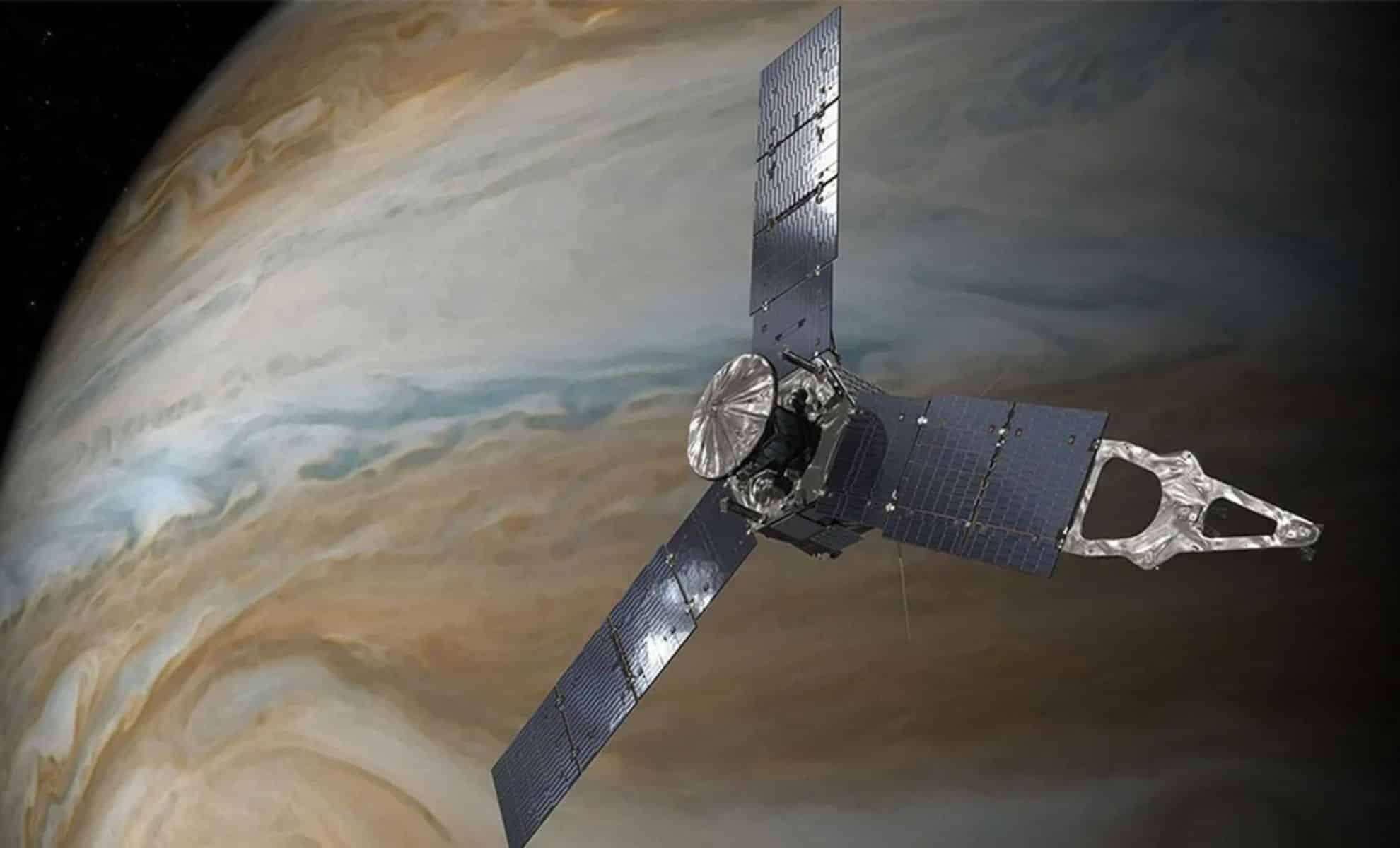
After more than a decade in space, NASA’s Juno spacecraft might soon embark on an extraordinary mission. A recent study posted on arXiv proposes altering Juno’s trajectory from orbiting Jupiter to intercept a rare interstellar comet called 3I/ATLAS. Scheduled for a close approach on March 14, 2026, this daring maneuver could allow Juno to gather unprecedented data about an object originating beyond our solar neighborhood. Initially covered by IFLScience, this mission would mark a remarkable deep-space encounter.
A Unique Pathway Into the Solar System
The comet 3I/ATLAS—the third interstellar object ever detected, following 1I/ʻOumuamua and 2I/Borisov—was identified due to its hyperbolic trajectory, signaling an origin outside our solar system. What sets this object apart is its unusual orbit: it will reach perihelion on the side of the Sun opposite Earth, making direct observation from our planet especially challenging during its peak brightness.
Physicist Avi Loeb remarked on his blog, “3I/ATLAS achieves perihelion on the opposite side of the Sun relative to Earth. This could be intentional to avoid detailed observations from Earth-based telescopes when the object is brightest or when gadgets are sent to Earth from that hidden vantage point.”

Whether this is coincidental or orchestrated, the object's positioning severely limits Earth-based monitoring, highlighting the value of spaceborne observations.
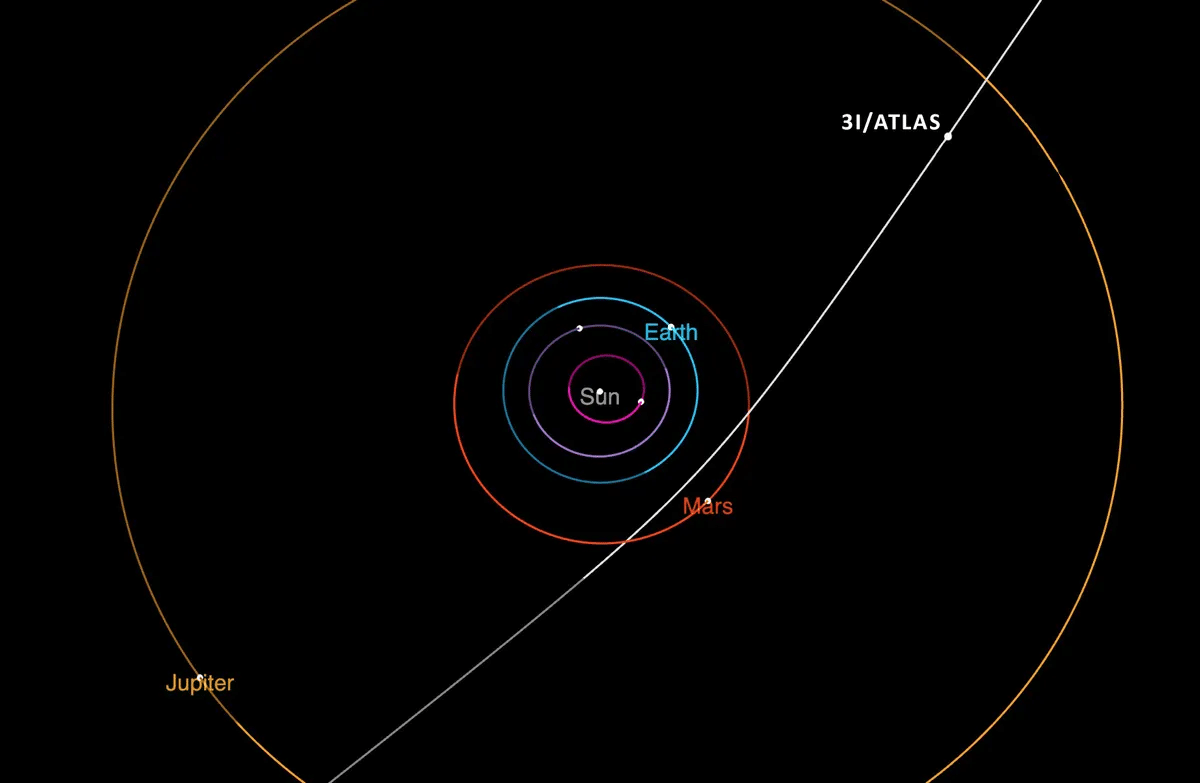
Juno’s Bold Course Correction for Interstellar Study
Launched in 2011 and currently exploring Jupiter, Juno has achieved much more than originally planned. Now, with precise navigational adjustments, it could alter its orbit to encounter 3I/ATLAS. This would involve a carefully timed boost in velocity.
According to the publication, "By executing a thrust of 2.6755 km s−1 on September 9, 2025, Juno can break free from its current orbit to intercept 3I/ATLAS on March 14, 2026." Despite the complexity, such a maneuver is within Juno’s existing propulsion capabilities.
The timing is critical because Juno will be near Jupiter when the comet passes, and its onboard instruments are suited for close-range investigation. The researchers note, “This rare window could transition Juno from a planetary explorer to an interstellar observer.”
Scientific Instruments Ready for Unseen Insights
A close encounter with 3I/ATLAS promises to yield invaluable scientific data. Earth telescopes will struggle due to solar glare, but Juno carries advanced tools ideal for firsthand measurements, including a near-infrared spectrometer, magnetometer, microwave radiometer, gravity instrument, particle detectors, radio/plasma sensors, ultraviolet spectrograph, and a visible light camera.
“Juno's suite of instruments enables detailed analysis of 3I/ATLAS’s composition, magnetic interactions, particle environment, and structure,” the study asserts. Physicist Avi Loeb adds, “The optimal location for a Solar Oberth maneuver to capture the object is at perihelion, the very spot obscured from Earth by the Sun.” This suggests that key behaviors may only be uncovered through this direct approach.
Risks and Time Constraints of the Proposed Mission
Reorienting Juno presents challenges. The spacecraft was not designed for an interstellar interception and operates under limited fuel reserves after enduring intense radiation near Jupiter. The precise thrust must occur on September 9, 2025, and any delay could eliminate the flyby opportunity.
While some onboard instruments have aged, the mission team highlights that a successful flyby could return data surpassing ground-based observations. They emphasize, “With Juno’s capabilities, this mission can deeply probe 3I/ATLAS’s nature beyond what Earth telescopes can achieve.”
Efforts now focus on obtaining mission approval, ensuring resource allocation, and completing trajectory calculations before the critical deadline in late 2025.
- Categories:
- News









0 comments
Sign in to Comment