
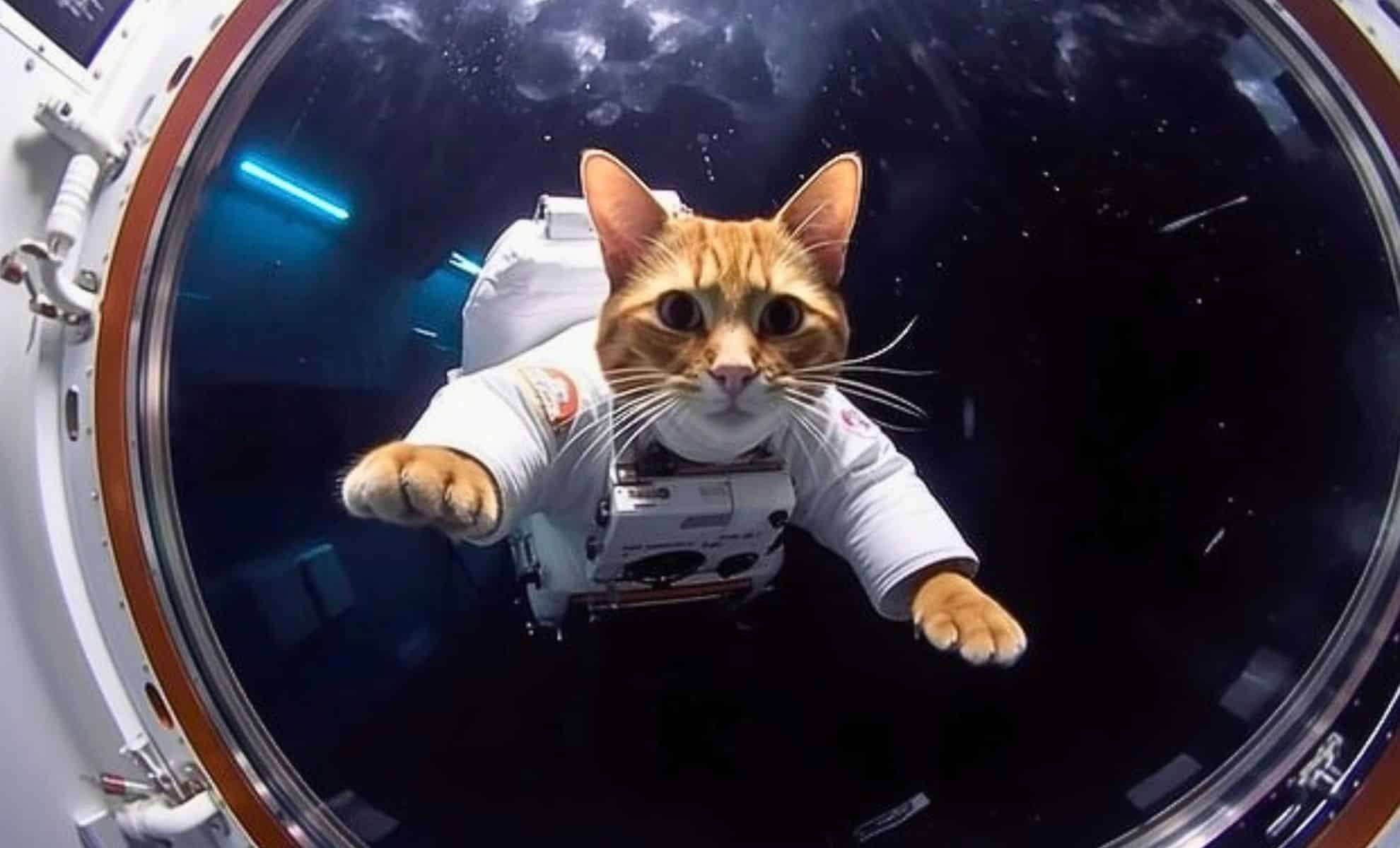
Cats have long amazed us with their ability to land gracefully on their feet. But what happens when this skill is tested in zero gravity? Scientists conducted experiments that sent felines into weightless environments, uncovering new understanding about balance, physics, and the challenges of movement in space.
Investigating the Cat’s Righting Reflex
The feline righting reflex, an innate skill allowing cats to reorient themselves mid-air to land safely, has intrigued researchers for centuries. Their flexible spines and sensitive vestibular system make this possible. Initial explorations using chronophotography began in 1894 with Étienne-Jules Marey, who captured the sequential stages of this maneuver. By the 1950s, scientists wondered: could cats perform this feat when gravity is absent?
This led to the use of parabolic flights, which mimic weightlessness by flying steep arcs, producing brief periods of microgravity. These flights provided a unique laboratory for observing feline responses in conditions beyond Earth’s pull.

Testing on the "Vomit Comet"
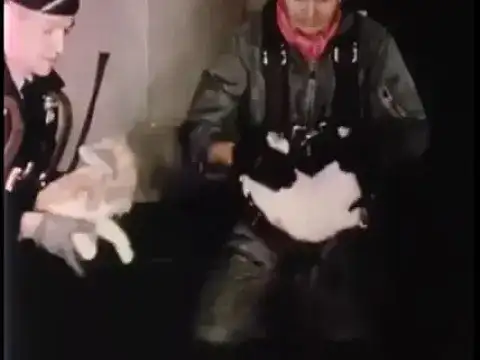
The US Air Force Aerospace Medical Research Laboratory spearheaded experiments aboard the Convair C-131 Samaritan, an aircraft notorious for causing motion sickness and earning the moniker "vomit comet." Cats were dropped mid-flight during these weightlessness intervals to study how their reflexes adapted.
Footage from these tests revealed cats twisting and contorting despite the absence of a defined up or down. Although their usual reflexive responses were diminished, they displayed partial bodily control, indicating influences beyond gravity—namely inertia and proprioception.
Understanding Movement in Weightless Conditions
Researchers went beyond observation to analyze the physics behind these movements. They discovered the cat’s mid-air twist depends on the otolith organs inside the inner ear, which sense linear acceleration and orientation relative to gravity. Without gravity cues, the cats became disoriented but still attempted to regain control using their intrinsic balance systems.
In 1969, Stanford scientists Thomas Kane and M.P. Scher developed a mathematical model treating the cat’s body as two rotating cylinders that adjust relative to each other to preserve angular momentum. This theory was revolutionary, bridging biology, physics, and astronautical training techniques.
From Feline Reflexes to Astronaut Training
The knowledge gained from these feline experiments reached far beyond animal biology. NASA applied Kane and Scher’s principles to help astronauts better manage movement in zero-gravity environments. Techniques such as aerial twisting and reorientation during spacewalks drew directly from the feline model.
The connection extended even further. In 1968, a gymnast, dressed as an astronaut, mimicked cat-like twisting on a trampoline to optimize NASA’s exercises. This process demonstrated that the mechanics governing motion without gravity have wide applications, from animals falling freely to humans floating in space.








0 comments
Sign in to Comment