
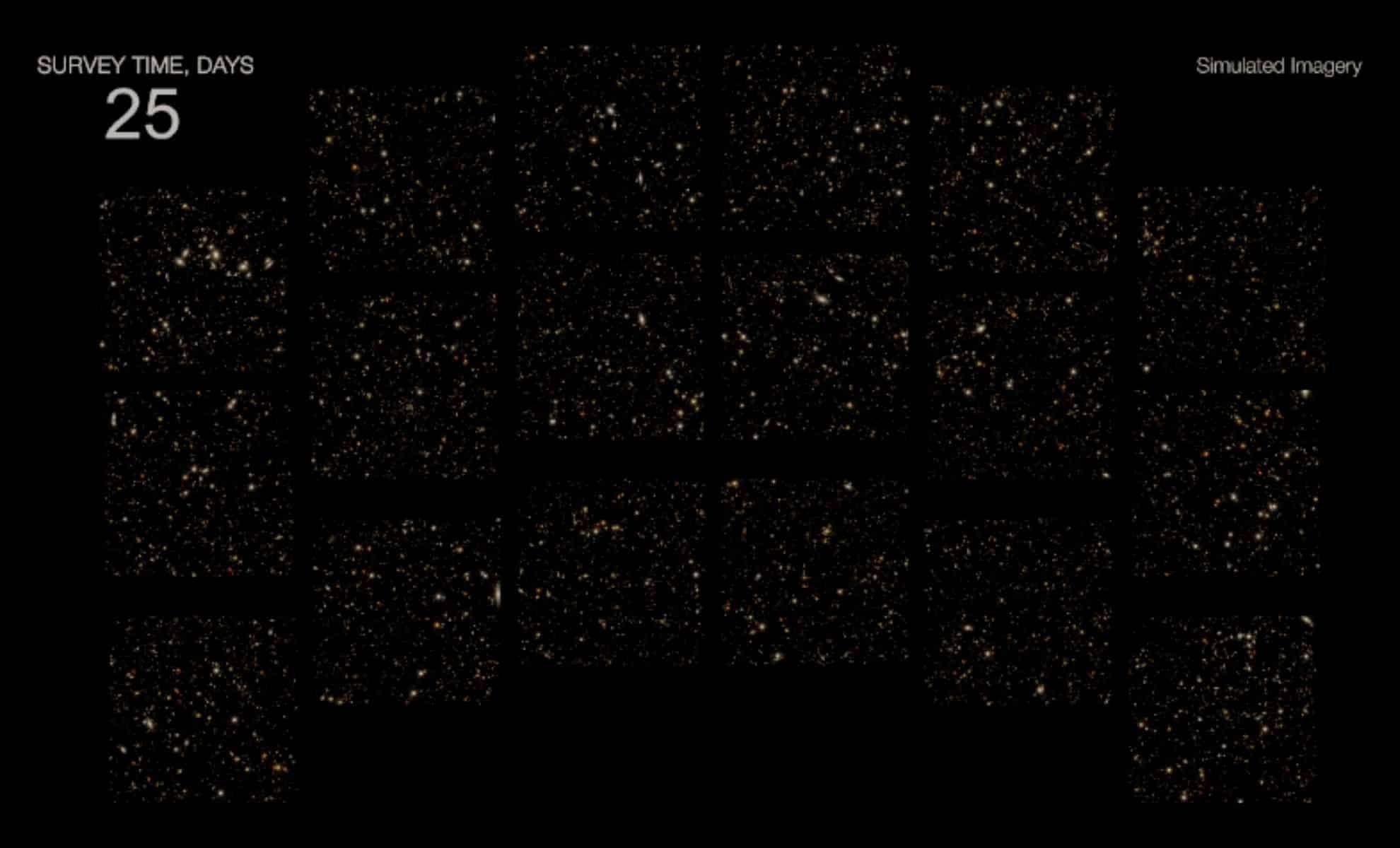
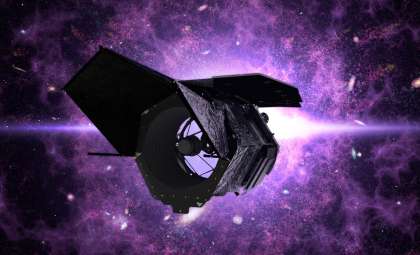
The Nancy Grace Roman Space Telescope, NASA's upcoming mission, is poised to transform our view of the cosmos by capturing an astonishing number of cosmic explosions. This ambitious effort will investigate some of the universe's most enigmatic events, including stellar deaths and phenomena connected to black holes. According to NASA, the initiative known as the High-Latitude Time-Domain Survey aims to reveal groundbreaking insights about dark energy and the universe’s evolution. Scheduled to begin scientific observations in 2027, this survey promises to be a cornerstone for astronomical research, merging theory with observation.
Decoding the Enigma of Cosmic Blasts
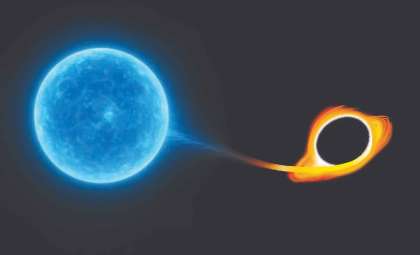
NASA’s Roman telescope is set to dramatically enlarge the inventory of recorded cosmic blasts. Among them, type Ia supernovae hold special significance, as they help scientists measure the universe’s rate of expansion. These explosions occur when a white dwarf star in a binary star system accumulates enough material from its companion to undergo a catastrophic detonation. Because their brightness is remarkably uniform, these supernovae function as reliable cosmic distance markers, or standard candles.
A major objective of the High-Latitude Time-Domain Survey involves monitoring type Ia supernovae across extensive regions of the sky. This will deepen researchers’ understanding of dark energy, the mysterious force driving the universe’s accelerated expansion. As NASA highlights, “Roman will help us understand how dark energy has changed over time by exploring cosmic history in ways other telescopes can’t.”

Advancing Astronomy with the Roman Telescope
Beyond type Ia explosions, Roman will observe a variety of cosmic events—expected to detect approximately 60,000 core-collapse supernovae. These events signal the dramatic end to a massive star’s lifecycle, occurring when it depletes nuclear fuel and collapses. Although core-collapse supernovae aren’t as direct in probing dark energy, they yield valuable information about stellar evolution and death.
Equipped with a wide field of view and cutting-edge instruments, Roman will grasp these consequences of stellar death with unparalleled accuracy. Rebekah Hounsell, assistant research scientist at the University of Maryland-Baltimore County and co-author of the research, explains, “By analyzing how light from an event changes over time and breaking it down into spectra—patterns of individual colors—we can differentiate among the numerous cosmic flashes Roman will observe.” This capability ensures precise classification and analysis of every detected event.
Spotting Rare and Exceptional Cosmic Events
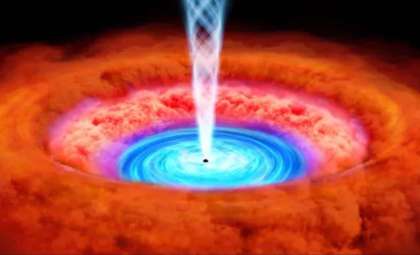
A particularly exciting possibility with Roman’s survey lies in uncovering seldom-seen occurrences like tidal disruption events, where a star is torn apart by the tidal forces of a black hole. The debris emits powerful radiation as it spirals inward. Roman is projected to identify around 40 tidal disruption events, offering unprecedented data on black hole physics.
Roman may also detect superluminous supernovae, explosions up to 100 times more luminous than typical supernovae. Their extraordinary brightness remains a puzzle that researchers are eager to solve. Assistant Professor Benjamin Rose from Baylor University comments, “Whether exploring dark energy, dying stars, galactic phenomena, or entirely new cosmic mysteries, this survey will be invaluable.” The information collected could reshape understanding of stellar deaths and black hole properties.
Hunting for the Universe’s Very First Stars
The mission extends beyond familiar explosions and targets the universe’s earliest stars. These primordial giants, often hundreds of times the mass of the Sun, consisted solely of hydrogen and helium. Benjamin Rose suggests, “I expect Roman will confirm the first detection of a pair-instability supernova.” Such phenomena result from the collapse of these huge early stars and differ drastically from known supernova types.
Capturing pair-instability supernovae—the demise of the first stars—would represent a monumental breakthrough, since these stars likely left no remnants behind after exploding. Roman’s capacity to observe events occurring billions of years ago, reaching back to the dawn of starlight, is one of its most remarkable features.
Harnessing Machine Learning for Data Analysis
Roman will generate a vast deluge of data, necessitating sophisticated tools for efficient analysis. Hounsell notes, “Our dataset allows scientists to develop machine-learning models capable of distinguishing among various cosmic objects and efficiently processing Roman’s massive output.” Artificial intelligence will play a pivotal role in rapidly classifying and identifying both common and rare phenomena detected during the mission.
Looking Ahead in Cosmic Discovery
This forthcoming survey by NASA’s Roman Space Telescope heralds a new frontier in cosmic observation. By delivering an unmatched view of explosive cosmic events, it will advance knowledge of dark energy, black holes, supernovae, and the early universe’s first stars.
The survey will also pave the way for future astronomical missions, establishing a foundation for ongoing cosmic exploration. As Rose anticipates, “Roman will uncover countless intriguing and unexpected phenomena across space, including ones beyond our current imagination.” NASA’s mission is set to open a new chapter in decoding the universe’s most profound mysteries, inspiring scientists and enthusiasts worldwide.
- Categories:
- News


0 comments
Sign in to Comment