
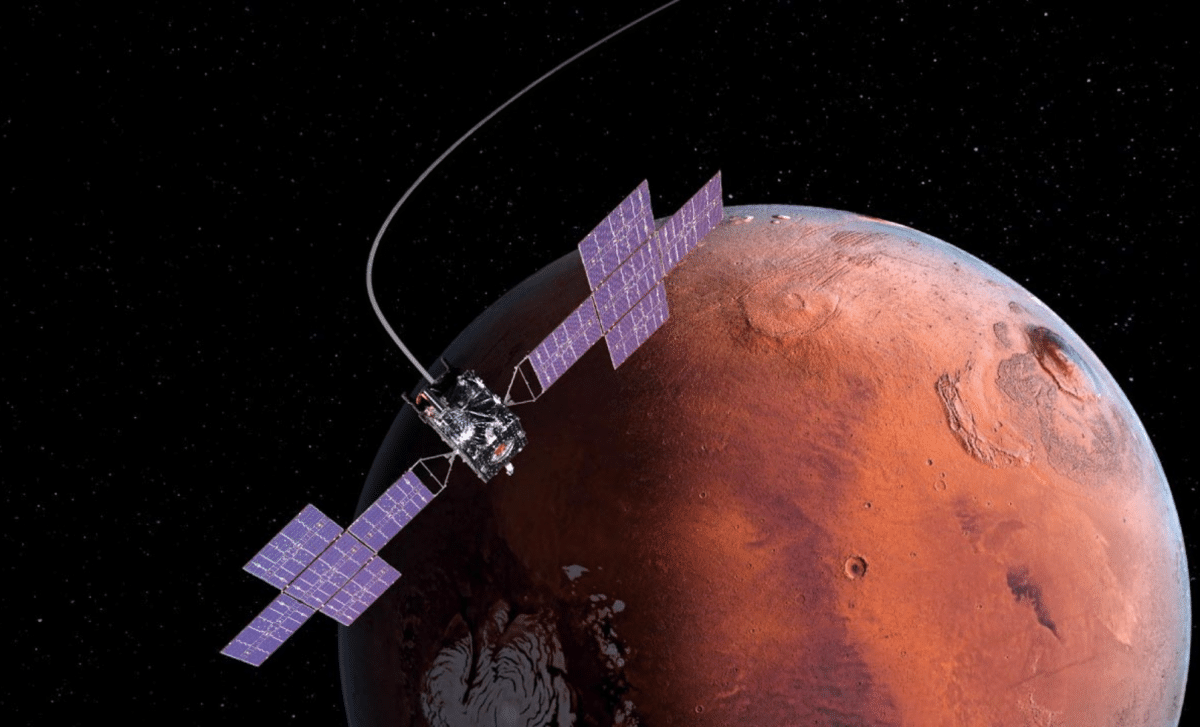
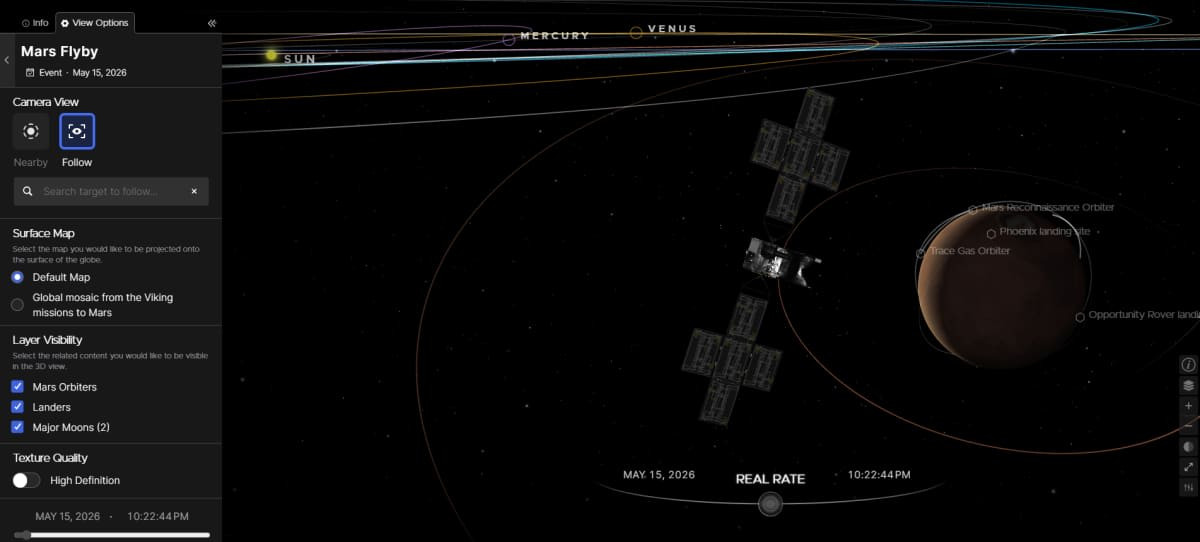
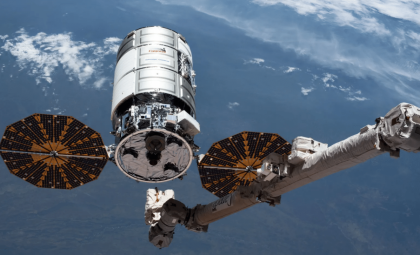
NASA’s Psyche spacecraft is executing a significant close encounter with Mars, passing approximately 2,800 miles from the planet’s surface. This flyby represents a pivotal phase in the mission’s six-year expedition heading toward the 16 Psyche asteroid, a distinctive, metal-rich body located in the asteroid belt, as detailed by NASA. The approach will increase the velocity of the spacecraft and provide a valuable chance to calibrate its instruments by observing a full-sized planet before arriving at its target in 2029.
Using Mars’ Gravity to Accelerate Psyche's Voyage
The mission uses the gravitational pull of Mars to propel Psyche at an even faster pace toward the namesake asteroid. Already moving at about 12,333 miles per hour, Psyche will gain further speed, reducing reliance on its xenon fuel for the remainder of the trek. This technique, called a gravity assist, is a fundamental strategy in planetary exploration, enabling spacecraft to traverse vast distances efficiently.
Since its October 2023 launch, Psyche has been en route to study 16 Psyche, which scientists suspect is the exposed core of a long-ago planetesimal. “We are on precise course for the flyby and have loaded the flight computer with commands for the entire month of May,” said Sarah Bairstow, mission planning lead at NASA’s Jet Propulsion Laboratory in Southern California, in a NASA announcement. “This will be our first chance to calibrate Psyche’s imaging system against a large, well-known object, and we will also collect data with the other onboard science instruments.”

Capturing Mars and Its Environment Up Close
As Psyche zooms past, its multispectral imager will obtain thousands of high-resolution images of Mars. These visuals not only aid in fine-tuning the spacecraft’s sensors for asteroid observations but also offer scientists a chance to examine subtle phenomena near the planet.
The team aims to identify a delicate dust ring or torus around Mars, theorized to form from micrometeorite impacts on its moons, Phobos and Deimos, which fling dust particles into space. Psyche’s instruments might detect sunlight filtering through this dust. Additionally, the mission will attempt to spot small moons orbiting Mars, refining detection techniques that will be key for discovering tiny satellites near the asteroid.
“If all science instruments can be powered and calibrated during this phase, it would be a tremendous bonus,” said Lindy Elkins-Tanton, Psyche’s principal investigator at the University of California, Berkeley.
Getting Ready for an Exceptional Asteroid Investigation
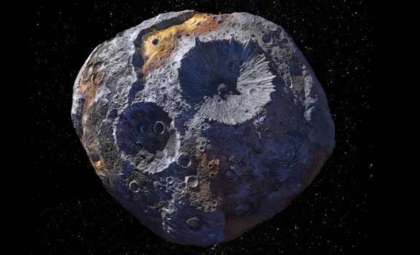
The 16 Psyche asteroid is of special interest because it likely represents the metallic core of a primordial planetesimal, offering rare insight into the interiors of planetary bodies similar to Earth’s core. Studying it could shed light on how planets formed and evolved in the early solar system.
This Mars flyby marks Psyche’s inaugural encounter with a planet and serves as a crucial test before its main mission begins in the asteroid belt. Every measurement made during this approach—from planetary surface features to faint dust and small orbiting bodies—will sharpen the mission’s capabilities and enhance the eventual scientific returns at 16 Psyche.
- Categories:
- Nasa



0 comments
Sign in to Comment