
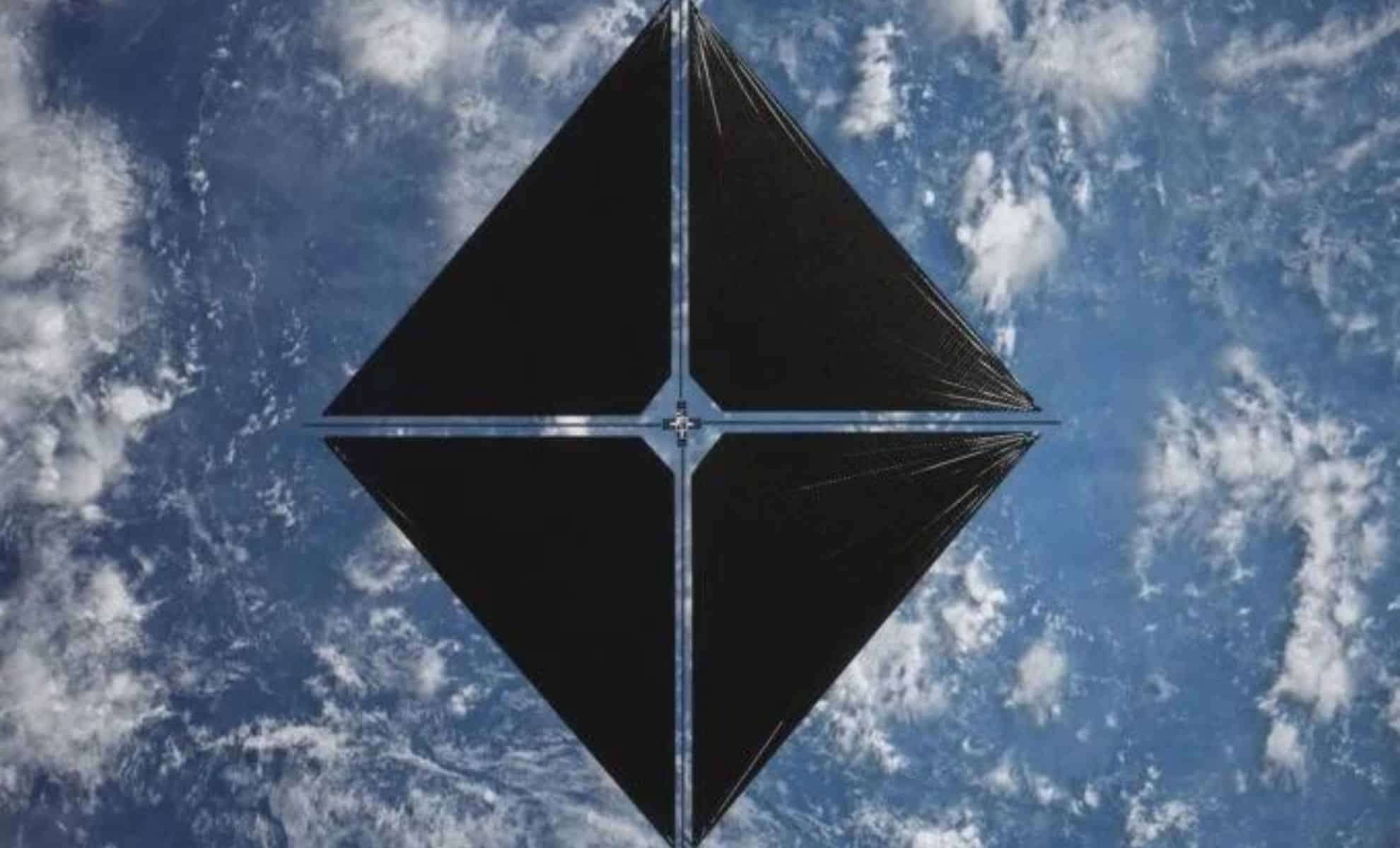
NASA's Advanced Composite Solar Sail System has triumphantly deployed its solar sail, marking a crucial milestone in demonstrating a novel form of spacecraft propulsion.
The mission, which began in April 2024, faced an initial setback when deployment was paused due to an onboard power monitor detecting unusually high motor currents. After resolving this, a second deployment attempt succeeded, allowing the sail to fully expand.
Advancing the Frontiers of Space Travel
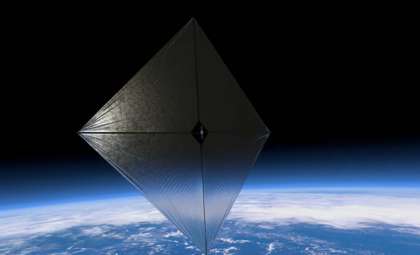
The principle behind solar sails is innovative: instead of conventional thrusters relying on fuel, these sails harness the momentum of sunlight. Photons from the Sun exert constant pressure on the sail, generating a gentle but continuous thrust. While the force produced is modest compared to traditional engines, this technique offers near-limitless propulsion without fuel, enabling extended voyages so long as the sail is effectively positioned towards the Sun.

Constructed from cutting-edge composite materials, the sail spans approximately 860 square feet—about half the size of a tennis court. This expansive surface is vital for maximizing solar photon capture to generate propulsion capable of adjusting the spacecraft’s orbit. The vehicle orbits Earth at around twice the height of the International Space Station, an optimal altitude to avoid atmospheric drag and receive direct solar radiation. Deploying the sail here tests its potential to elevate and lower orbit solely via sunlight, providing data essential for upcoming missions.
Evaluating the Solar Sail's Performance
With the solar sail now fully extended, NASA has shifted focus to trialing the sail’s performance in space. Over the next weeks, the team will carry out precise maneuvers by altering the sail’s angle relative to the Sun, testing how well it can modify the spacecraft’s trajectory. This will demonstrate the ability to raise or lower the orbit through the pressure of sunlight alone, eliminating reliance on traditional thrusters.
This testing phase is vital not only for validating solar sail propulsion but also for collecting insights to optimize future spacecraft designs. The experiments will assess the sail’s responsiveness, vehicle stability under varying conditions, and overall system efficiency. Scheduled to last two months, this initial mission phase aims to thoroughly monitor sail operation, potentially setting the stage for wide adoption of solar sail technology in future space endeavors, ranging from scientific probes to deep space explorers.
Implications for Future Space Missions
The successful deployment and operation of NASA’s solar sail prototype marks an important step forward in creating affordable, sustainable propulsion options for spaceflight. Solar sails present a promising alternative to conventional engines, especially for long missions where fuel limitations become critical. By tapping the Sun’s energy, spacecraft equipped with sails could travel vast distances efficiently, expanding opportunities for exploration within our solar system and beyond.
Nevertheless, challenges remain before solar sails become mainstream. The materials must endure severe space conditions, including extreme temperatures, micrometeoroid impacts, and extended solar exposure. Additionally, onboard electronics must maintain precise control over sail positioning to ensure accurate navigation. Despite these hurdles, the mission’s data will be crucial in solving these issues and advancing this propulsion technology.
As the project progresses, NASA engineers and scientists will closely examine the solar sail’s behavior to refine its design for future applications. Beyond proving the technology, this mission lays essential groundwork for breakthroughs in space exploration that could enable distant planetary, asteroid, and potentially interstellar journeys.
Footage from four onboard cameras capturing the sail’s deployment will be released publicly on September 4. These visuals will highlight this engineering triumph and illustrate the transformative potential of solar sails in space travel. Observers on Earth might even glimpse the sail circling our planet, signaling exciting advancements in humanity’s quest to explore the cosmos.







0 comments
Sign in to Comment