
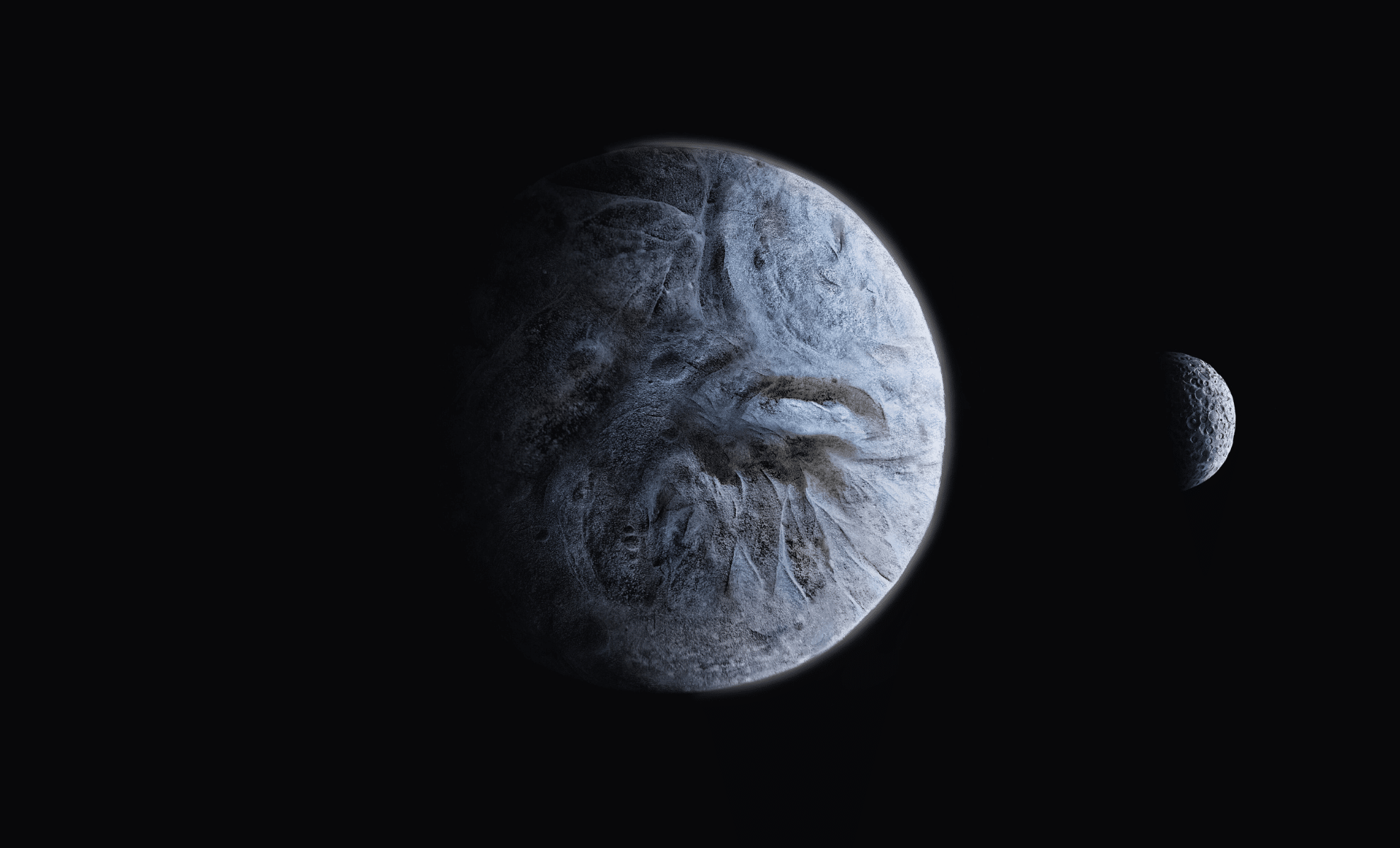
Using data from NASA’s Transiting Exoplanet Survey Satellite (TESS), astronomers have verified the existence of two rocky exoplanets orbiting a nearby K-type star known as TOI-2322. Published on August 25, 2025 in a research article on arXiv, this discovery underscores how TESS continues to broaden our knowledge of planets outside our solar system, with a particular focus on Earth-like worlds.
Expanding the Frontier of Exoplanet Discoveries with TESS
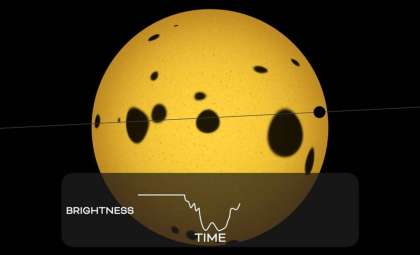
Since its launch in 2018, TESS has been surveying nearly the entire sky, observing approximately 200,000 of the brightest nearby stars for periodic brightness dips caused by planets passing in front of them. To date, TESS has identified over 7,600 planet candidates, or TESS Objects of Interest (TOIs), with 686 confirmed as actual exoplanets following follow-up observations using ground-based telescopes.
The newly confirmed planets TOI-2322 b and TOI-2322 c highlight the crucial role of combining TESS photometric detections with high-precision instruments like the ESPRESSO spectrograph at the Very Large Telescope in Chile. This approach enables astronomers to derive the masses and compositions of these distant worlds through radial velocity measurements, moving beyond mere detection to detailed planet characterization.

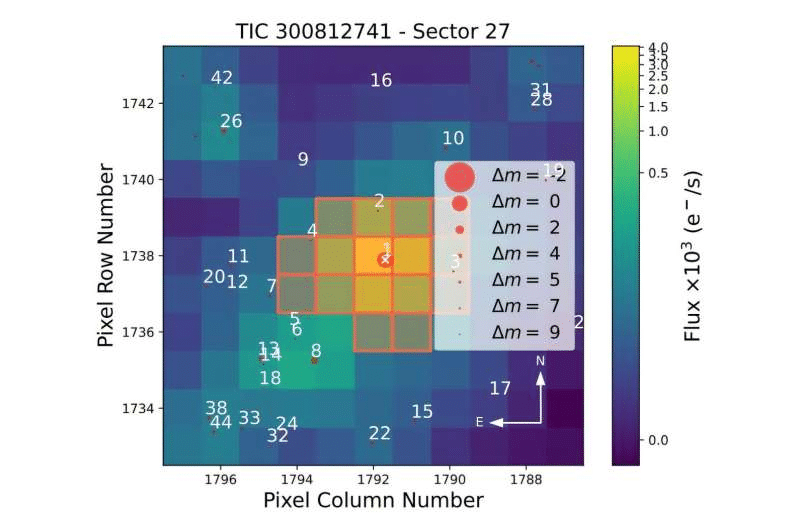
TOI-2322: A Nearby K-Type Host Star
Located roughly 195 light-years away, the TOI-2322 system is relatively close on a cosmic scale. Its star, classified as K4-type and identified as TIC 300812741, is about 30% smaller and less massive than the Sun. It has an effective surface temperature of 4,664 K and a metallicity slightly lower than the Sun’s at –0.12 dex. The star’s estimated age is around 3.9 billion years, placing it at a similar evolutionary point but with distinct stellar properties.
The star’s rotation period of 21.28 days intriguingly overlaps with the orbital period of one of its planets, TOI-2322 c. This coincidence complicates separating signals caused by stellar activity from planetary-induced variations, making this system an excellent testbed for improving analysis methods in exoplanet research.
TOI-2322 b: Earth-Sized Rocky Planet Close to Its Star
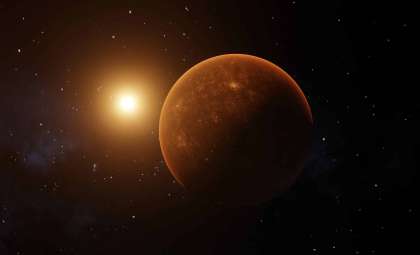
TOI-2322 b is the innermost planet in the system, closely matching Earth’s size and weighing under 2.03 Earth masses. It orbits at approximately 0.09 AU, completing a circuit every 11.3 days. With an estimated equilibrium temperature of 603 K (329 °C), the planet is too hot to sustain liquid water but remains a fascinating subject for studying rocky planet formation around stars smaller than the Sun.
Although unlikely to support life, TOI-2322 b enriches our understanding of the diversity and structure of terrestrial planets orbiting K-type stars.
TOI-2322 c: A Dense Super-Earth with Earth-Like Composition
The second planet, TOI-2322 c, is larger and significantly more massive, with a radius of 1.87 Earth radii and a mass about 18 times that of Earth. Its high density, measured at 14.69 g/cm³, suggests an internal makeup remarkably similar to Earth’s. It orbits 0.13 AU from its star every 20.2 days. With an equilibrium temperature around 500 K (227 °C), the planet remains inhospitable by Earth standards.
This planet stands out as one of the most massive known with a terrestrial-like core, serving as a valuable example for studying the development and structure of rocky super-Earths in compact systems.
Significance of the TOI-2322 Planetary System
The TOI-2322 system illustrates the kind of planetary variety that TESS aims to reveal. Both planets are rocky, orbit closely to their star, yet differ drastically in mass and density. Their juxtaposition offers a unique chance to investigate how terrestrial planets scale and evolve based on their distance from their stars.
Moreover, the overlap of stellar rotation with planetary orbits challenges astronomers to disentangle stellar noise from exoplanet signals. This makes TOI-2322 a critical system for refining detection methods key to future searches for habitable planets.
- Categories:
- News



0 comments
Sign in to Comment