
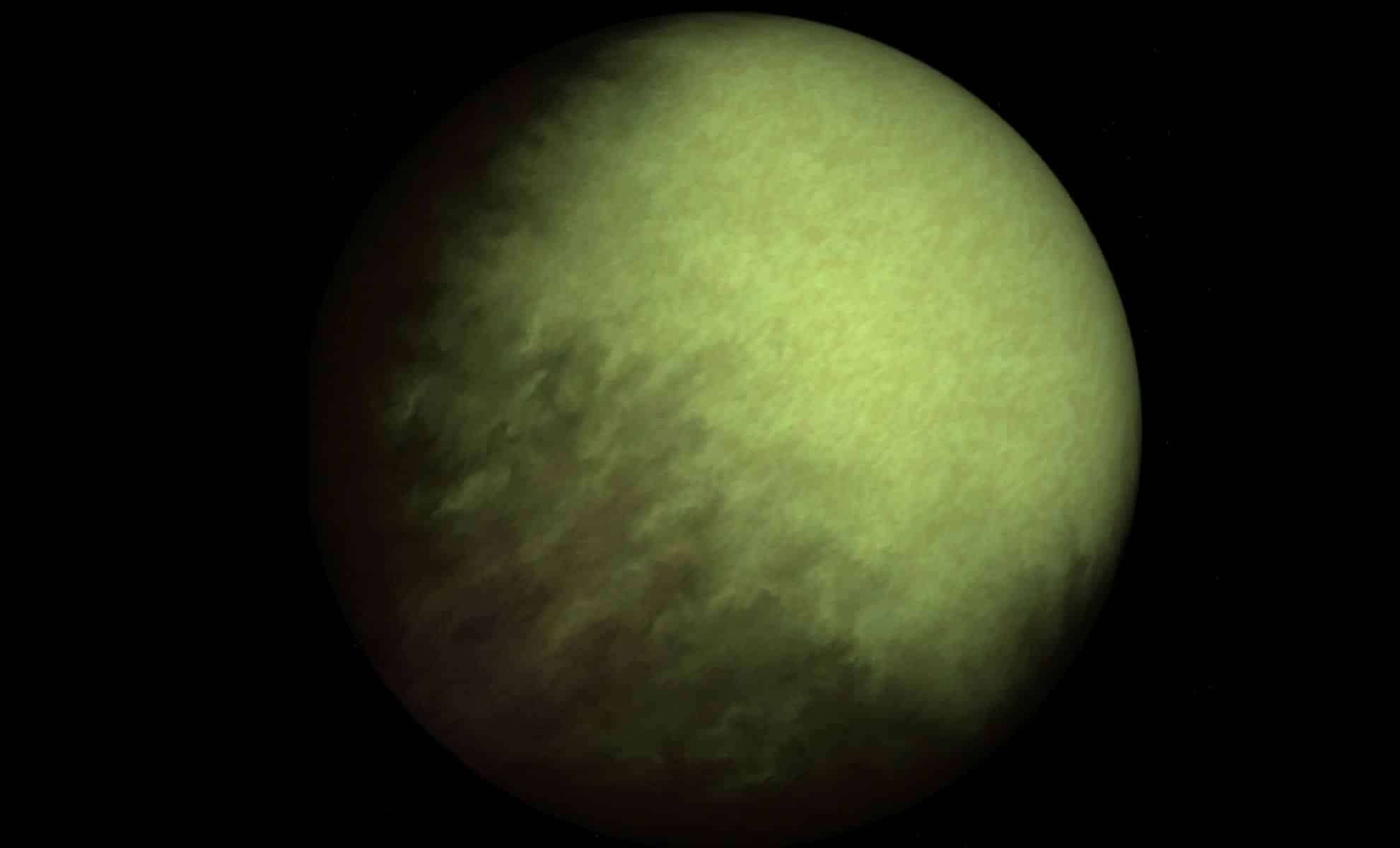
A recent breakthrough in exoplanet exploration has uncovered a distinctive planet orbiting a star a mere 124 light-years from our solar system. Named GJ 2126 b, this enormous planet stands out not only for its closeness but also for its remarkably unusual orbit. The discovery was made utilizing the highly sensitive HARPS spectrograph, which detects tiny stellar movements caused by the gravitational influence of orbiting planets. According to the research detailed in the Astronomy & Astrophysics publication, GJ 2126 b possesses an exceptionally elongated orbit, with an eccentricity reaching 0.85. This finding challenges existing planetary formation theories and invites new perspectives on planetary system dynamics.
GJ 2126 b’s Uncommon Orbital Path
The defining trait of GJ 2126 b is its highly elliptical orbit, which differs starkly from the near-circular paths typical of many planets, including those within our solar system. Instead of a stable, roughly circular trajectory like Earth's or Jupiter’s, this planet travels along a highly stretched route around its star. During its orbital cycle of roughly 273 days, the planet's proximity to its star swings dramatically, coming as close as 0.11 AU (around 9.9 million miles) and retreating to 1.31 AU (approximately 122 million miles).
"Orbiting a low-mass star, this planet ranks among the most eccentric exoplanets ever identified," stated Arbel Schorr, the study’s principal investigator from Tel Aviv University’s School of Physics and Astronomy. Such an extreme orbital shape is rare and suggests significant implications for the planet’s climate, potentially causing intense temperature shifts and variable atmospheric phenomena through each orbit.

The researchers also speculate that this eccentric orbit hints at a turbulent origin, likely shaped by gravitational interactions with other unseen massive bodies in its early development. They note that “this high eccentricity often points to a chaotic past shaped by strong gravitational run-ins.”
Size and Makeup of GJ 2126 b
With an estimated mass at least 1.3 times that of Jupiter, GJ 2126 b qualifies as a massive giant planet, resembling the gas giants familiar in our solar system. This figure is based on radial velocity data, derived from 112 observations made using the precise HARPS spectrograph, which detects subtle shifts in stellar movement caused by orbiting bodies.
Nevertheless, the planet's exact mass remains uncertain due to unknown orbital inclination, leaving open the possibility that it could be even more massive than initial estimates suggest. However, the stable signal without major long-term variations excludes the presence of a much larger object, like a brown dwarf, in orbit around this star. As Schorr emphasized, “We report the discovery of GJ 2126 b, a highly eccentric (e = 0.85) Jupiter-like planet orbiting its host star every 272.7 days.”
The planet’s composition is believed to be mostly hydrogen and helium, similar to Jupiter, with potential heavier elements forming its core. Being classified as a “Jupiter-like” planet implies that, despite its atypical orbit, it shares foundational traits with gas giants in other planetary systems.
Techniques Behind the Discovery
The identification of GJ 2126 b demonstrates the cutting-edge capabilities of current astronomical instruments and data processing methods. The discovery was made using the HARPS spectrograph, housed on the European Southern Observatory’s 3.6-meter telescope, renowned for its exceptional sensitivity to minute stellar velocity changes induced by orbiting planets.
The team examined 252,615 velocity measurements spanning 5,239 stars from the publicly accessible HARPS-RVBank dataset, allowing multiple research groups to revisit the data for previously undetected signals. HARPS’ ability to register velocity variations as slight as one meter per second was crucial in detecting the gentle stellar wobble caused by GJ 2126 b’s gravitational pull.
Prospects for Further Study of GJ 2126 b
The revelation of GJ 2126 b paves the way for numerous future investigations. While its eccentric orbit is well-defined, more research is needed to clarify its physical attributes, including its actual mass and size. A significant hurdle is the absence of observed transits, which hampers efforts to measure the planet’s radius directly.
As Schorr highlighted, “The radius is unknown because no transit has been seen in the available survey photometry.” Consequently, scientists must depend on alternative methods such as continued velocity monitoring and astrometric techniques to better characterize the planet. Future observations could also reveal additional components or dynamic interactions within this planetary system through subtle variations in the star’s motion.
- Categories:
- News







0 comments
Sign in to Comment