
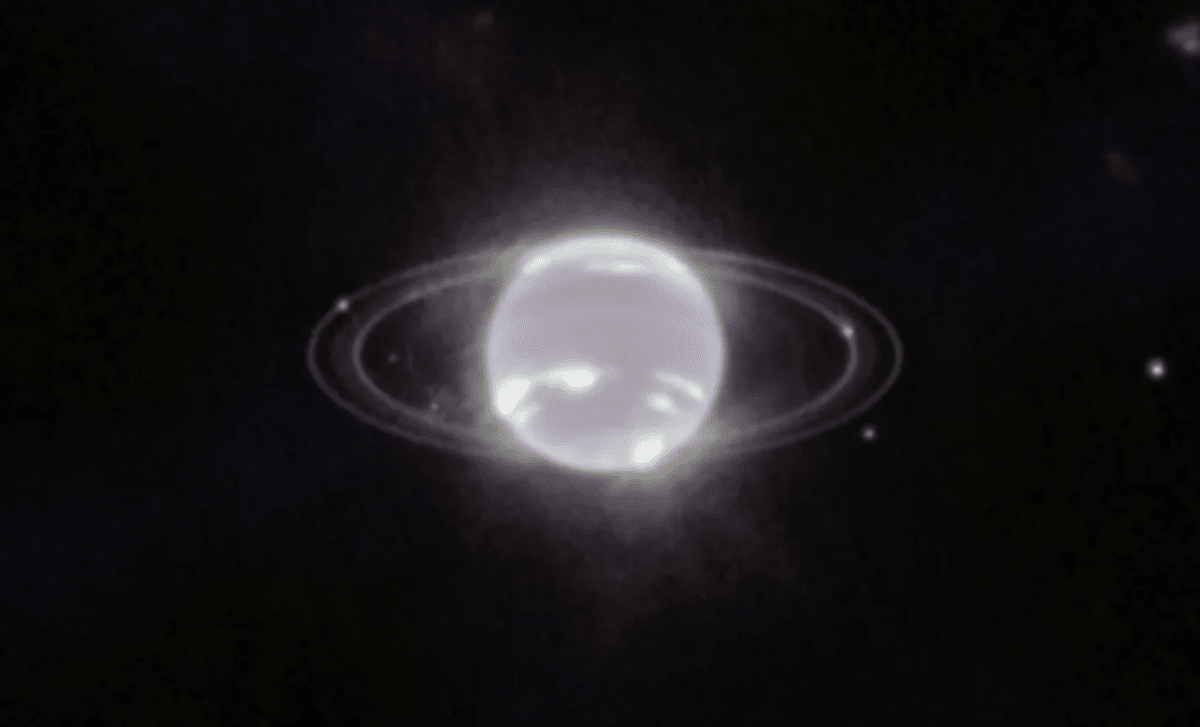
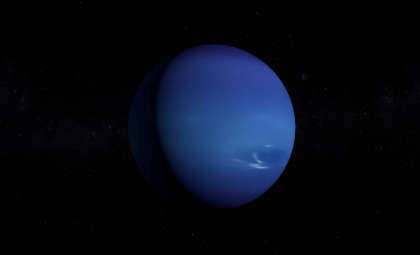
New research appearing in Science Advances proposes that Neptune’s satellite Nereid could be the sole remaining original moon of the planet, having endured billions of years of dynamic cosmic events while its fellow satellites were scattered or obliterated. By utilizing the powerful James Webb Space Telescope, a team from the California Institute of Technology identified characteristics in Nereid’s makeup and unusual orbit that indicate a deep connection to Neptune itself, rather than an origin within the distant Kuiper Belt.
Nereid’s Distinct Orbit Points to Its Ancient Roots
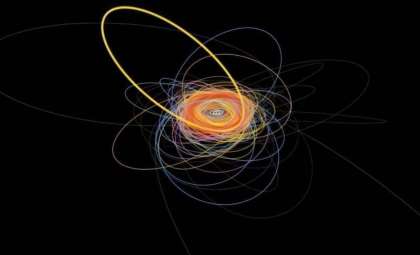
In contrast to Neptune’s largest moon, Triton, which arrived from the outer solar system and significantly disturbed Neptune’s initial set of moons, Nereid holds a distinctive, yet steady orbital path. Its journey around Neptune is highly elliptical, ranging between 1 million miles (approximately 1.4 million kilometers) at closest approach and extending to about 6 million miles (roughly 9.6 million kilometers) at its farthest. Webb telescope data reveals that Nereid is primarily composed of ice, a composition that diverges from typical Kuiper Belt objects, supporting the idea that it has been a part of Neptune’s system since its formation.
Matthew Belyakov, one of the lead researchers from Caltech, shared with AP News in an email,

“We don’t have all that much evidence left around Neptune — the system doesn’t have very many moons left. But the latest observations strongly rule out that Nereid wandered by like so many others and got ensnared by planetary gravity.”
Nereid’s extremely elongated orbit likely played a crucial role in preserving it amid the turmoil caused by Triton’s capture, preventing the collisions that eliminated most of Neptune’s original moons.
Revealing Neptune’s Tumultuous Origins
The findings, outlined in Science Advances, illuminate the violent birth of Neptune’s moon system. The arrival of Triton billions of years ago disrupted the existing satellites, scattering or destroying many. Now, Nereid’s unique makeup and orbit provide valuable clues about the moons that first formed with Neptune.
The inner moons likely arose from debris generated by those ancient collisions, creating a fragmented but relatively steady arrangement lasting billions of years. Nereid offers scientists an exceptional lens into the original dynamics of Neptune’s early moon system, granting insights unattainable from planets with calmer pasts.
Kuiper’s Early Observations Gain New Support
Discovered in 1949 by Dutch astronomer Gerard Kuiper, Nereid was initially highlighted as a potentially important key to unraveling Neptune’s unusual system. Kuiper stated, “There is some reason to hope that this object may become a clue to the unusual cosmogonic problem presented by the Neptune system, and as such is of more than routine interest.” The recent Webb data validates Kuiper’s initial suspicions: Nereid indeed holds critical information about Neptune’s moon formation and development.
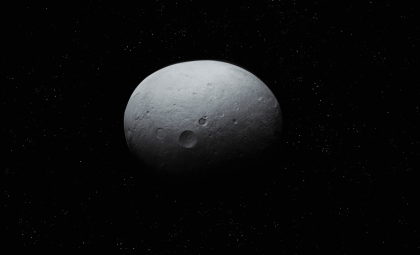
At about 220 miles (or 350 kilometers) in diameter, Nereid remained relatively unexplored until the advanced observations made possible by the Webb Space Telescope provided detailed insights into its surface and composition. These breakthroughs reported in Science Advances represent a substantial advancement in our knowledge of Neptune’s remote and scarcely studied region.
Looking Forward: Potential Missions to Neptune
Though these discoveries are groundbreaking, Neptune’s realm is still rarely visited. Only NASA’s Voyager 2 spacecraft has conducted a close flyby, back in 1989. Future missions dedicated to exploring Neptune could validate hypotheses about Nereid and its fellow moons by uncovering detailed information about their materials, orbits, and the planet’s primordial satellite system.
Until then, observations made with the Webb telescope offer compelling evidence that Nereid survived a period of cosmic upheaval that eliminated or displaced Neptune’s other original moons. Continuing investigations are expected to further reveal the history of this icy, resilient moon circling the outermost planet of our solar system.
- Categories:
- News


0 comments
Sign in to Comment