
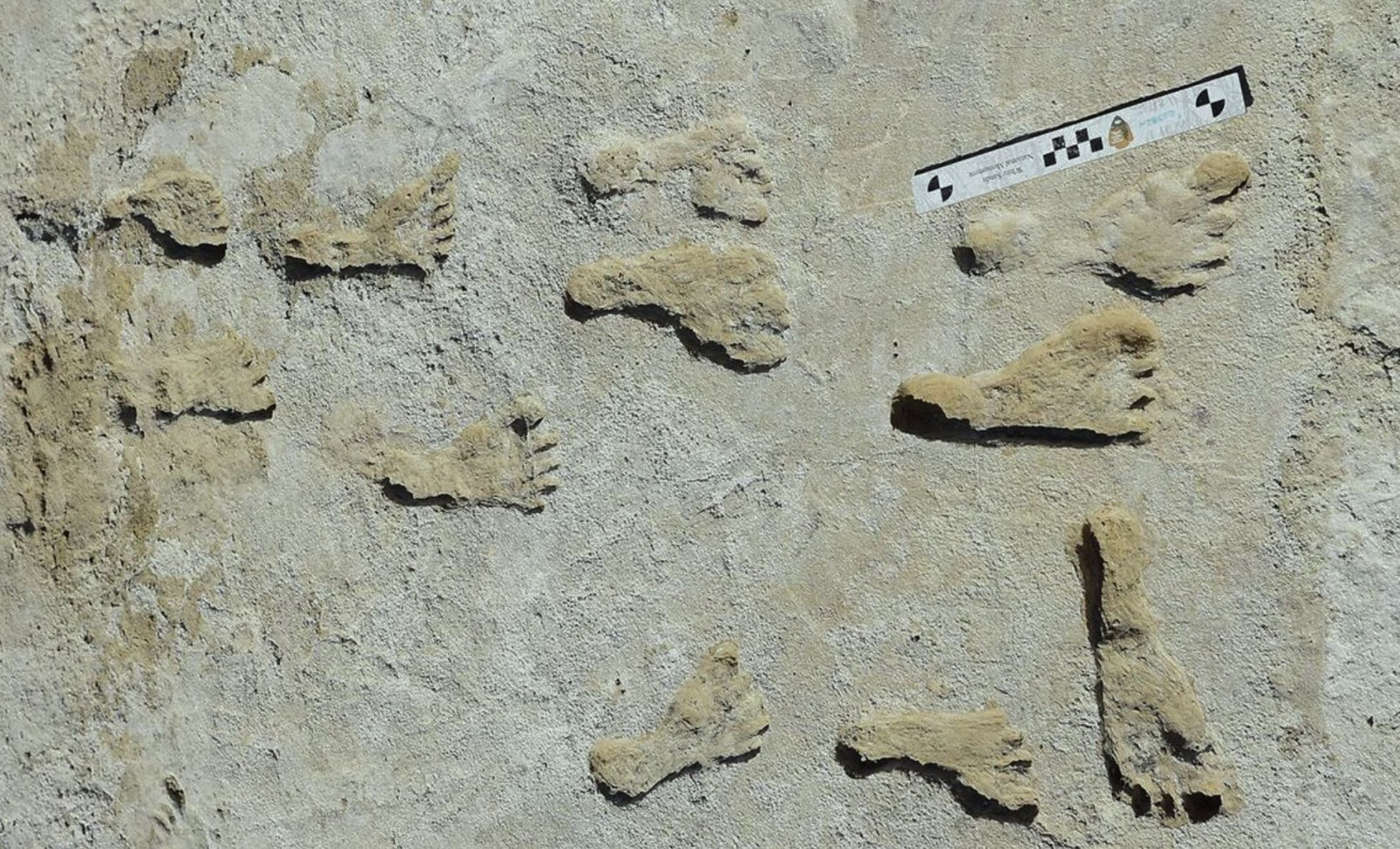
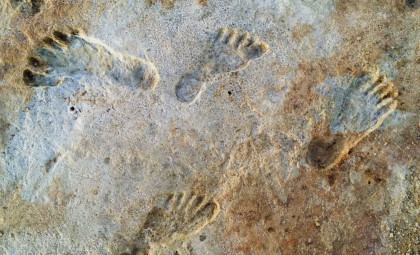
Recent research has reinforced evidence of ancient human footprints discovered at White Sands in New Mexico. Published in Science Advances, this new analysis upholds previous conclusions that humans walked the area between 23,000 and 21,000 years ago, a finding that has generated considerable debate among scientists.
This latest study re-examines the original dating using a distinct material—ancient mud—yielding dates that closely align with earlier estimates, bolstering confidence in the timeline.
Currently marked by its iconic gypsum dunes, White Sands once featured lakes and flowing streams before drying and becoming covered with gypsum sands. According to the University of Arizona, these conditions allowed the footprints to be preserved for thousands of years.

Accessing the area has been challenging since part of it lies within a national park, while adjacent land serves as the White Sands Missile Range. Archaeologist and geologist Vance Holliday began examining the site’s ancient lakebed sediments in 2012, unaware that significant archaeological discoveries were just a short distance away.
Reassessing the Original Timeline
The footprints were uncovered in 2019 by teams from Bournemouth University and the U.S. National Park Service, with an initial study published two years later. That report suggested the footprints date from 23,000 to 21,000 years ago, much earlier than previous estimates.
Certain experts questioned these conclusions due to their reliance on radiocarbon dating of ancient seeds and pollen extracted from sediments. The new study offers an alternative approach.
As detailed by Science Advances, researchers measured the age of organic components preserved in ancient mud from the same sediment layers. Results indicated ages between 20,700 and 22,400 years, closely matching previous estimates.

The footprints have now been validated through dating of three separate materials—seeds, pollen, and mud—processed in three independent labs. Combined, two distinct research groups have produced 55 consistent radiocarbon readings.
“It’s a remarkably consistent record,” Vance Holliday said. He added that, ” it would be serendipity in the extreme to have all these dates giving you a consistent picture that’s in error.”
Footprints That Challenge Established Timelines
If the dating at White Sands is accurate, humans occupied this region some 10,000 years before the famed Clovis culture, long thought to be North America’s earliest human presence.
This discovery has thus captured significant scientific interest. Holliday mentioned in a University of Arizona press release that his nearly 50 years studying early human settlement in the Americas is reinforced by the increasing number of corroborated dates.
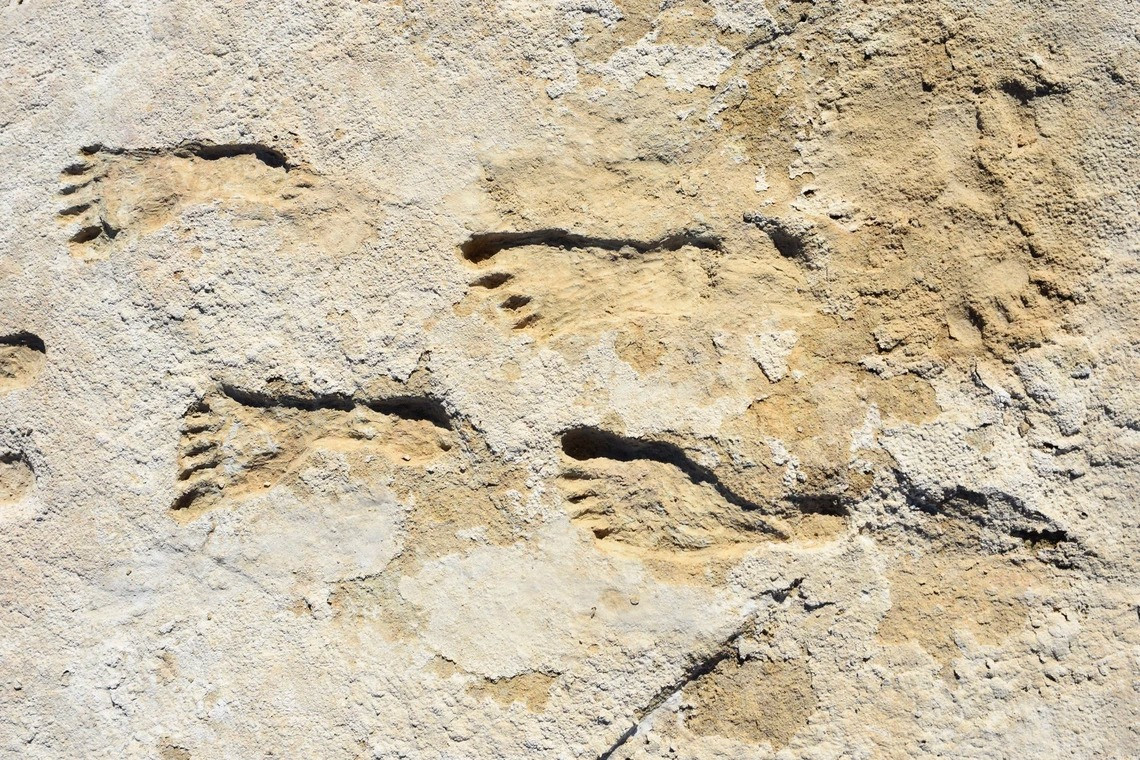
This new investigation specifically addressed critiques of the 2021 research by utilizing a totally different dating material for the footprints. Far from replacing previous assessments, it offers independent confirmation of the footprints’ proposed age.
Unanswered Questions Remain
While the dating evidence solidifies, one puzzle persists: if humans lived in the area so long ago, why have no artifacts or campsites been located nearby?
Holliday acknowledged that the latest data doesn’t resolve this matter. Some footprints capture only brief moments of walking, and in such cases, he argues, it’s unlikely that hunter-gatherers would have abandoned tools behind.
“These people live by their artifacts, and they were far away from where they can get replacement material. They’re not just randomly dropping artifacts,” he stated. “It’s not logical to me that you’re going to see a debris field.”
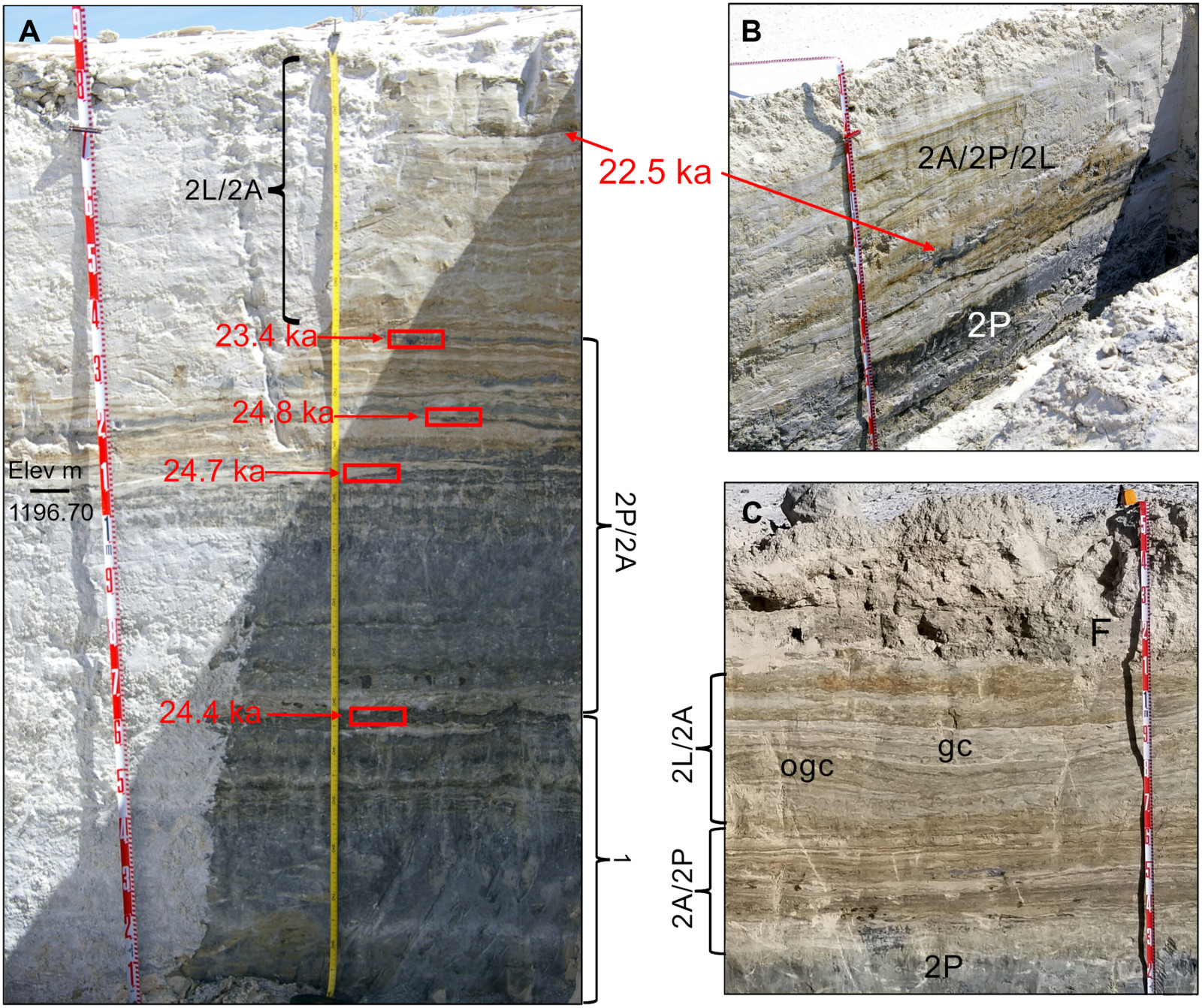
The region has also experienced significant geological changes over millennia. The University of Arizona notes that wind erosion has stripped parts of the ancient surface, while other areas remain hidden beneath thick gypsum sands.
- Categories:
- Science







0 comments
Sign in to Comment