
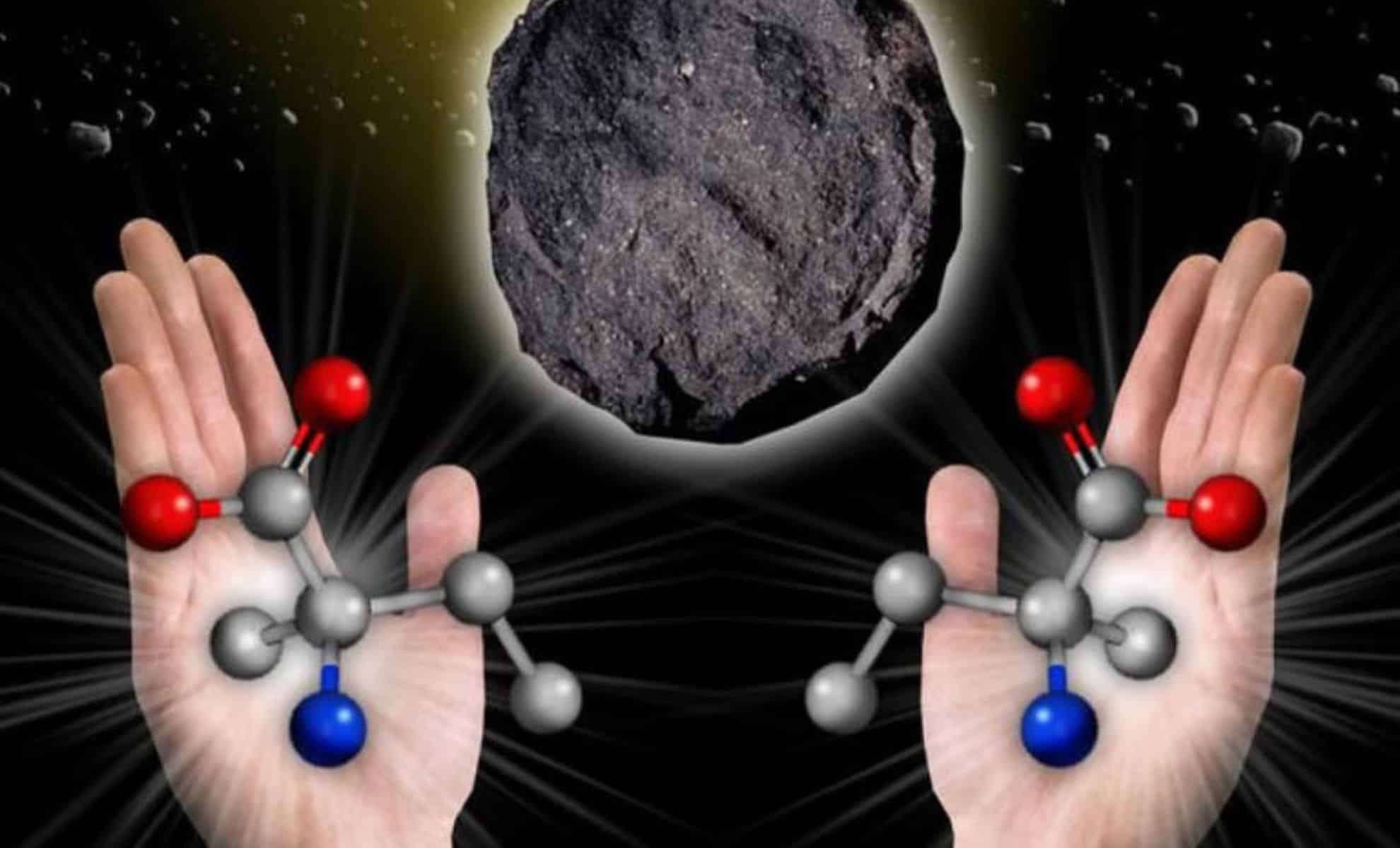
Groundbreaking research from teams at UCLA and NASA’s Goddard Space Flight Center is revolutionizing our perception of how life’s molecular components arose on Earth. This recent study suggests that the earliest life forms may not have been restricted to the traditional “left-handed” molecules as previously believed, upending long-standing assumptions about the chiral nature of amino acids and sugars essential to biological systems.
Published in Nature Communications, the research unveils evidence for greater molecular flexibility in early RNA sequences, which could profoundly alter our understanding of life's beginnings on our planet as well as the prospects for life beyond Earth.
The Importance of Chirality in Biological Molecules
Chirality is a fundamental concept in molecular biology describing molecules that exist as non-superimposable mirror images, much like left and right hands. Typically, biological molecules exhibit a specific handedness: sugars in DNA and RNA are predominantly right-handed, while the amino acids that build proteins are usually left-handed. This uniformity of molecular orientation, termed homochirality, is a hallmark of terrestrial life and considered crucial for its structural and functional integrity.

However, this new research, spearheaded by Irene Chen, a chemical and biomolecular engineering professor at UCLA, questions the strictness of this principle. It proposes that primitive RNA molecules might not have been limited by fixed chirality conventions, potentially utilizing both left- and right-handed molecular forms in their earliest stages.
RNA Ribozymes Show Surprising Duality
The study centers on ribozymes, small RNA molecules known for catalyzing chemical reactions and thought to be pivotal intermediates preceding the rise of DNA and proteins. Historically, ribozymes were assumed to favor one chiral form exclusively, but the team from UCLA and NASA tested this premise under simulated early Earth conditions.
Intriguingly, certain ribozymes demonstrated the ability to produce both left- and right-handed amino acids depending on environmental variables. This contrasts sharply with contemporary biological systems, where right-handed ribozymes typically yield left-handed amino acids, exhibiting strong stereochemical fidelity.
“Our experiments revealed that ribozymes can lean toward either left- or right-handed amino acids, suggesting that early RNA worlds might not have had the strict chiral preferences seen in modern life,” explained Irene Chen.
This points to a more chemically diverse RNA world than previously envisioned, shaped by a combination of stochastic chemical processes and environmental factors rather than rigid molecular rules.
A Reconsideration of Life’s Chemical Beginnings
Such findings carry weighty implications. If primordial life did not exhibit a fixed preference for certain chiral molecules, it means life’s molecular architecture may have been more variable initially. This challenges the idea of life’s origin as a preordained chemical event, suggesting instead that evolutionary pressures played a critical role in selecting specific molecular handedness over time.
Alberto Vázquez-Salazar, a UCLA postdoctoral researcher involved in the study, remarked, “Our data imply that the homochirality of life likely emerged through evolutionary mechanisms rather than being chemically predetermined.”
This paradigm shift highlights adaptability and molecular diversity as fundamental in life’s early development, potentially reshaping models of biology’s origins both on Earth and beyond.
Broader Impacts on the Search for Life in Space
The discovery of this molecular flexibility has significant consequences for astrobiology, which investigates the existence of life beyond our planet. If Earth’s early molecular structures lacked a strict chiral bias, extraterrestrial life could have evolved along divergent chemical lines, defying assumptions that alien biology must mirror Earth’s handedness.
Jason Dworkin, a senior NASA Goddard scientist and co-author, emphasized that such insights refine our strategies for detecting life elsewhere. “Better understanding molecular characteristics equips us to recognize life signatures during explorations of the solar system,” he noted.
This has direct relevance to missions like OSIRIS-REx, which returned samples from the Bennu asteroid. Investigating these materials may reveal how chirality influenced life’s building blocks and broaden the scope of conceivable molecular arrangements in space.
Future Directions: Exploring Molecular Diversity in Life’s Origins
The collaborative effort between UCLA and NASA introduces a fresh perspective on how life’s molecular precursors originated and evolved. Scientists are poised to expand their studies by analyzing extraterrestrial samples from asteroids, moons, and other celestial bodies to uncover variations in biochemical building blocks.
These findings also raise provocative questions about the possibility of life elsewhere operating under different molecular frameworks, potentially with alternative chiralities or novel molecular arrangements. As space exploration advances, this research broadens the horizon of astrobiological inquiry, encouraging a more inclusive search for life throughout the cosmos.
- Categories:
- News











0 comments
Sign in to Comment