
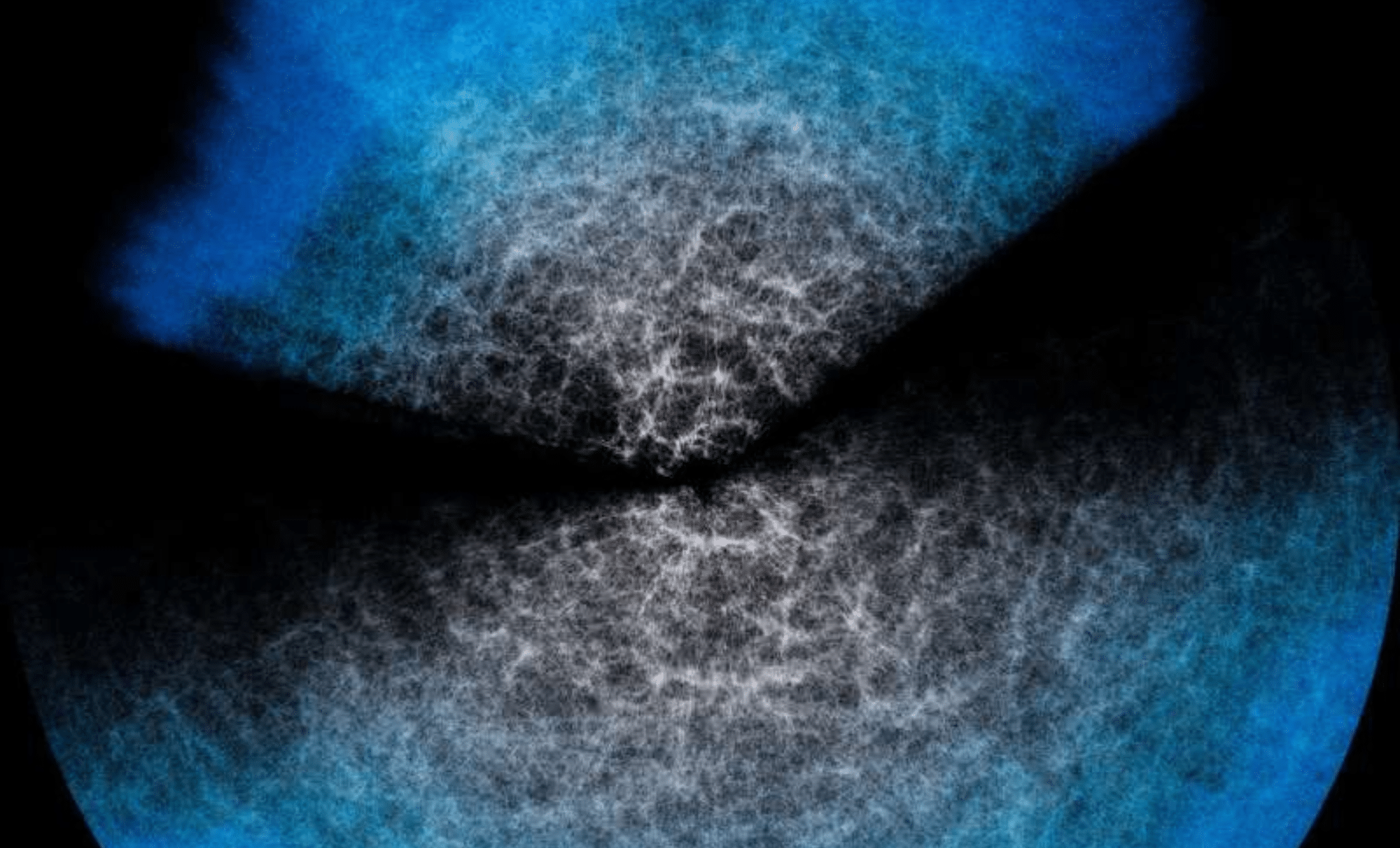
Decoding the immense architecture of the cosmos—from individual galaxies to vast superclusters—has traditionally demanded intricate models and significant computing power. The introduction of Effort.jl, a cutting-edge emulator designed to replicate these cosmological models, promises to accelerate this process significantly while keeping results accurate. This innovation, presented by Marco Bonici and his team in the Journal of Cosmology and Astroparticle Physics, heralds a new era in astronomical data analysis, enabling faster cosmic explorations.
Unraveling the Cosmic Web’s Complexity
The universe features a complex network of galaxies, clusters, and superclusters interwoven with expansive voids, collectively forming a three-dimensional cosmic web. Scientists utilize enormous datasets from astronomical surveys, such as those collected by the Dark Energy Spectroscopic Instrument (DESI), to chart this intricate structure. These observations are interpreted through theoretical constructs like the Effective Field Theory of Large-Scale Structure (EFTofLSS), which models the statistical distribution of cosmic matter and predicts galaxy arrangements across huge scales.
Yet, analyzing these extensive datasets requires hefty computational resources. Conventional models like EFTofLSS are computationally intensive, making full-scale simulations cumbersome and slow when processing fresh data. With the volume of data expanding rapidly, new tools are essential to streamline this analytical bottleneck. Here, Effort.jl offers a transformative solution.

Introducing Effort.jl: Speeding Up Universe Simulations
Effort.jl functions as an emulator that approximates the EFTofLSS model's outcomes with far less computational effort. Emulators work by simulating complex calculations through an approximated method rather than executing all steps repeatedly. This tool leverages a neural network trained to identify the connections between input parameters and the EFTofLSS outputs, enabling rapid, accurate predictions for new parameter sets.
Marco Bonici, lead author and researcher at the University of Waterloo, explains, “Consider the immense challenge of analyzing water at the atomic level to understand every movement: theoretically possible but computationally overwhelming. This analogy reflects the difficulties inherent in precisely modeling the vast structures of the universe.”
Reducing Processing Times with Neural Emulation
Though emulators have existed before, Effort.jl sets itself apart by balancing speed with high fidelity to the original model. The neural network integrates fundamental physics into its training, allowing it to operate efficiently with fewer examples and generate faster outputs. Bonici notes, “This is why emulators like Effort.jl are essential to drastically reduce time and resource demands.”
The method involves training the neural network on EFTofLSS-derived data, teaching it how subtle variations in input parameters influence predictions. This approach enables faster yet precise cosmic data analysis indispensable for unraveling the universe’s large-scale structures.
Ensuring Precision in Emulation
Accuracy remains a critical benchmark for any emulator. The team behind Effort.jl ran rigorous comparisons to verify that its predictions align closely with those from the full EFTofLSS model. Their findings were encouraging: Effort.jl delivered precise forecasts and, in certain scenarios, revealed finer details that traditional models had to omit to save time.
Bonici adds, “Where model constraints require simplifying parts of the analysis to speed it up, Effort.jl enables including those portions, enhancing overall precision.” Such reliability is crucial for cosmological research, where even minor inaccuracies can skew our understanding of galaxy distribution and dark matter across cosmic scales.
- Categories:
- News










0 comments
Sign in to Comment