
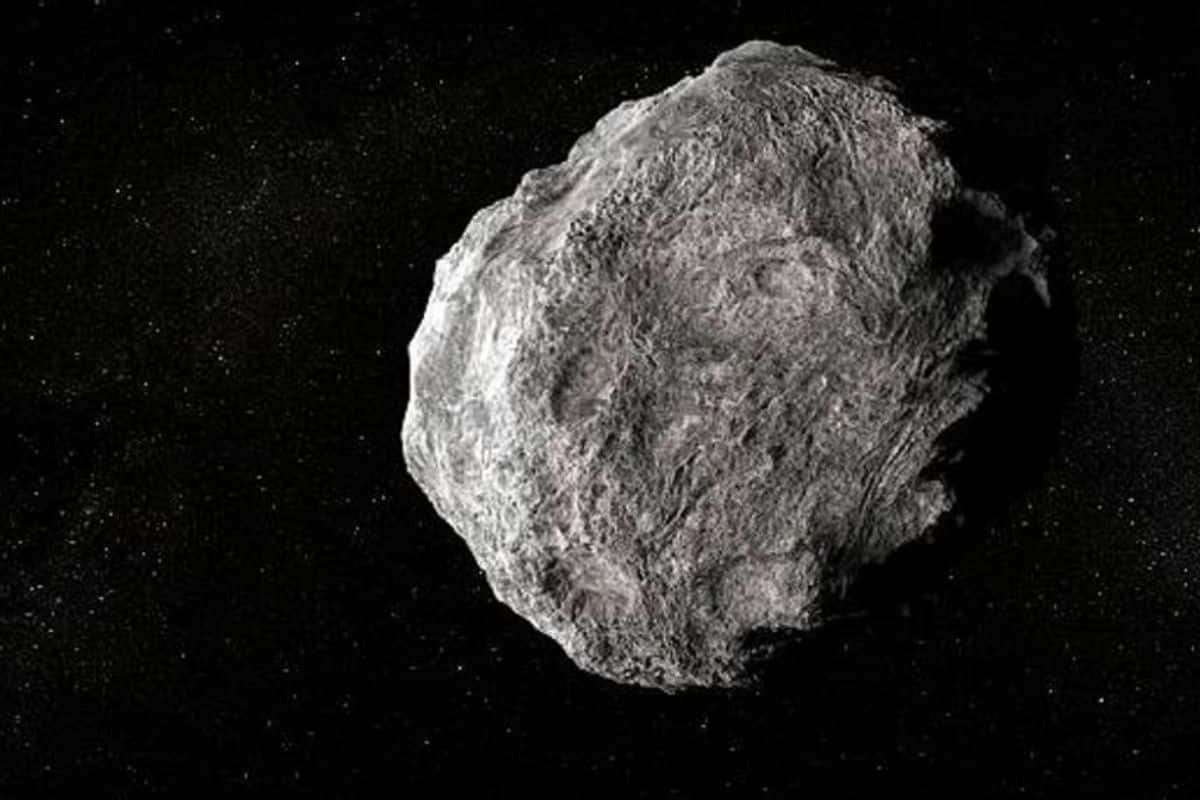
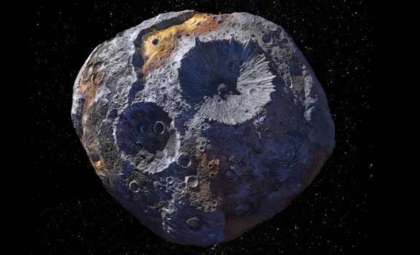
A team of Japanese scientists has identified salt minerals on the asteroid Ryugu, implying that liquid water once existed on its original parent body. These insights, derived from material collected by Japan’s Hayabusa2 spacecraft, shed light on the solar system’s watery past and its significance in planetary development.
Indicators of Ancient Water Activity
Researchers at Kyoto University examined grains of sodium carbonate, halite (rock salt), and sodium sulfates from Ryugu’s samples. Such minerals usually form through interactions with liquid water, suggesting the parent body of the asteroid harbored water billions of years ago, which later evaporated or froze.
Planetary scientist Toru Matsumoto explains that these salt crystals offer crucial data on the timing and processes behind water’s disappearance from Ryugu’s source. This discovery indicates that Ryugu once belonged to a larger object that experienced hydrothermal processes or contact with water-rich environments.

Insights Into Planetary Formation
These salt deposits link Ryugu to other celestial bodies thought to contain extensive subsurface oceans. Scientists propose that similar salty layers may be found on:
- Ceres, the largest object in the asteroid belt between Mars and Jupiter.
- Europa and Ganymede, Jupiter’s icy moons with liquid water layers beneath their surfaces.
- Enceladus, Saturn’s moon, known for its water plumes.
These bodies are prime candidates in the search for extraterrestrial life due to their potential to sustain stable liquid water environments. The Ryugu findings reinforce the idea that water was once commonly distributed throughout the solar system and may still exist in concealed reservoirs.
Hayabusa2’s Landmark Mission
Japan’s Hayabusa2 spacecraft, launched in 2014, reached Ryugu in 2018, gathered samples, and returned to Earth in 2020 with over five grams of asteroid material. Researchers have since been analyzing these fragments to learn more about solar system origins and planetary evolution.
Discovering salt minerals adds to earlier evidence that Ryugu contains organic compounds and carbonaceous material.
Implications for Earth’s Ancient Waters
The findings spark new discussions about the formation of Earth’s primeval oceans. Some experts suggest that water-laden asteroids and comets struck the early Earth, delivering key ingredients that eventually led to ocean development and possibly prebiotic chemistry.
Investigations into the composition of Ryugu’s minerals enable comparisons with Earth’s oldest rocks and meteorites, helping to clarify how our planet’s water cycle originated. Matching mineral signatures would support the theory that Earth’s earliest seas had extraterrestrial beginnings.
Looking Forward to Future Missions
The success of Hayabusa2 encourages further sample-return missions like:
- NASA’s OSIRIS-REx, which has recently delivered samples from asteroid Bennu.
- JAXA’s MMX, aiming to collect samples from Phobos, a moon of Mars.
- ESA’s Hera mission, designed to study the results of NASA’s DART impact on an asteroid.
These expeditions strive to expand our knowledge of asteroids, the components of planetary formation, and the distribution of water throughout outer space. Each discovery brings us closer to solving the mystery of how life began in the cosmos.
Piecing Together Solar System History
The identification of salt minerals on Ryugu represents an important stepping stone toward decoding our solar system’s narrative. Continued analysis of asteroid materials promises to reveal more about the origins of water, life, and planetary assembly.
As upcoming missions venture to new celestial targets, researchers edge nearer to unlocking how life’s essential elements were scattered across the solar system—and perhaps beyond.






0 comments
Sign in to Comment