
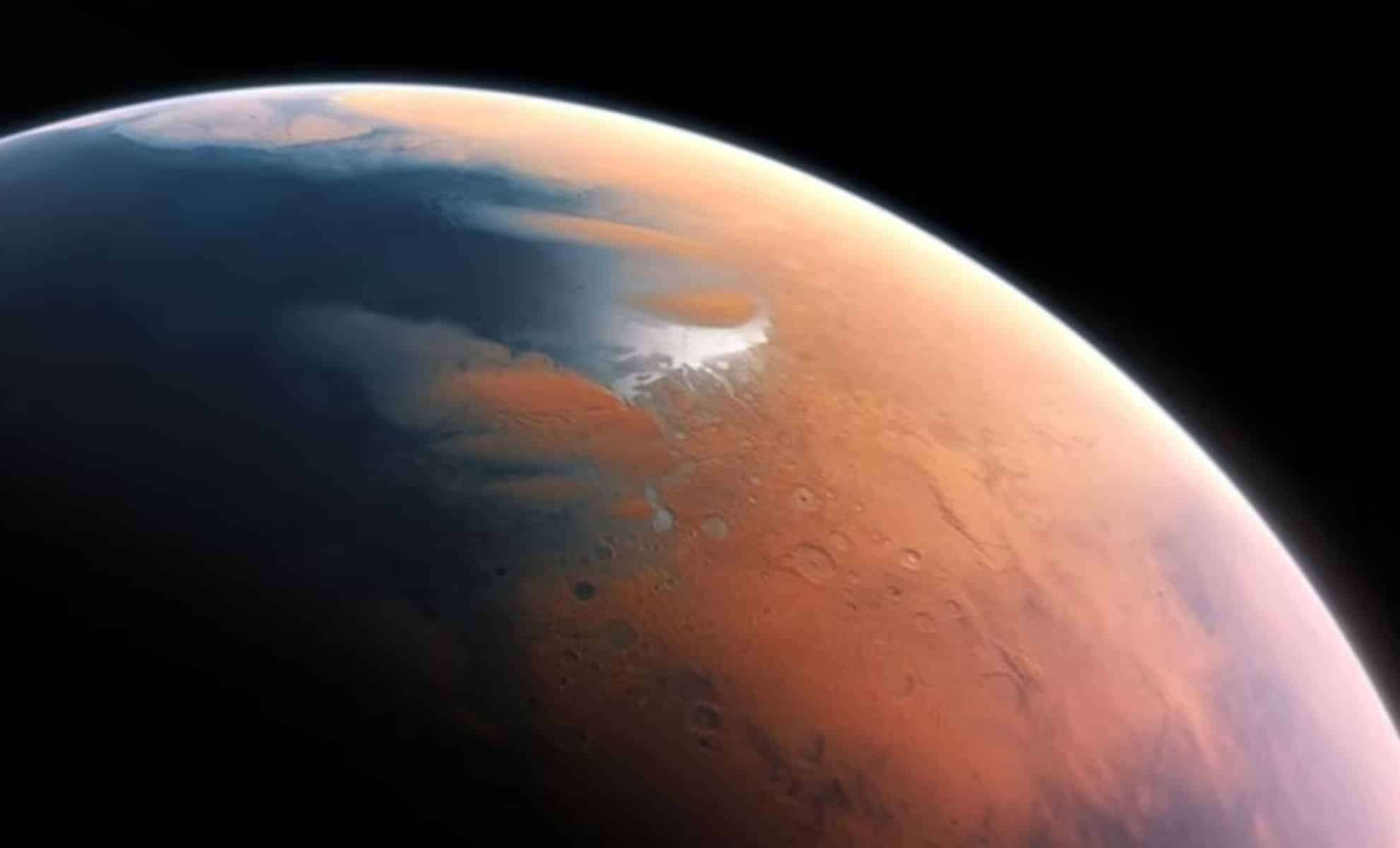
For years, the question of where Mars' water vanished has intrigued scientists. Recent findings, however, offer compelling proof that enormous oceans once covered the Red Planet. By utilizing ground-penetrating radar technology, researchers have identified submerged shorelines, revealing that Martian landscapes were once shaped by waves, tides, and river inlets. This exciting revelation transforms our knowledge of Mars’ history and opens fresh avenues in the quest to find ancient life.
Unveiling Hidden Beaches Beneath Mars’ Surface
A groundbreaking study featured in the Proceedings of the National Academy of Sciences has established the presence of fossilized beach structures on Mars, supporting the theory that a vast northern ocean existed in the planet’s past. This research, led by a collaborative team from China and the United States, analyzed data gathered by the Zhurong Mars rover, focusing on Utopia Planitia — an area long thought to be an ancient seabed.
As the rover explored the terrain, it employed ground-penetrating radar (GPR), which emits radio waves below the surface to locate concealed geological features. They detected thick sediment layers angled at roughly 15 degrees, closely matching Earth's buried coastline patterns.

"We’re uncovering sites on Mars that resemble ancient beaches and river deltas," explained geologist Benjamin Cardenas from The Pennsylvania State University. "Evidence of wind, waves, and abundant sand points to a genuine beach-like environment."
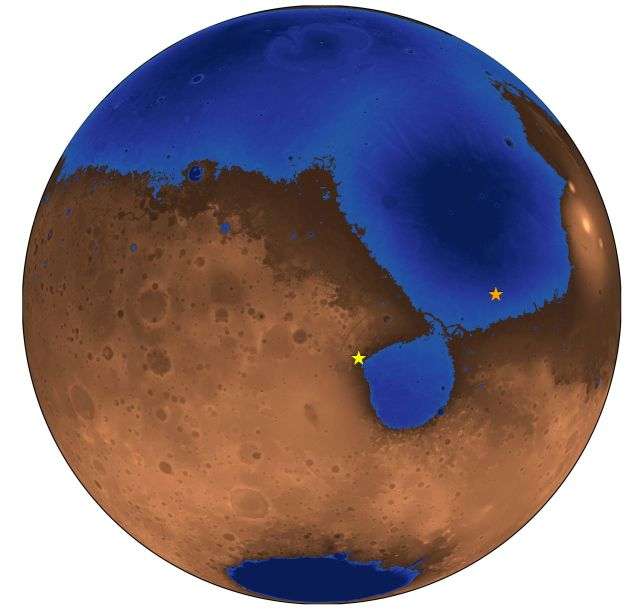
Implications of Mars' Former Ocean for Planetary Science
This discovery offers vital clues about Mars’ development over billions of years. Although scientists have long hypothesized that liquid water once existed on Mars, the extent and longevity of its ocean remained uncertain. The evidence points to an ocean called Deuteronilus that may have endured millions of years, sufficient time for tides and waves to craft beaches comparable to Earth’s.
“Oceans significantly influence a planet’s climate and surface features, as well as offer potentially habitable settings,” noted Michael Manga, a geophysicist at the University of California, Berkeley.
Furthermore, these insights may guide future exploration for ancient microbial life. On Earth, coastal regions and shallow bodies of water are considered prime habitats for early organisms. If Mars once hosted similar environments, they might have supported life billions of years ago.
Tracing the Ancient Martian Water Cycle
Though Mars is now an arid, frigid planet, the presence of old shorelines indicates it once had an active hydrological cycle. Rivers likely fed into the ocean, creating deposits analogous to river deltas on Earth. This suggests Mars experienced phenomena like rainfall, evaporation, and flowing water over sustained periods.
The essential mystery remains: where did all that water disappear? Some researchers think it was lost to space, while others propose that significant water reserves could be trapped underground. If hidden aquifers exist beneath Mars' crust, future expeditions might access these reservoirs, which would be vital for potential human settlement.
- Categories:
- News







0 comments
Sign in to Comment