
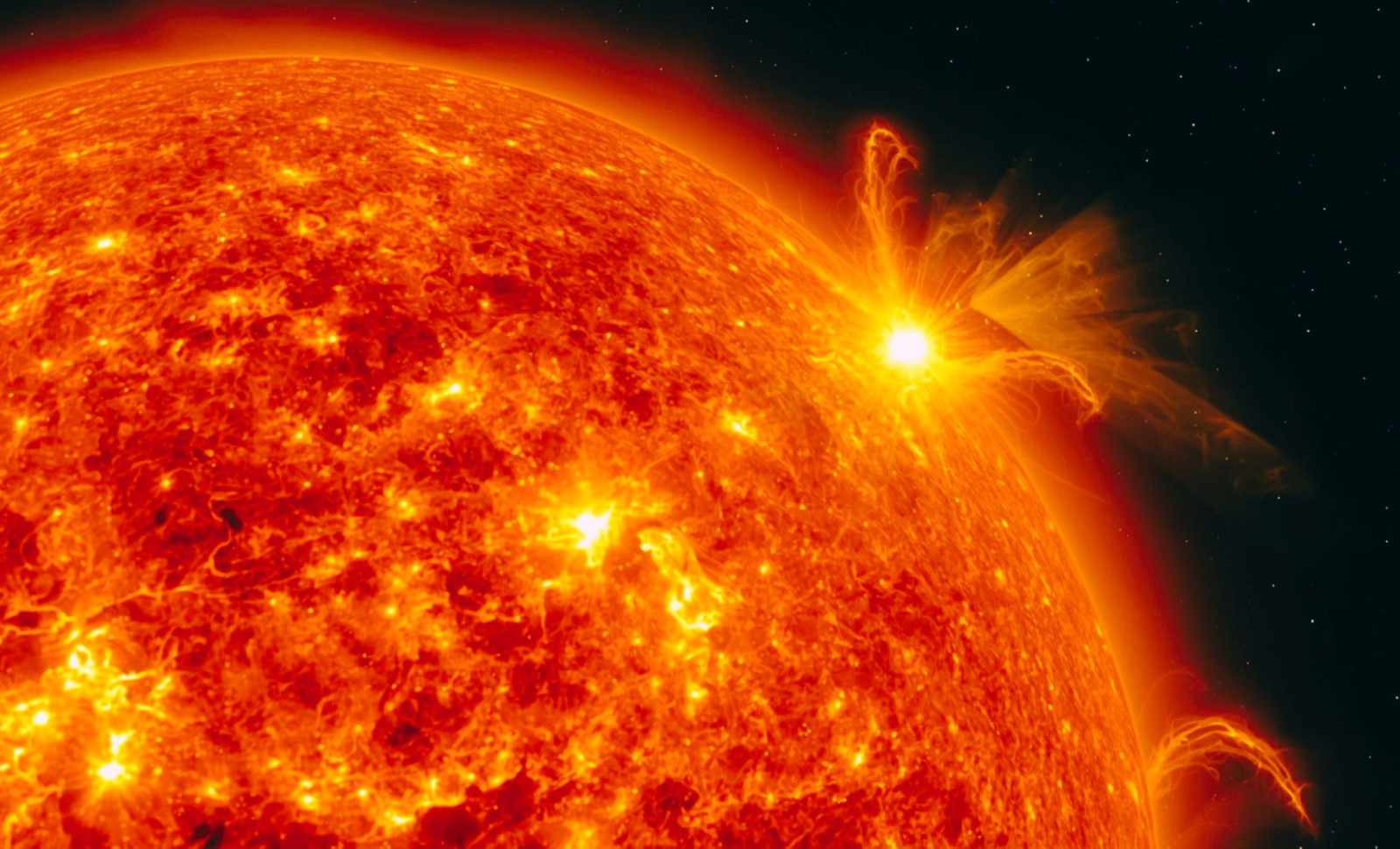
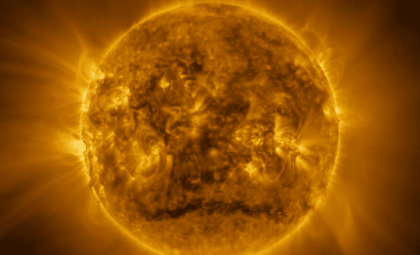
Solar prominences, enormous arches of plasma suspended above the Sun’s surface, have become a focal point for researchers investigating space weather phenomena. Recent findings uncover the mechanisms behind their formation, evolution, and occasional eruptions, which can affect Earth's delicate technological systems. These plasma structures can remain steady for weeks or even months, before abruptly collapsing. When this occurs, streams of charged particles are propelled into space, potentially disrupting satellites and communication networks.
For years, solar prominences have presented a scientific enigma. Despite being cooler than their surroundings, they are far denser and appear to be suspended above the Sun’s surface. New investigations by the Max Planck Institute for Solar System Research shed light on how these seemingly impossible formations are maintained.
Why Dense Plasma Clouds Hover Against Gravity
Solar prominences consist of dense plasma clouds held aloft in the Sun’s outer atmosphere. Dr. Lisa-Marie Zessner characterizes them as dynamic features distributed across the Sun’s surface, varying widely in structure and lifespan.

These prominences maintain temperatures near 10,000 degrees Celsius, significantly cooler than the ambient corona, where temperatures soar beyond a million degrees. Yet their density is approximately 100 times greater than the surrounding plasma.
“The density of the prominence material is typically two orders of magnitude higher than the density of the surrounding corona.” she added, “A comparison to the typical density ratio might be a piece of wood (a bit dependent on the type of wood).”
To illustrate this phenomenon, Zessner likens the prominence’s buoyancy to a piece of wood floating in air, emphasizing the peculiarity of this solar occurrence. Reporting by The Debrief highlights the critical role magnetic fields play in counteracting solar gravity to stabilize these dense plasma structures.
The Delicate Magnetic Dance Sustaining Prominences
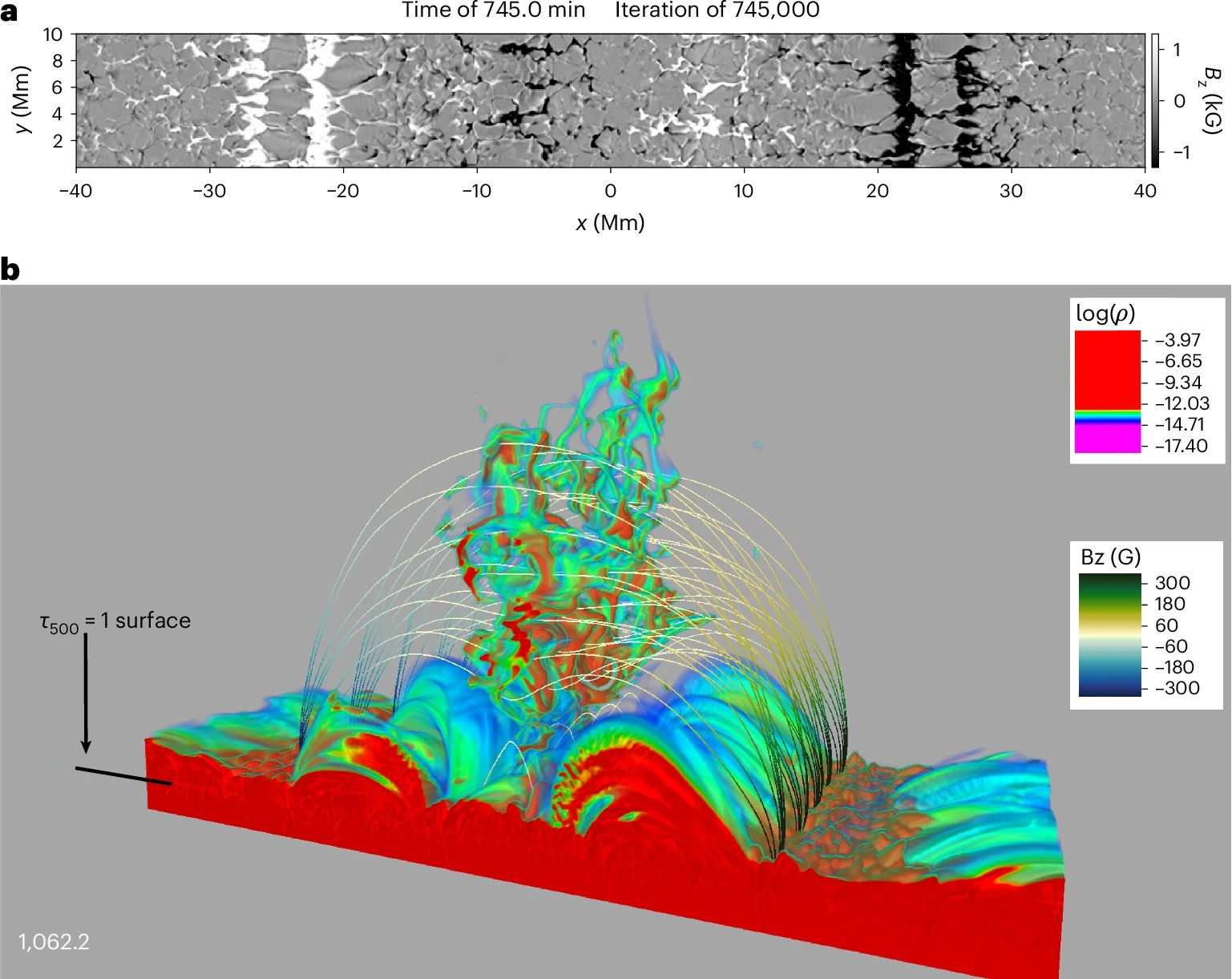
Published in Nature Astronomy on April 23, 2026, this research examines the life cycle of prominences from their inception to growth. It reveals that prominences develop within magnetic field valleys formed by arching magnetic lines. Computer simulations demonstrate that minor bursts of magnetic turbulence nudge plasma upwards, where it becomes trapped and accumulates, facilitating prominence growth.
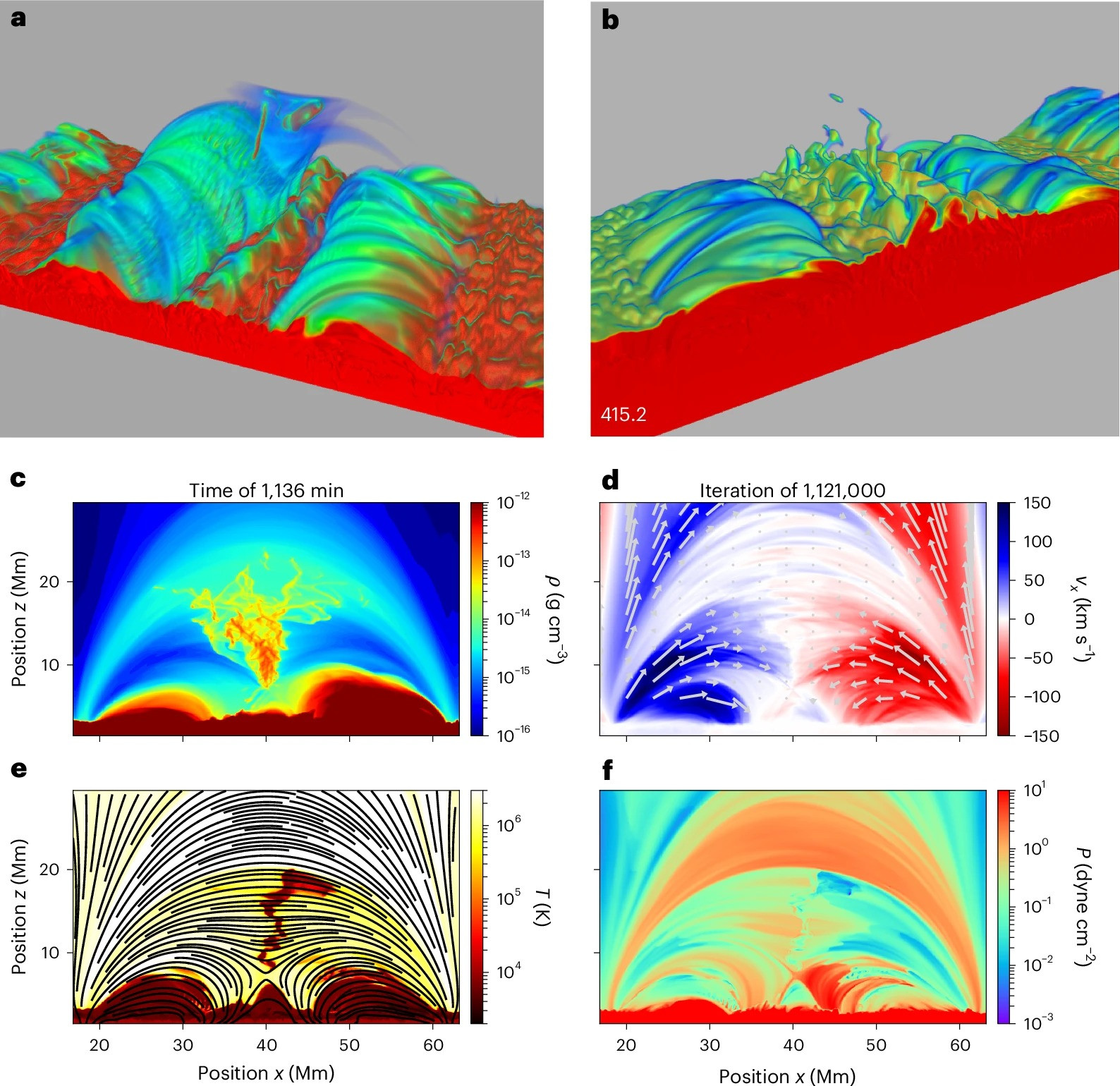
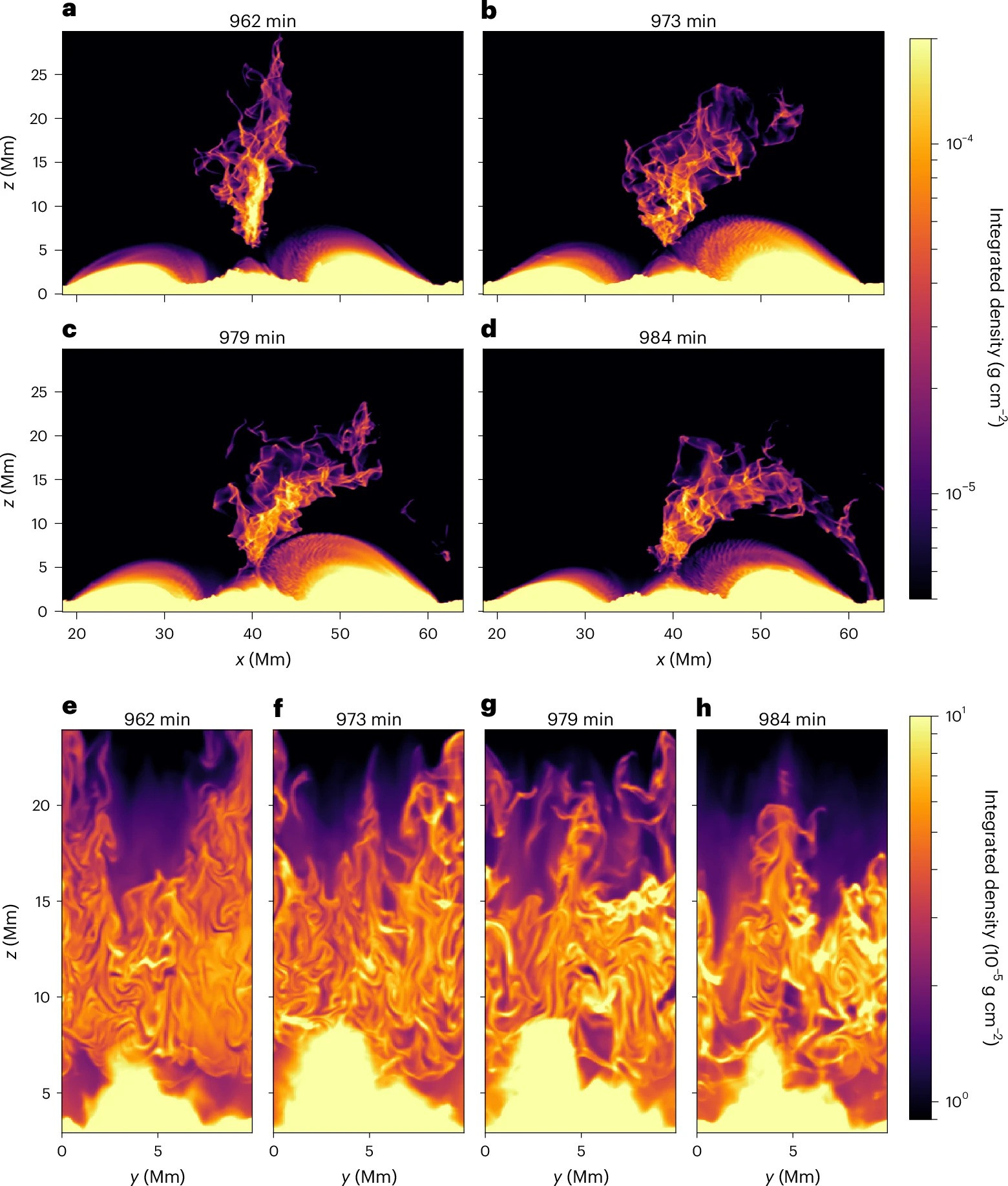
“Our models now provide an unprecedented realistic depiction of how plasma feeding and gravitational settling work together to sustain prominences,” explained Zessner.
Simultaneously, some plasma descends back to the Sun in a phenomenon called plasma rain. According to Zessner, whether a prominence persists, dissipates, or erupts depends on the interplay between the material inflows and outflows.
Earthly Impacts of Solar Prominence Eruptions
When solar prominences destabilize, they can erupt violently, releasing charged particles into interplanetary space. These solar events pose tangible risks to Earth’s technological infrastructure. The source material notes that despite Earth's atmospheric shield, periods of intense solar activity can disrupt electric grids and communication networks. Satellites, particularly those relying on GPS, are vulnerable to such solar storms.
Sami K. Solanki, head of the Sun and Heliosphere Department at MPS, underscores the continued need for improving space weather forecasts.
“To protect Earth’s infrastructure in time, reliable forecasts of dangerous space weather are needed. A deeper understanding of prominences is a crucial piece of the puzzle,” he noted.
- Categories:
- Space




0 comments
Sign in to Comment