
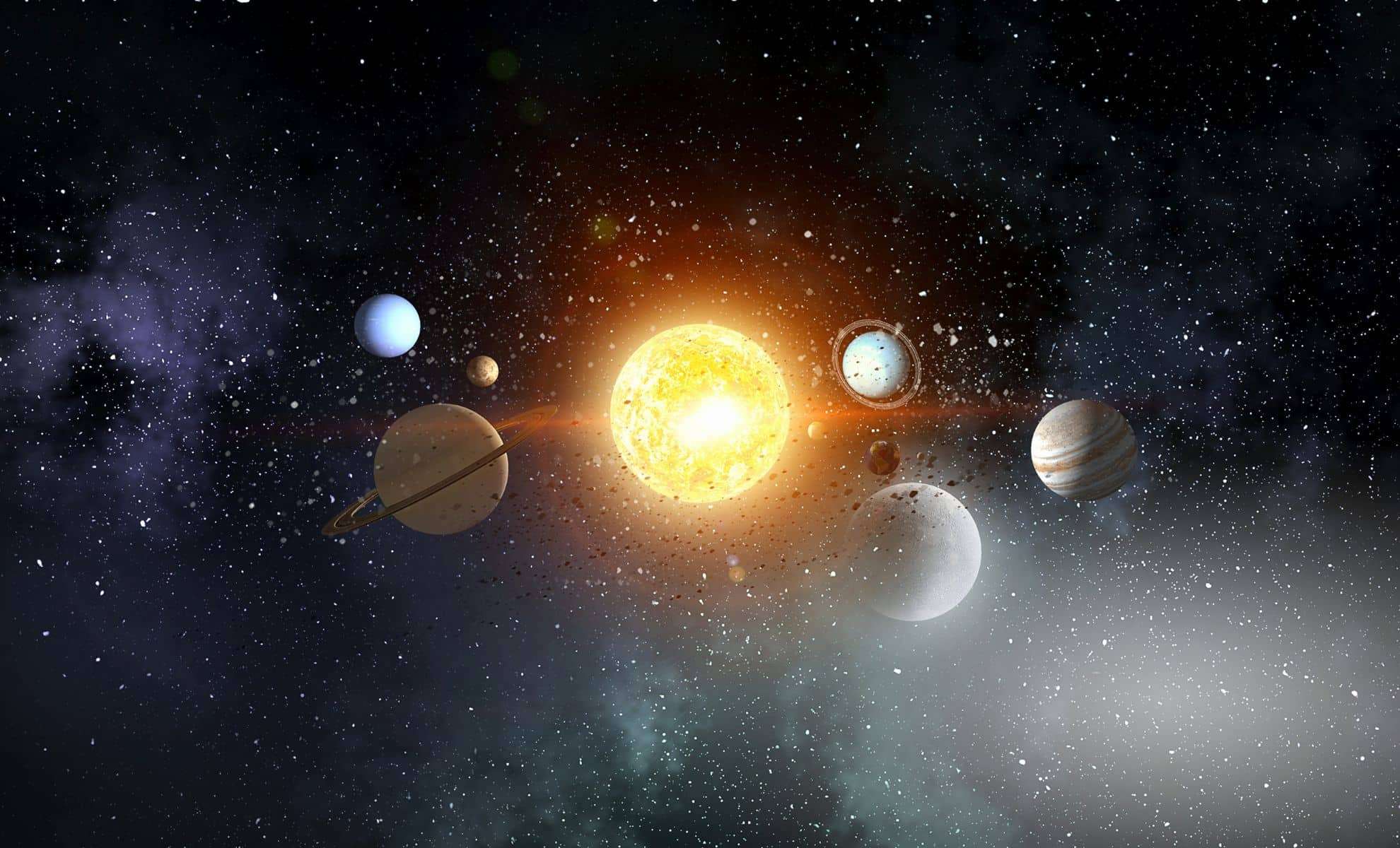
The birth of our solar system is a story that unfolds over billions of years, marked by swirling gases, cosmic impacts, and planetary shifts that crafted the celestial neighbors we recognize today. Contrary to earlier beliefs that planets near the Sun formed first, researchers now reveal a far more intricate formation timeline, with far-reaching implications for Earth's habitability.
From Cosmic Clouds to Planetary Bodies: The Dawn of Our Solar Neighborhood
Popular Science explains that about 4.5 billion years ago, a giant gas cloud collapsed under gravity, igniting the formation of our Sun. This event gave rise to a rotating protoplanetary disk composed of gas and dust encircling the newborn star. Within this disk, tiny particles began to collide and adhere in a process called accretion. Over time, these grains accumulated from pebbles to boulders, eventually combining into substantial bodies recognized as planets.
Observations of planet-forming regions around other stars provide scientists with comparative perspectives to better understand our solar system’s infancy. A significant feature, the ice line or snow line, exists roughly where the asteroid belt now lies—between Mars and Jupiter. This boundary marks the distance from the Sun beyond which temperatures were low enough for water ice to condense.

The First Giants: How Solar System’s Largest Planets Took Shape
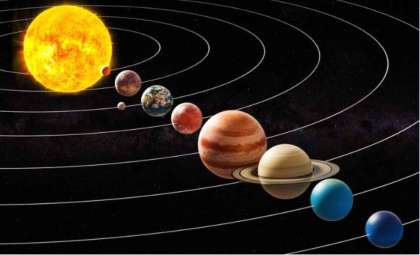
The combination of ice, gas, and dust beyond the snow line accelerated the growth of the major outer planets. Jupiter and Saturn emerged first, completing their formation within a few million years, followed closely by Uranus and Neptune within 10 million years.
Inside the ice line, the terrestrial planets Mercury, Venus, Earth, and Mars formed with far less material, resulting in a much slower development process. These inner planets are now believed to be the youngest, taking around 100 million years or longer to complete their growth. Though the 90-million-year age difference sounds large, it represents less than 1% of the universe’s total lifespan, which is relatively brief on cosmic scales.
To put it simply: if Earth were the younger sibling, Jupiter would be just a few years older.
Rearranging the Solar System’s Layout
After their formation, the solar giants—especially Jupiter and Neptune—migrated significantly, reshaping the solar system.
Neptune is thought to have moved outward, switching places with Uranus and pushing numerous icy objects into the distant Kuiper Belt, home to dwarf planets like Pluto and millions of comets.
At the same time, Jupiter shifted inward, using its powerful gravity to pull some nascent planets into the Sun where they were destroyed, and eject others completely from the solar system. Many leftovers were scattered into the asteroid belt.
Jupiter’s Role in Earth's Unique Position
Jupiter's dynamic gravitational influence was crucial in placing the inner planets into their final orbits, especially positioning Earth within the Goldilocks zone, where temperatures are just right for liquid water to exist. This fortunate location fostered conditions essential for life to arise.
As the article states, “If Jupiter hadn’t formed the way it did, it’s entirely possible life would not have ignited on Earth.” In this respect, our solar system’s oldest planet may have been vital in laying the groundwork for life’s evolution.
- Categories:
- Space





0 comments
Sign in to Comment