
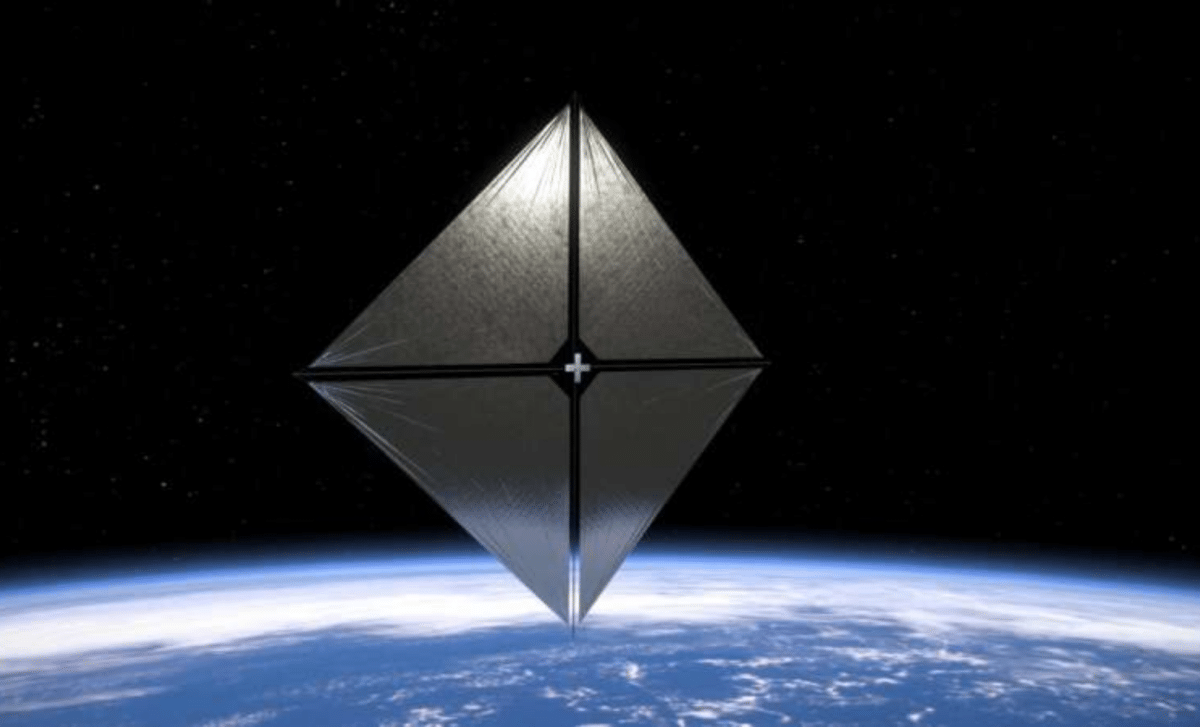
For many years, scientists and engineers have considered the use of space-based mirrors as a method to control a planet’s climate by redirecting sunlight to specific areas, thereby moderating temperature extremes. The basic concept is straightforward: install a large reflective surface in orbit, channel sunlight toward colder regions, and finely tune a planet’s energy balance. However, the complexities of space introduce forces that complicate this seemingly simple approach, especially since light not only illuminates but also exerts pressure through momentum.
A recent study uploaded on arXiv delves into the orbital behavior of massive solar mirrors. The research reveals that managing these structures is a dynamic challenge, influenced continuously by sunlight pressure, gravity, and orbital mechanics rather than a one-time engineering setup.
Understanding the Role of Orbital Mirrors
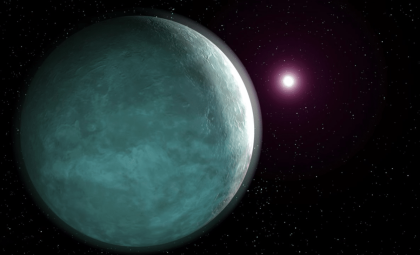
Large orbital mirrors have been proposed to help terraform or modify climates especially on planets orbiting faint stars. These mirrors could theoretically focus star energy onto dark or colder zones, making borderline habitable worlds more suitable for life. This concept is particularly promising for planets around red dwarf stars, where one side perpetually faces the star, creating extreme temperature contrasts. A mirror network orbiting such a planet could potentially redistribute light to balance these differences. Yet, the physics governing these mirrors extends well beyond simple reflection, involving complex interactions with their environment.

The paper emphasizes that these mirrors are never isolated; they interact constantly with gravity fields, orbital velocity changes, and the momentum carried by photons. Even subtle energy exchanges with light over time can alter a mirror’s path. As noted by Universe Today, this is comparable to the phenomenon behind solar sails, where photon impacts gradually push large surfaces. While solar radiation exerts a relatively weak force, the vast size required for planetary mirrors makes this effect considerable and capable of disrupting orbits if not countered by propulsion.
How Radiation Pressure Drives Orbital Changes
The arXiv study demonstrates that radiation pressure plays a critical role in destabilizing orbital mirror installations. When photons collide with the lightweight reflective surfaces, they transfer momentum that exerts a steady directional push. Over extended periods, this force can cause orbital mirrors to gradually drift away from their planned trajectories. This effect is especially pronounced in mirrors designed to be massive in area but minimal in mass.
Simulations indicate that mirrors orbiting in the same rotational direction as their planets (prograde orbits) are more prone to faster destabilization. Conversely, mirrors in retrograde orbits may experience somewhat greater long-term stability due to different momentum interactions. Nonetheless, no orbital arrangement fully negates this problem. Therefore, sustaining such mirrors would likely require continuous adjustment via propulsion or autonomous positioning systems.
Advances From Recent Computational Simulations
The researchers used sophisticated N-body simulations to replicate the gravitational interplay between stars, planets, and orbital mirrors. They tested various planets in habitable zones, mirror sizes, and orbital distances to assess how long mirrors could maintain stable orbits under realistic cosmic conditions. The models typically involved a kilometer-scale mirror with low mass orbiting Earth-sized planets.
Results revealed that planetary systems orbiting cooler, smaller red dwarfs generally experienced more stability than those around hotter, larger stars, mainly because of lower radiation intensity and different gravitational environments. Mirrors close to their planets also benefited from stronger gravitational anchoring, offsetting some drift caused by radiation pressure. However, regardless of these factors, simulations consistently showed that without active control, maintaining perfect orbital stability is highly challenging. This implies that any functional orbital mirror system would need regular management and corrections.
Implications for Identifying Extraterrestrial Technology
Besides engineering challenges, this research is relevant to the quest for alien civilizations. If advanced species employ large space mirrors to adjust their planets’ climates, these might be observable as technosignatures. Because such mirrors would likely not remain fixed in orbit unnoticed, their movement, correction maneuvers, or orbital irregularities could be key indicators distinguishing them from natural space debris or dust.
Future astronomical surveys may benefit from searching for dynamic orbital patterns rather than static structures. Instead of looking for unchanging mirror arrays, scientists might detect signs of orbital adjustments, shifts in reflected light patterns, or cyclical behavior indicating active maintenance. In this way, orbital instability itself becomes a useful clue to advanced engineering rather than a limitation.
Challenges in Large-Scale Space Climate Engineering
The broader takeaway is that large engineered megastructures face more fundamental physical constraints than previously appreciated. Even with cutting-edge materials and technology, factors like radiation pressure, gravitational perturbations, and resonance effects impose continuous external pressures that complicate long-term stability.
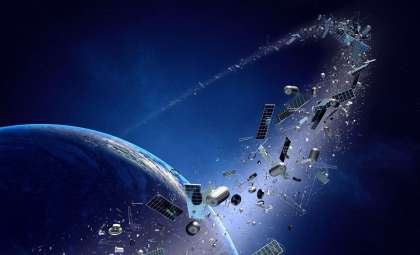
The study’s simulations emphasize that constructing orbital mirrors is only one part of the challenge; constant upkeep and deep expertise in orbital dynamics are essential to keep such systems functional. Without these resources, enormous reflective devices risk drifting away over time, transforming from precise climate-engineering tools into uncontrolled space hazards.
- Categories:
- News






0 comments
Sign in to Comment